I Want To Take You Higher

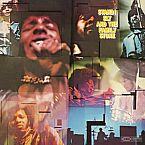
Album: Stand! (1969)
Charted: 38
Play Video

Songfacts®:

  • This song represents everything Sly & the Family Stone stood for when they were at their best: enlightenment, togetherness, uplift. Like most songs from the '60s with the word "high" in the title, many assumed it was about drugs, but there's indication that's so. It's the music that will lift you higher.
  • Group leader Sly Stone wrote and produced this song, as he did all their tracks. Unnaturally creative and extremely proficient, he created a funk sound that was unlike anything else out there. The band, formed in 1966, was just as unusual, with two white guys (drummer Gregg Errico and saxophone player Jerry Martini), a bass player who thumped instead of plucked (Larry Graham) and a female trumpet player (Cynthia Robinson).

    Their breakthrough album was their fourth, Stand! Released in 1969, the lead single, "Everyday People" was their first #1 hit topping the chart in February 1969. "I Want To Take You Higher" was released a few months later and stalled at #60 in June, but after the band played it a Woodstock, it became one of their classics.

    But in the later part of 1969, Stone started spiraling downward. He moved operations from San Francisco to Los Angeles and suddenly became much less productive and much more mercurial. Their record label was desperate for another album, but didn't one all through 1970. The band did deliver two hit singles that year, "Hot Fun in the Summertime" and "Thank You (Falettinme Be Mice Elf Agin)," then "I Want To Take You Higher" was re-released, this time reaching #38. The next album, There's a Riot Goin' On, didn't show up until November 1971. It had another #1 single, "Family Affair," but the bonhomie that defined the group was gone and they split for good in 1975.
  • The groove on this song is so potent that in places, the only lyric to supported it is the line "Boom shaka-laka-laka" repeated a few time. Sly Stone wasn't going to let the words get in the way of the rhythm (Earth, Wind & Fire also felt this way. See: "September"), so he didn't mind some nonsense syllables. You can hear this technique on "Everyday People," where Rose Stone sings, "And so on and so on and scooby-dooby-dooby."
  • When the band played this at Woodstock, it was one of those transcendent performances particular to a specific time and place. They played Day 2 of the festival and didn't go on until the wee hours of the morning. It was about 4 a.m. when they launched into "I Want To Take You Higher," but the crowd was full of energy and sang along, bringing everyone to a higher place. This performance was included on the soundtrack and in the film, which earned a lot of exposure for the song. Epic Records re-released it in 1970; this time it charted at #38.
  • Ike & Tina Turner's 1970 version went to #34 in 1970; a live version by Kool & The Gang went to #105 in 1971.
  • "I Want To Take You Higher" was never a big chart hit for the band, but it became their signature. Unfortunately, Sly Stone became a high-profile drug casualty and never returned to form. After the band broke up in 1975 he worked at a much slower pace, then disappeared completely around 1987. When he was spotted, it was often in conjunction with legal trouble or to discuss a spurious comeback.

    His best shot at a revival came at the Grammy Awards in 2006, where his bandmates teamed with a slew of stars (Will.i.am, Joss Stone, John Legend, members of Aerosmith) to run through some of their hits, capped off by a performance of "I Want To Take You Higher" with the main attraction - Sly Stone - taking his place up front. Stone showed up with a huge mohawk and looked disoriented from the start. He got through some of the song before walking off stage as the band finished the song without him. He never gave an explanation but did schedule a few more performances, none of which went well.

Comments

Be the first to comment...

Editor's Picks

Adam Young of Owl City

Adam Young of Owl CitySongwriter Interviews

Is Owl City on a quest for another hit like "Fireflies?" Adam answers that question and explains the influences behind many others.

Jim McCarty of The Yardbirds

Jim McCarty of The YardbirdsSongwriter Interviews

The Yardbirds drummer explains how they created their sound and talks about working with their famous guitarists.

Jonathan Cain of Journey

Jonathan Cain of JourneySongwriter Interviews

Cain talks about the divine inspirations for "Don't Stop Believin'" and "Faithfully."

Thomas Dolby

Thomas DolbySongwriter Interviews

He wrote "She Blinded Me With Science" so he could direct a video about a home for deranged scientists.

Into The Great Wide Open: Made-up Musicians

Into The Great Wide Open: Made-up MusiciansSong Writing

Eddie (played by Johnny Depp in the video) found fame fleeting, but Chuck Berry's made-up musician fared better.

Maria Muldaur

Maria MuldaurSongwriter Interviews

The "Midnight At The Oasis" singer is an Old Time gal. She talks about her jug band beginnings and shares a Dylan story.