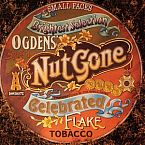

Happiness Stan

Album: Ogdens' Nut Gone Flake (1968)
Play Video

Songfacts®:

  • "Happiness Stan" opens Side 2 of the Small Faces' 1968 concept album Ogdens' Nut Gone Flake and serves as the gateway to one of British rock's most charmingly eccentric narratives. Written by vocalist Steve Marriott and bassist Ronnie Lane, the song introduces the title character, an innocent dreamer who becomes troubled by what he perceives to be a cosmic oversight: half the moon appears to be missing. Determined to solve the mystery, Stan embarks on a quest that teaches him happiness comes not from possessing more, but from appreciating what is already there.
  • The name "Stan" was borrowed from Ronnie Lane's older brother Stanley, while "Happiness" echoed Immediate Records' slogan, "Happy to be part of the industry of human happiness." Combined, the words perfectly capture the spirit of the suite: a blissfully uncomplicated soul setting off on a wide-eyed adventure in search of answers.
  • The five songs that follow "Happiness Stan" form a continuous story cycle that shifts effortlessly between styles. Along the way, the music moves from the proto-progressive rock flourishes of the title track to the muscular hard rock of "Rollin' Over" and the psychedelic folk textures of "Mad John." Binding the whole thing together is the narration of comedian Stanley Unwin, whose trademark "Unwinese" language sounded as though English had wandered into a funhouse mirror and decided to stay for tea.
  • The inspiration for the suite arrived during a boating holiday on the River Thames, organized by manager Andrew Loog Oldham. The trip was intended to revive the band's spirits after a difficult 1968 tour of Australia and New Zealand with the Who. "He said, 'We've got to get you guys writing,'" drummer Kenny Jones recalled to Mojo magazine. "'I've hired you some boats for a long weekend.'"

    Unfortunately, the band proved considerably better at relaxing than songwriting. "We had so much fun we never actually wrote anything at first," Jones admitted. It wasn't until the final evening, when the musicians moored their boats and gazed up at the night sky, that inspiration struck. Ronnie Lane looked at the moon and asked, "Where's the other half?" From that simple observation grew an entire fairy tale.
  • The Small Faces hoped to recruit comedian Spike Milligan as narrator, but those discussions went nowhere. Stanley Unwin proved an inspired alternative. Eager to understand the band's world, he spent time absorbing their slang and mannerisms before incorporating them into his narration. "Stanley got to know us," Jones remembered. "He said, 'I want to spend time with each one of you, so I get used to all your sayings.'"
  • Multi-instrumentalist Lyn Dobson was given considerable freedom when recording his flute parts. "They gave me the framework that it would be one long piece," he told Mojo. "Basically I just took it as it came, one track at a time."

    The improvisational approach fit perfectly with the album's free-flowing, whimsical atmosphere.
  • The Small Faces only performed the complete Happiness Stan suite once - on the BBC's Colour Me Pop on June 21, 1968. The band mimed to the studio recordings while microphones remained live to capture fresh vocals, ad-libs and a specially revised narration from Unwin.
  • Ogdens' Nut Gone Flake spent six weeks at #1 on the UK Albums Chart and is often mentioned alongside Sgt. Pepper's Lonely Hearts Club Band as one of the defining British concept albums of the psychedelic era. Its seamless Side 2 narrative helped pave the way for later concept records and influenced generations of Britpop, hard rock and psychedelic artists. Over half a century later, Happiness Stan's search for the missing half of the moon remains one of rock's most delightfully improbable adventures.

Comments

Be the first to comment...

Editor's Picks

Trucking Songs That Were #1 Hits

Trucking Songs That Were #1 HitsSong Writing

The stories behind the biggest hit songs about trucking.

Def Leppard Quiz

Def Leppard QuizMusic Quiz

Can you name Def Leppard's only #1 hit in America? Get rocked with this adrenalized quiz.

How "A Rolling Stone Gathers No Moss" Became Rock's Top Proverb

How "A Rolling Stone Gathers No Moss" Became Rock's Top ProverbSong Writing

How a country weeper and a blues number made "rolling stone" the most popular phrase in rock.

Gary Louris of The Jayhawks

Gary Louris of The JayhawksSongwriter Interviews

The Jayhawks' song "Big Star" has special meaning to Gary, who explains how longevity and inspiration have trumped adulation.

Lace the Music: How LSD Changed Popular Music

Lace the Music: How LSD Changed Popular MusicSong Writing

Starting in Virginia City, Nevada and rippling out to the Haight-Ashbury, LSD reshaped popular music.

Amy Lee of Evanescence

Amy Lee of EvanescenceSongwriter Interviews

The Evanescence frontwoman on the songs that have shifted meaning and her foray into kids' music.