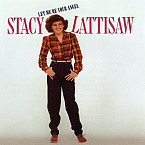
Let Me Be Your Angel

Album: Let Me Be Your Angel (1980)
Charted: 21
Play Video

Songfacts®:

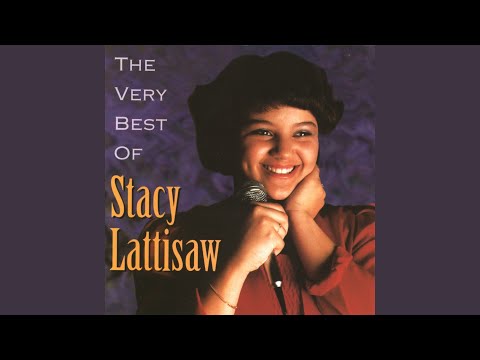
  • In this heartache ballad, 13-year-old Stacy Lattisaw tries to convince the object of her affection that she's not too young to understand the ways of love. "Let me be your angel," she pleads. "Let me be the one for you."

    Let Me Be Your Angel landed in 1980, a year after the young R&B singer debuted with Young And In Love. For her sophomore release, Cotillion Records paired her with Narada Michael Walden, the former drummer for the Mahavishnu Orchestra who was carving out a career as a songwriter and producer. In addition to producing the album, he also wrote all of its tracks, many with the help of lyricist Bunny Hull ("New Attitude"). It was the beginning of a fruitful working relationship between Lattisaw and Walden, who helmed most of her releases throughout the '80s.

    "Most of my favorites were written by Narada Michael Walden. Narada is one of the nicest, easiest people to work with. He didn't have an ego. He was just authentic," she said in a 2010 Blogcritics interview. "He came to our house in DC with an eight-track. My mom had bought a piano. He started to play the chords to 'Let Me Be Your Angel.' It was written in our home."
  • Peaking at #21, this was Lattisaw's first single to make the Billboard Hot 100. It also went to #8 on the R&B chart.
  • The single's success opened doors for Walden, whose phone was ringing off the hook for offers to produce big-name artists like Aretha Franklin (he produced her 1985 comeback album, Who's Zoomin' Who? and co-wrote the hit single "Freeway Of Love").

    Walden told The Songfacts Podcast in 2024: "Even [Arista Records president] Clive Davis called and said, 'Who are you? How did you know how to make those kinds of records?' And then he said, 'Well, do you want to work with Aretha? You want to work with Dionne Warwick?' Because of 'Let Me Be Your Angel.' So, I've got to thank Stacy Lattisaw."
  • Lattisaw also notched hits with the album's disco tunes "Dynamite!" and "Jump To The Beat," which both went to #1 on the Dance chart - making her the youngest artist at the time to ever top the tally. But she preferred singing ballads like "Angel." She explained: "My voice was still very soft and being developed then. The more I sang, the stronger my voice became. I grew into the songstress. That's how I considered myself. I never cared as much for the uptempo, techno-style music. I prefer singing ballads and midtempos."
  • Before being picked up by Cotillion, a subsidiary of Atlantic Records, Lattisaw was offered a contract with TK Records. Frederick Knight, a producer at TK, heard a tape of Lattisaw singing at a local event in her native Washington, DC, and wrote a song tailored for her voice and youthful appeal: "Ring My Bell." When she signed with Cotillion instead, Knight revamped the song with more mature lyrics and gave it to Anita Ward, who swept the charts with it in 1979.

Comments

Be the first to comment...

Editor's Picks

Martin Page

Martin PageSongwriter Interviews

With Bernie Taupin, Martin co-wrote the #1 hits "We Built This City" and "These Dreams." After writing the Pretty Woman song for Go West, he had his own hit with "In the House of Stone and Light."

Yacht Rock!

Yacht Rock!Song Writing

A scholarly analysis of yacht rock favorites ("Steal Away," "Baker Street"...) with a member of the leading YR cover band.

Def Leppard Quiz

Def Leppard QuizMusic Quiz

Can you name Def Leppard's only #1 hit in America? Get rocked with this adrenalized quiz.

Jesus Christ Superstar: Ted Neeley Tells the Inside Story

Jesus Christ Superstar: Ted Neeley Tells the Inside StorySong Writing

The in-depth discussion about the making of Jesus Christ Superstar with Ted Neeley, who played Jesus in the 1973 film.

Leslie West of Mountain

Leslie West of MountainSongwriter Interviews

From the cowbell on "Mississippi Queen" to recording with The Who when they got the wrong Felix, stories from one of rock's master craftsmen.

He Hit Me (And It Felt Like A Kiss): A History Of Abuse Pop

He Hit Me (And It Felt Like A Kiss): A History Of Abuse PopSong Writing

Songs that seem to glorify violence against women are often misinterpreted - but not always.