Talk Talk

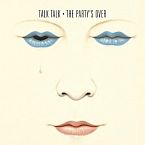
Album: The Party's Over (1982)
Charted: 23 75
Play Video

Songfacts®:

  • In this song, Mark Hollis of Talk Talk sing sings about the anxiety and torment that is bearing down upon him. Communication, especially talking, is a common theme for Hollis, who was notoriously terse and enigmatic in interviews.
  • Mark Hollis first recorded this song in 1977 when he was in a band called The Reaction. Titled "Talk Talk Talk Talk," it was issued on a compilation album put out by the Beggars Banquet label called Streets, and more of a punk rendition. This version was produced by Mark's brother, Ed, and Steve Lillywhite.

    Mark and Ed wrote the song together but were never in the same band; Ed managed Eddie And The Hot Rods and teamed Mark up with Paul Webb, Lee Harris and Simon Brenner, which became the band Talk Talk in 1981.
  • The band named themselves after this song. Mark Hollis liked it because it's very direct, easy to remember, can't be abbreviated, and graphically compatible.
  • The original version of this song ("Talk Talk Talk Talk") was more political, with the lines:

    Society was bringing me down
    Well, politicians, they keep talking in rhymes


    The "Talk Talk" version is all directed at one person, focusing the lyric. Both versions contain these lines:

    Don't you ever stop to think about me
    I'm not that blind to see that you've been cheating on me
  • Talk Talk didn't use any guitar on the album, relying on Simon Brenner's synthesizer for the melody.
  • The band was signed to EMI, which also had Duran Duran on their roster. The label sent Talk Talk to tour as the opening act for Duran Duran in 1981, before they had released any material. They were clearly hoping the MTV-friendly hitmaking habits of Duran Duran would rub off on Talk Talk, but frontman Mark Hollis was averse to most media and insisted on dictating his own musical direction and image. His band got more experimental over the course of their next four albums, which all had respectable sales but never came close to the arena-filling numbers EMI hoped for. They went down in history as a very influential band that made some groundbreaking music. Mojo listed their fourth album, Spirit of Eden, among the Top 500 of all-time in their 2000 survey.
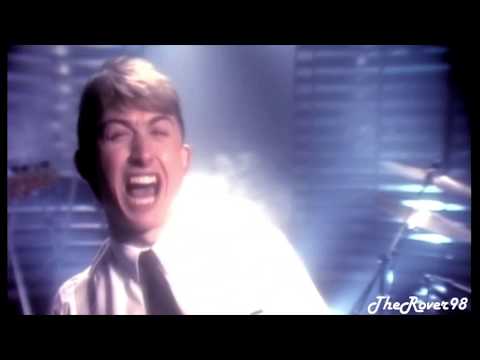
  • Talk Talk made two videos for this song, both with big-name directors who dominated MTV early on. The first, with Russell Mulcahy, was rejected by the band's label. The next one, which was approved and got decent airplay on MTV, had Brian Grant behind the viewport and showed the band performing on a claustrophobic, metallic set. They wore white suits with black ties, which was their signature look at the time. According to Mark Hollis, the music supplied the color.
  • Colin Thurston, who was Duran Duran's producer, produced The Party's Over album. He and the band didn't get on very well; their next album was produced by Tim Friese-Greene, who became a key collaborator, co-writing their hit "It's My Life."
  • This isn't the first hit song called "Talk Talk." A garage-rock band called The Music Machine hit #15 with a very different song of that title in 1967.
  • This was used in the 1982 movie Night Shift, which was directed by Ron Howard and starred his Happy Days co-star Henry Winkler.

Comments

Be the first to comment...

Editor's Picks

Dean Friedman - "Ariel"

Dean Friedman - "Ariel"They're Playing My Song

Dean's saga began with "Ariel," a song about falling in love with a Jewish girl from New Jersey.

Emmylou Harris

Emmylou HarrisSongwriter Interviews

She thinks of herself as a "song interpreter," but back in the '80s another country star convinced Emmylou to take a crack at songwriting.
Harold Brown of War

Harold Brown of WarSongwriter Interviews

A founding member of the band War, Harold gives a first-person account of one of the most important periods in music history.
Macabre Mother Goose: The Dark Side of Children's Songs

Macabre Mother Goose: The Dark Side of Children's SongsSong Writing

"London Bridge," "Ring Around the Rosie" and "It's Raining, It's Pouring" are just a few examples of shockingly morbid children's songs.

Supertramp founder Roger Hodgson

Supertramp founder Roger HodgsonSongwriter Interviews

Roger tells the stories behind some of his biggest hits, including "Give a Little Bit," "Take the Long Way Home" and "The Logical Song."

Edwin McCain

Edwin McCainSongwriter Interviews

"I'll Be" was what Edwin called his "Hail Mary" song. He says it proves "intention of the songwriter is 180 degrees from potential interpretation by an audience."