No Small Thing

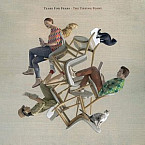
Album: The Tipping Point (2021)
Play Video

Songfacts®:

  • In 2004, Roland Orzabal and Curt Smith released the sixth Tears for Fears album, Everybody Loves a Happy Ending. The title hinted it would be their last project, but in 2013 work began on a fresh record. Two new songs, "I Love You But I'm Lost" and "Stay" featured on their 2017 Greatest Hits set, but then they lost focus for a couple of years. Orzabal struggled with health problems following the death of his wife, and Smith contemplated walking away from Tears For Fears as his bandmate wasn't communicating.

    In early 2019, Orzabal contacted Smith again, and after meeting for lunch, they sat down together with just a couple of acoustic guitars and an iPhone voice memo, and started to jam. This folky ballad was the first fruit from their reconnection.
  • "No Small Thing" is an acoustic guitar-driven tune that builds into a sweeping epic. An examination of misconceptions about freedom, Smith likened it to "a song from a '70s or '60s acoustic folk album," adding: "The fact that we felt confident enough to go from there to the end of the song to where it's just absolute mayhem speaks to that sense of freedom, and that's our comfort zone musically."
  • The song found Orzabal and Smith searching for some heart and soul rather than striving for a hit single. In going back to the drawing board, they unlocked the album. "Curt came up with this simple folk-country riff, a little bit Dylan, a little bit Johnny Cash, and then we were off," said Orzabel.

    "We felt suddenly unencumbered, free if you like, no longer worrying about the market, about success, but drawing on influences from our childhoods," he added. "It was at this point that the whole album started opening up. 'No Small Thing' was the key, the thing that turned a red light green."
  • "No Small Thing" opens The Tipping Point, its journey from acoustic ballad to symphonic pandemonium giving a sense what the album will be like. "Your initial feelings are 'what is this. This is not Tears For Fears," Smith told American Songwriter. "In that, it's already making you pay attention, so then you're already paying attention to the record. I think if you came in with something that was so familiar, and so clearly Tears for Fears, it wouldn't invite you in as well. That was always my premise."
  • The black-and-white official video was inspired by the 1982 experimental non-narrative film Koyaanisqatsi. The American visual tone poem consists primarily of slow motion and time-lapse footage of cities and many natural landscapes across the United States. Tears For Fears made their video using footage mirroring the conflict between individual freedoms and collective responsibility.

Comments

Be the first to comment...

Editor's Picks

Eric Clapton

Eric ClaptonFact or Fiction

Did Eric Clapton really write "Cocaine" while on cocaine? This question and more in the Clapton edition of Fact or Fiction.

Trans Soul Rebels: Songs About Transgenderism

Trans Soul Rebels: Songs About TransgenderismSong Writing

A history of songs dealing with transgender issues, featuring Pink Floyd, David Bowie, Morrissey and Green Day.

John Waite

John WaiteSongwriter Interviews

"Missing You" was a spontaneous outpouring of emotion triggered by a phone call. John tells that story and explains what MTV meant to his career.

The Truth Is Out There: A History of Alien Songs

The Truth Is Out There: A History of Alien SongsSong Writing

The trail runs from flying saucer songs in the '50s, through Bowie, blink-182 and Katy Perry.

Deconstructing Doors Songs With The Author Of The Doors Examined

Deconstructing Doors Songs With The Author Of The Doors ExaminedSong Writing

Doors expert Jim Cherry, author of The Doors Examined, talks about some of their defining songs and exposes some Jim Morrison myths.

Ian Anderson: "The delight in making music is that you don't have a formula"

Ian Anderson: "The delight in making music is that you don't have a formula"Songwriter Interviews

Ian talks about his 3 or 4 blatant attempts to write a pop song, and also the ones he most connected with, including "Locomotive Breath."