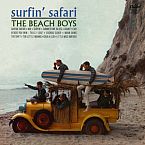
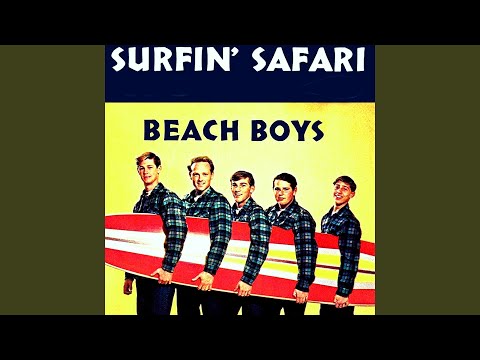
Surfin' Safari

Album: Surfin' Safari (1962)
Charted: 14
Play Video

Songfacts®:

  • Many of the early Beach Boys songs were about surfing, which was their niche (their first record label named the band; they were almost The Surfers). Only their drummer, Dennis Wilson, surfed, but they could fake it in photos and songs. "Surfin' Safari" is a travelogue of popular surf spots in California: Huntington, Malibu, Doheny State Beach, Rincon, Laguna Beach. They also mention Cerro Azul in Peru.


    Released June 4th 1962, this was the Beach Boys' first major hit. In his 1990 autobiography Brian Wilson said it sold 900,000 copies, and more overseas: #1 in Sweden, #13 in New Zealand, and a hit too in Italy and France, where it attracted cover versions.
  • In the first verse, the band grabs some honeys and loads up the woody with some boards, setting the stage for the surfin' safari with some hip lingo. A woody is a funny looking wood-paneled vehicle popular with surfers. It also gets a mention in "Surfer Girl" with the line, "In my woody I would take you everywhere I go."
  • Written by Wilson and lead singer Mike Love, this was the first recording to display the distinctive counterpoint harmonies for which the group became famous. The recording was also self-produced, and taken to Capitol complete with its B-side "409" which was a minor hit. This precedent made the Beach Boys the first total, self-contained artists of the rock era, not to be matched for many years to come.
  • When the Chrysler corporation conducted a survey in 2004 on "What is the best song to cruise to?" - this won. >>>
    Suggestion credit:
    Gary - Auckland, New Zealand, for above 3
  • This was the second Beach Boys single, and their first with Capitol Records. Their first single, "Surfin'," was issued on the independent label Candix Records. Group patriarch Murry Wilson sold the masters of "Surfin' Safari," along with two other songs, "Lonely Sea" and "409," to Capitol for $100 each, with a 2.5% royalty for the group. With "409" issued as the B-side, the single proved successful, and Capitol signed the band. The group had already done a lot of work on their debut album by the time they got the deal.
  • On the DVD Brian Wilson Songwriter 1962 - 1969, Mike Love credits Murry Wilson - father of Brian, Carl and Dennis of The Beach Boys - with the distinctive treblelly guitar sound on this track. When Brian Wilson would leave the control room to record his bass parts, Murry, who fancied himself a producer, would switch the sounds on the guitars to the treble he preferred. Love feels that guitar sound really cut through and helped "Surfin' Safari" sell.

Comments: 6

  • John from Cleveland"This precedent made the Beach Boys the first total, self-contained artists of the rock era, not to be matched for many years to come."

    self-contained: "Not dependent on others; self-sufficient."

    Despite the massive effort that came from within included production, since studio musicians recorded a great deal of their music, I do not think this description is accurate, particularly when contrasted against bands that played all of their own parts.
  • Tim from San MateoIn response to the comment about different lyrics between the Candix era version and the version released by Capitol: those lyrics were obviously changed before Capitol ever heard the newer version, so insinuating that Capitol objected to "honeys will be making the scene" is complete rubbish.
    There are numerous examples where lyrics to Brian Wilson penned tunes get revised, usually by Mike Love, when they are being recorded. My guess is that Mike with Brian changed it to "some honeys will be coming along" since it just flows better.
  • Steve Dotstar from Los Angeles, CaSpencer-Brian Wilson opens the song with his high voice stacked on the top of harmonies "let's go surfin'now"...etc..then when the solo voice comes on,it's Mike Love.("early in the morning,.."etc)
  • Boogiespencer from Bethesda, Mdwho opens with lead vocals on this track?
  • Gary from Auckland, New ZealandThis has been sales-ranked above known 1962 million-sellers 'Return to Sender' and 'Twistin' the Night Away' by the analysis of Classicbands.com. It broke Capitol sales records in New York City, was ranked #1 in LA, San Diego and the Twin Cities, #3 in San Francisco, #5 in Chicago, etc, etc -- but only #14 by Billboard. This might have been partly because it wasn't guaranteed as much airplay as Dick Clark favorites the Four Seasons, but probably mainly because each regional market was left to take it up individually -- its flip, '409', was first promoted by Capitol as the A-side. 'Surfin' Safari's regional chart runs extended over a period of nine months, from June 1962 to February 1963, not falling all within three months as national hits normally do.
  • Rick from San Juan, United StatesThe early Candix version began with the phrase "some honeys will be makin' the scene" ... ". It was watered-down by Capitol as "some honeys will be coming along" to avoid controversy that would affect airplay and sales.
see more comments

Editor's Picks

Little Big Town

Little Big TownSongwriter Interviews

"When seeds that you sow grow by the wicked moon/Be sure your sins will find you out/Your past will hunt you down and turn to tell on you."

Richie Wise (Kiss producer, Dust)

Richie Wise (Kiss producer, Dust)Songwriter Interviews

Richie talks about producing the first two Kiss albums, recording "Brother Louie," and the newfound appreciation of his rock band, Dust.

Part of Their World: The Stories and Songs of 13 Disney Princesses

Part of Their World: The Stories and Songs of 13 Disney PrincessesSong Writing

From "Some Day My Prince Will Come" to "Let It Go" - how Disney princess songs (and the women who sing them) have evolved.

Michelle Branch

Michelle BranchSongwriter Interviews

Michelle Branch talks about "Everywhere," "The Game Of Love," and her run-in with a Christian broadcasting network.

Dean Pitchford

Dean PitchfordSongwriter Interviews

Dean wrote the screenplay and lyrics to all the songs in Footloose. His other hits include "Fame" and "All The Man That I Need."

Justin Hayward of The Moody Blues

Justin Hayward of The Moody BluesSongwriter Interviews

Justin wrote the classic "Nights In White Satin," but his fondest musical memories are from a different decade.