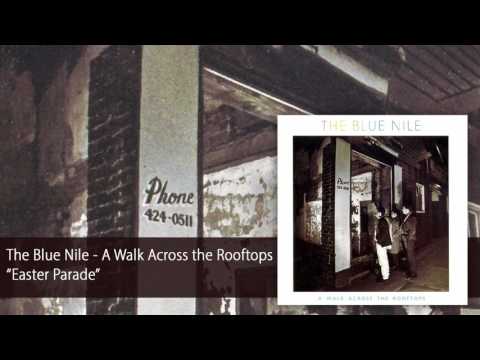

Easter Parade

Album: A Walk Across the Rooftops (1984)
Play Video

Songfacts®:

  • Not to be confused with the Irving Berlin song of the same title, this "Easter Parade" is part of The Blue Nile's debut album A Walk Across The Rooftops and written by their lead singer Paul Buchanan and bass player Robert Bell. The song finds Buchanan setting a scene with vivid, but sparse imagery describing an Easter parade in a "city perfect in every detail."

    "It's a Sunday song, something with a stillness in it," told NME. "It would be blasphemous of me to say it's a holy song in any way, but that's something that was in our minds."
  • The Blue Nile is a Scottish band that found an audience in the UK but never caught on in America despite stalwart endorsements from many respected musicians, including Rickie Lee Jones, who in 1990 sang this with The Blue Nile on a TV show called Halfway to Paradise. They also performed Jones' "Flying Cowboys" on the show.
  • Jack Hues of Wang Chung, whose songs "Dance Hall Days" and "Everybody Have Fun Tonight" helped form the music tapestry of the '80s, considers "Easter Parade" one of the best songs of that decade. He broke it down to Songfacts: A Walk Across The Rooftops came seemingly out of nowhere in 1984. There are some classic pop tunes on the album, all stylish and all beautifully finished. I wish I'd written any one of them, but 'Easter Parade' is an art song that might have come from the mind of Claude Debussy rather than a bunch of lads from Glasgow.

    The opening gesture of rising piano arpeggio and answering fall is beautifully orchestrated with bell-sound synths. Paul Buchanan sings with the command and textural opulence of Scott Walker, but whereas Scott makes you feel you are listening to a theatrical performance (which I love!) Paul is sitting next to you on the settee at home, quietly telling you what he saw. The lyric is like looking at a Cartier-Bresson photograph. Paul Joseph Moore sculpts a sound as the first verse concludes - that never fails to move me.

    It has that unforgettable quality that you hear in some of Stockhausen's work, but here this abstract noise hits an emotional spot in the service of the song. The song is totally satisfying in its AABA structure and the elements that constitute it: the harmonic sophistication, the vocal melody, the choices of instrument and particularly the sound design, the brevity - add up to something close to perfection."

Comments

Be the first to comment...

Editor's Picks

Donnie Iris (Ah! Leah!, The Rapper)

Donnie Iris (Ah! Leah!, The Rapper)Songwriter Interviews

Before "Rap" was a form of music, it was something guys did to pick up girls in nightclubs. Donnie talks about "The Rapper" and reveals the identity of Leah.

Bass Player Scott Edwards

Bass Player Scott EdwardsSong Writing

Scott was Stevie Wonder's bass player before becoming a top session player. Hits he played on include "I Will Survive," "Being With You" and "Sara Smile."

Chris Fehn of Slipknot

Chris Fehn of SlipknotSongwriter Interviews

A drummer for one of the most successful metal bands of the last decade, Chris talks about what it's like writing and performing with Slipknot. Metal-neck is a factor.

Carol Kaye

Carol KayeSongwriter Interviews

A top session musician, Carol played on hundreds of hits by The Beach Boys, The Monkees, Frank Sinatra and many others.

James Bond Theme Songs

James Bond Theme SongsMusic Quiz

How well do you know the 007 theme songs?

Annie Haslam of Renaissance

Annie Haslam of RenaissanceSongwriter Interviews

The 5-octave voice of the classical rock band Renaissance, Annie is big on creative expression. In this talk, she covers Roy Wood, the history of the band, and where all the money went in the '70s.