The haunting "Riders On The Storm" was the last song Jim Morrison recorded; a few weeks later he went to France, and he died there on July 3, 1971.
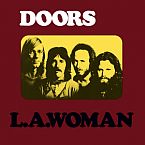
The song first appeared on the LA Woman album, released April 19, 1971, and was issued as a single June 1971, shortly before Morrison's death.
The song can be seen as an autobiographical account of Jim Morrison's life: he considered himself a "Rider on the storm."
The "killer on the road" is a reference to a screenplay he wrote called The Hitchhiker (An American Pastoral), where Morrison was going to play the part of a hitchhiker who goes on a murder spree. The lyrics, "Girl you gotta love your man" can be seen as a desperate plea to his long-time girlfriend Pamela.
As written in
Jim Morrison: Life, Death, Legend by Stephen Davis, in 1962, while Jim Morrison was attending Florida State University in Tallahassee, he was seeing a girl named Mary Werbelow who lived in Clearwater, 280 miles away. Jim would oftentimes hitchhike to see her.
"Those solitary journeys on hot and dusty Florida two-lane blacktop roads, with his thumb out and his imagination on fire with lust and poetry and Nietzsche and God knows what else - taking chances on redneck truckers, fugitive homos, and predatory cruisers - left an indelible psychic scar on Jimmy, whose notebooks began to obsessively feature scrawls and drawings of a lone hitchhiker, an existential traveler, faceless and dangerous, a drifting stranger with violent fantasies, a mystery tramp: the killer on the road."
The song evolved out of a jam session when the band was messing around with "
Ghost Riders In the Sky," a 1948 cowboy song by Stan Jones that was later recorded by Johnny Cash, Bing Crosby and many others. It was Jim Morrison's idea to alter the title to "Riders On The Storm."
The Doors brought in bass players Marc Benno and Jerry Scheff to play on the album. Scheff came up with the distinctive bass line after Manzarek played him what he had in mind on his keyboard. It took a while to figure out, since it was much harder to play on a bass than a keyboard.
Ray Manzarek used a Fender Rhodes electric piano to create the effect of rain.
This was the last song on the last Doors album with Morrison. Fittingly, it ends with the storm fading slowly to silence. The remaining Doors released two more albums without Morrison before breaking up in 1972. In 2002, Kreiger and Manzarek reunited as "The Doors Of The 21st Century." Densmore, who says he wasn't invited to join them, went to court and eventually got a ruling preventing the group from using The Doors in its name, so they changed their name to "Riders On The Storm" after this song.
>>>
Suggestion credit:
Bertrand - Paris, France
If you listen closely, you can hear Jim Morrison whispering the lyrics over his own singing, which causes a kind of creepy effect.
This was Morrison's final contribution as a rock star. Ray Manzarek told
Uncut magazine September 2011: "There's a whisper voice on 'Riders on the Storm,' if you listen closely, a whispered overdub that Jim adds beneath his vocal. That's the last thing he ever did. An ephemeral, whispered overdub."
>>>
Suggestion credit:
Mark - West Bountiful, UT
Paul Rothchild, who produced The Doors' first five albums, decided not to work on this because he didn't like the songs. He thought this sounded like "cocktail music." The Doors ended up producing it themselves with the help of their engineer, Bruce Botnick.
The single was shortened for radio play. Some of the piano solo was cut out.
In 2000, the surviving members of The Doors taped a VH1
Storytellers episode with guest vocalists filling in for Morrison.
Scott Stapp from Creed sang on this track.
Creed contributed a version of this to the 2000 Doors tribute album
Stoned Immaculate. Creed also performed it with Doors guitarist Robby Krieger at Woodstock '99. Krieger sat in on Creed's "
What's This Life For" during the set.
Doors drummer John Densmore wrote a book called
Riders On The Storm about his life with Jim Morrison and The Doors.
>>>
Suggestion credit:
Ted - Poway, CA
Eric Red, the screenwriter of the 1986 film The Hitcher, has said that his screenplay was inspired by this song. He said in an interview with DVD Active: "I thought the elements of the song - a killer on the road in a storm plus the cinematic feel of the music - would make an terrific opening for a film. I started with that scene and went from there."
When the 71-year-old Ray Manzarak was asked by the Somerville Journal in March 2010 if he turns up or turns off Doors music when he hears it on the radio. Manzarek said, "Oh, God, turn it up! Are you kidding? Living up in northern California, it rains a lot, so they play the heck out of 'Riders on the Storm.' And when that comes on, I crank that sucker, man."
>>>
Suggestion credit:
DeeTheWriter - Saint Petersburg, Russia Federation
When he recorded this song, Jim Morrison had already decided that he was going to leave the band and go to Paris, where he would die. Some of the lyrics in this song ("girl, you gotta love your man...") relate to his love for his girlfriend Pam Courson, who went with him to France.
At the end of this song, there are sound effects of thunder, and the faint voice of Jim Morrison whispering, "riders on the storm." This was envisioned as his spirit whispering from the beyond.
The B-side of the single is "
The Changeling," a song The Doors wanted released as an A-side.
"Riders On The Storm" wasn't a big hit, reaching just #14 despite all the buzz about Jim Morrison's death, but it endured to become the most popular Doors song in the streaming era. Another Doors song that wasn't huge at the time but has put up gaudy streaming numbers is "
People Are Strange," released in 1967.