
The Terror

Album: The Terror (2013)
Play Video

Songfacts®:

  • This is the title track of The Flaming Lips 13th studio album. Lead singer Wayne Coyne said the record features, "horrible creepy songs" fueled by band member Steven Drozd's battle with substance abuse. The title, according to Coyne, refers to "finding the answer."
  • The main sound that begins this song and features on the other tracks is an iPad app that Drozd put his voice into and turned into an electric choir. Coyne told MusicRadar.com: "It's extremely haunting, and we found we kept coming back to it. So now the song even begins with Steven's voice that was made into his own synthesizer."

    "That really is the secret as to why this is such a long piece," he continued. "You're not really hearing instruments so much; you're hearing a lot of the human voice, even though it's been put through synthesizers and s--t. It becomes emotionally evocative."

    Coyne added: "Steven started doing this thing, and I knew immediately that I could sing something to it. We were playing along, not really knowing what we were doing, and some of the sounds that we used were really fu---d-up, distorted, heavy, tri-tone things - some of them electric guitars, some of them keyboards put through different reverbs and effects."
  • Coyne commented to MusicRadar that a lot of The Terror "is very gentle, but some of it is very stabbing." He added: " I think this song is probably the peak of the aggression. What's interesting is that the intensity doesn't destroy the gentleness. We don't show restraint, but sometimes restraint happens. That's why we love this song. Truthfully, it's still mysterious what's happening here."
  • Coyne explained the overall theme of the album in a press release, saying: "We want, or wanted, to believe that without love we would disappear, that love, somehow, would save us that, yeah, if we have love, give love and know love, we are truly alive and if there is no love, there would be no life. The Terror is, we know now, that even without love, life goes on... we just go on… there is no mercy killing."
  • Coyne elaborated on the meaning of the album title in a 2017 Consequence Of Sound article: "The title is referring to the terror in our heads - what we think is happening, and then there’s this true version of us that we can't see. Whatever your profession, if that subconscious life is pulling you and you’re not going with it, you will go insane. That's just the way it is, or you will find some drugs or alcohol somewhere to stop answering to it. And that's just a motherf--ker. You have to dig in and take yourself out of it. When you're trying to be this responsible grownup person who is trying to control everything, be at least the one saying which direction you can go in. This album showed us that your mind is always expanding, it's always trying, and it’s always seeing new things."
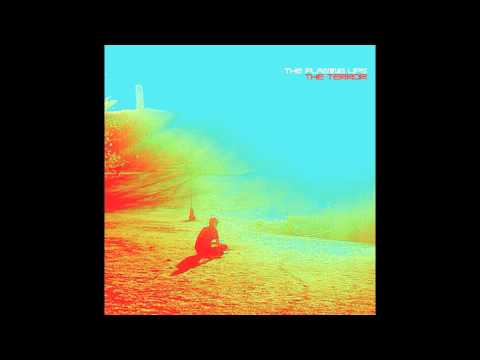
  • The album art is a neon blue and orange photo of a boy crouching in the middle of an isolated park. "I took that of the kid at the park that I would walk around," Coyne explained. "It just looked very uncomfortable to me. When I approached him, he knew who I was, and he was on 10 hits of acid and drawing a picture that he actually gave me. He didn't know I was taking a picture of him. He was in a very strange mood; he was kind of happy and suicidal at the same time, which I thought was what the record was about, too."

Comments

Be the first to comment...

Editor's Picks

Philip Cody

Philip CodySongwriter Interviews

A talented lyricist, Philip helped revive Neil Sedaka's career with the words to "Laughter In The Rain" and "Bad Blood."

Ian Gillan of Deep Purple

Ian Gillan of Deep PurpleSongwriter Interviews

Deep Purple frontman Ian Gillan explains the "few red lights" in "Smoke On The Water" and talks about songs from their 2020 album Whoosh!

Annie Haslam of Renaissance

Annie Haslam of RenaissanceSongwriter Interviews

The 5-octave voice of the classical rock band Renaissance, Annie is big on creative expression. In this talk, she covers Roy Wood, the history of the band, and where all the money went in the '70s.

Bands Named After Real People (Who Aren't In The Band)

Bands Named After Real People (Who Aren't In The Band)Song Writing

How a gym teacher, a janitor, and a junkie became part of some very famous band names.

Lecrae

LecraeSongwriter Interviews

The Christian rapper talks about where his trip to Haiti and his history of addiction fit into his songs.

Which Songs are About Drugs?

Which Songs are About Drugs?Fact or Fiction

"25 or 6 to 4" to "Semi-Charmed Life" - see if you can spot the songs that are really about drugs.