Ten Years Gone

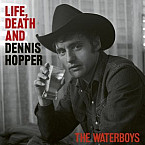
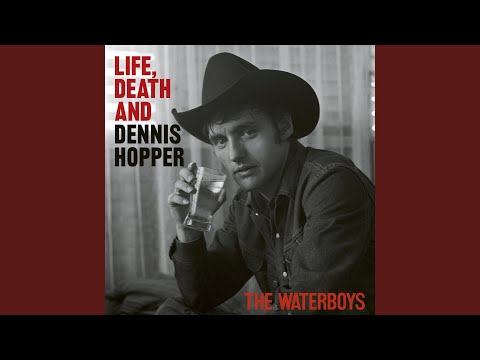
Album: Life, Death and Dennis Hopper (2025)
Play Video

Songfacts®:

  • Life, Death and Dennis Hopper is a concept album about the American actor Dennis Hopper. Written and produced by Waterboys frontman Mike Scott along with bandmates James Hallawell and Brother Paul Brown, the album follows the entire arc of Hopper's gloriously chaotic life, from his boyhood in Kansas to his days on the outer limits of Hollywood, through the cocaine blizzards of the '70s, and back again to something like redemption.
  • Scott told Uncut magazine the inspiration for the project dates back to the mid-2010s. "I was walking past the Royal Academy in Mayfair and saw a poster: The Lost Album by Dennis Hopper," he recalled. "It sounded like a bootleg record, except it wasn't, it was an exhibition of Hopper's photography from 1961 to 1967."

    The photos weren't just good, Scott said - they were revelatory. "They'd captured a moment in history, and a moment in human consciousness, really. That marvelous time in the '60s when things were opening up and people were looking at new ways of being human."

    So Scott dove headfirst into Tom Folsom's biography Hopper, caught up on the actor's more obscure film work, and slowly assembled what would become a sprawling musical portrait of a man who somehow survived himself.
  • This wasn't Scott's first time diving into a conceptual deep end. As he told Uncut, "I'd done it with the Yeats record, so it wasn't such a big deal." (Referring to An Appointment with Mr. Yeats, the Waterboys' 2011 album setting W.B. Yeats' poetry to music.)
  • "Ten Years Gone" is a squalling, disorienting song about Hopper's lost decade, a time when he was lost in a maze of his own making. The track includes a brooding, spoken-word monologue by Bruce Springsteen, who channels the ghost of Hopper over dirty guitars and looping rhythms.

    "Dennis was out of it at that time," Scott told The Sun. "So I wanted something hard, dirty and hypnotic."

    When searching for a voice with sufficient dramatic weight, he remembered the spoken outros Springsteen used to deliver on bootlegs - those gripping monologues where Bruce would tell you about Mary, cars, and redemption while the band kept playing like the world might end.
  • On hiring the services of The Boss, Scott recalled: "I met Bruce after a Waterboys show in 2015. Didn't know he was there, probably just as well. He was really kind. So I asked my manager, who knows his manager, and Bruce said yes."

    Springsteen recorded three takes in his home studio and let Scott pick his favorite. "How wonderful is that?" Scott marveled. (Answer: very.)

Comments

Be the first to comment...

Editor's Picks

Reverend Horton Heat

Reverend Horton HeatSongwriter Interviews

The Reverend rants on psychobilly and the egghead academics he bashes in one of his more popular songs.
Maxi Priest

Maxi PriestSongwriter Interviews

The British reggae legend tells the story of his #1 hit "Close To You," talks about his groundbreaking Shabba Ranks collaboration "Housecall," and discusses his latest project with Robin Trower.

David Paich of Toto

David Paich of TotoSongwriter Interviews

Toto's keyboard player explains the true meaning of "Africa" and talks about working on the Thriller album.
Glen Phillips of Toad the Wet Sprocket

Glen Phillips of Toad the Wet SprocketSongwriter Interviews

The "All I Want" singer went through a long depression, playing some shows when he didn't want to be alive.
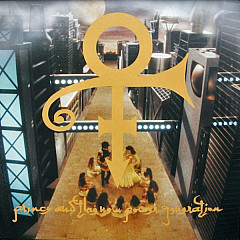
Evolution Of The Prince Symbol

Evolution Of The Prince SymbolSong Writing

The evolution of the symbol that was Prince's name from 1993-2000.
Dean Pitchford

Dean PitchfordSongwriter Interviews

Dean wrote the screenplay and lyrics to all the songs in Footloose. His other hits include "Fame" and "All The Man That I Need."