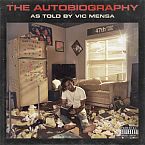
We Could Be Free
by Vic Mensa (featuring Ty Dolla $ign)

Album: The Autobiography (2017)
Play Video

Songfacts®:

  • The 13th track on Vic Mensa's debut album, The Autobiography, this finds the Chicago rapper explaining that his people can achieve a lot more united than divided.

    That we could be free
    If we only knew we were slaves to the pains of each other


    Mensa explained the song's meaning to Billboard:

    "The vision is religion of power. That's how you rule and conquer to separate your subjects, and I think that particularly at this point in time, we are at such a moment when the differences between people of different colors, ethnic backgrounds, theological sects are being highlighted more than ever. It's crazy because all you have to do is leave outside of a major city in most places in the nation for the entire outlook on life to do a full 180.

    I live in Chicago, and you could spend your whole life in Chicago not interacting with anyone conservative, any Trump supporters. In the city of Chicago, you could spend your whole life in [that bubble] of progressive, urban people. And then you could go an hour outside of Chicago to Kankakee, Illinois, and you got the KKK. You know what I'm sayin'? It's like the boundaries that separate us are so thin, and I feel that this separation is really just a tool of the powers that be to benefit from all of our pains. So, the violence in Chicago -- somebody still makes money every time a gun is sold, as with mass shootings in suburbia and rural white America. The NRA and the corporations that make glocks and ammunition, they all experience huge hikes in their profits every time there's one of these murders. Yet, we're convinced by our different media of choice - media and propagandas of choice - that these guns are necessary and they're our right and they in fact keep us safe when they really kill us.

    I guess that was kind of a long-winded way to say that I just think that I want to use music to unite people."
  • Vic Mensa debuted the song in September 2016 during his opening act in Paris for Justin Bieber's Purpose World Tour.
  • Ty Dolla Sign joins Mensa at the end of the song and also croons the outro.
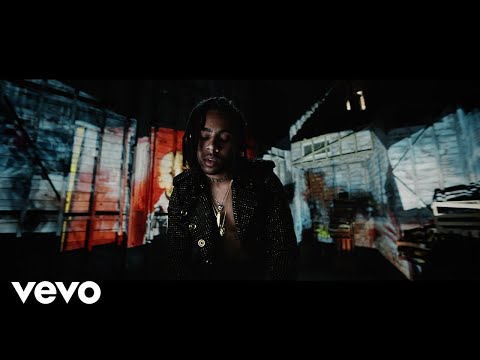
  • The song's lyric video contains graphic footage of ongoing conflicts within America and Palestine.

    "I wanted to make a video to show solidarity with people struggling against oppression all over the world," Mensa said. "I took scenes from the military occupation of a village I visited in Palestine and juxtaposed them with racial violence in America to show how similar our struggles are and imagine a world without division."
  • The song's music video is intended to take a look at the world without fear or prejudice. "Globally there's a lot of division based on a lot of fear," Mensa told Beats 1's Zane Lowe. "I wanted to present an alternative that was without fear and something that was more so based in humanity."

Comments

Be the first to comment...

Editor's Picks

Adam Schlesinger of Fountains of Wayne

Adam Schlesinger of Fountains of WayneSongwriter Interviews

The guy who brought us "Stacy's Mom" also wrote the Jane Lynch Emmy song and Stephen Colbert's Christmas songs.

Art Alexakis of Everclear

Art Alexakis of EverclearSongwriter Interviews

The lead singer of Everclear, Art is also their primary songwriter.

Bill Medley of The Righteous Brothers

Bill Medley of The Righteous BrothersSongwriter Interviews

Medley looks back on "Unchained Melody" and "You've Lost That Lovin' Feelin'" - his huge hits from the '60s that were later revived in movies.

Dave Mason

Dave MasonSongwriter Interviews

Dave reveals the inspiration for "Feelin' Alright" and explains how the first song he ever wrote became the biggest hit for his band Traffic.

Michael W. Smith

Michael W. SmithSongwriter Interviews

Smith breaks down some of his worship tracks as well as his mainstream hits, including "I Will Be Here For You" and "A Place In This World."

Matt Sorum

Matt SorumSongwriter Interviews

When he joined Guns N' Roses in 1990, Matt helped them craft an orchestral sound; his mezzo fortes and pianissimos are all over "November Rain."