MTV's role in breaking Men at Work
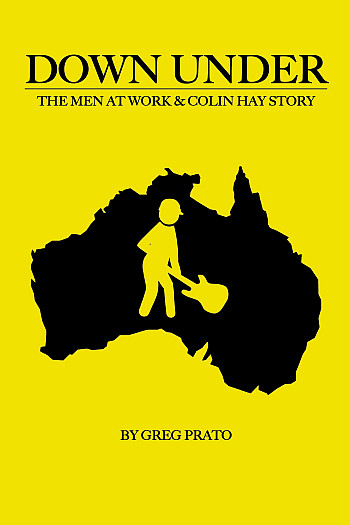
Before streaming, social media, and even widespread cable television, breaking a new band in America was an uphill battle. Then MTV arrived, changing the music business almost overnight. Few groups benefited more from that shift than Men at Work, whose low-budget but personality-filled videos helped transform an Australian success story into an international phenomenon. The following excerpt from my 2026 book, Down Under: The Men at Work & Colin Hay Story explores how MTV became one of the band's greatest allies.
 "1982, when we got Cable," is when Songfacts' Carl Wiser was first exposed to MTV, in Branford, Connecticut. "There were 36 channels controlled from a wired remote control with 12 buttons and a three-way switch. It was a big upgrade from the four stations we could pull from the antenna. And you had to get up to change the channel!"
"In a world without MTV, Men at Work would have done really well in their native Australia, but would have been far less popular in America. Consider the Buggles, a British group. 'Video Killed The Radio Star' peaked in America at #40 in 1979, pre-MTV."
"You needed radio back then to break a pop song. Established artists got a chance, but new artists needed a marketing push, often augmented by live shows. So, unless Men at Work came all the way to America and did the dirty work of 'glad-handing' program directors at radio stations, it would have been very hard for them to get airplay. MTV changed that game."
AllMusic's Stephen Thomas Erlewine also recalled his initial impressions of MTV, and how important it quickly proved to helping break Men at Work in the USA. "I think that Hall & Oates are also on a similar level to Men at Work in the early '80s – bands that wound up really able to exploit MTV through force of personality, too. They were two acts that weren't afraid to have fun in the videos."
"But I also think that's probably because a lot of people weren't taking videos especially seriously at the time. You look at what happens even just four or five years later when the budgets increased and things get overblown. Part of the charm of early MTV/early video was that people were working with shoestring budgets. So, the personalities come through. There was still a lot of opportunities for things to break through. I almost think that it was sort of breaking up a little bit because there was a need for newer acts – livelier acts – that maybe had a little bit of a different personality."
"It was a case really of finding a good location and coming up with a couple of ideas that would be interesting. Primarily, Greg Ham and myself came up with what we would shoot, in collaboration with John and Tony. We never went to the cops and got permission or anything like that. We just went in, shot, and got out of there as quickly as we could, if we weren't supposed to be somewhere."
And what exactly was spotted in the "Down Under" clip? Be prepared for perhaps the two longest run-on sentences in modern literary history. It starts with Speiser banging out the song's drum part on beer bottles, before we see the band (who resemble longhaired hippies!) "traveling in a fried out Kombi," Hay enjoying some Vitos E (what was it with him and breakfast cereal in videos?) with "a strange lady who made me nervous" in a dessert by the water, the band struggling to get up a sandy hill upon being instructed to "take cover," and Ham serenading a stuffed Koala Bear toy while seated in a tree.
Also, meeting a man who was "six foot four and full of muscles" (who was merely Speiser donning a wig) who offers up a vegemite sandwich and sprays the lads with beer, a classic shot of the band digging, dancing, and/or juggling in the desert (and Strykert bravely sporting leather trousers in the heat), nodding off in a "den in Bombay" (how a reenactment of an opium den made it past MTV's self-righteous censor police remains a mystery), a final scene of the band dressed all in white (with Ham bringing along his stuffed Koala and Strykert on a walkie talkie) and what appears to be the band's road crew dressed all in black and carrying a cumbersome road case.
In the end, Men at Work's early success in America wasn't just about catchy songwriting or radio airplay - it was about timing. MTV arrived just as the band did, and together they created a perfect feedback loop of sound and image. In that brief window when music television was still defining itself, Men at Work's humor, charm, and low-budget creativity fit right in—and helped turn them into global stars.
July 6, 2026
Down Under: The Men at Work & Colin Hay Story is available for purchase now.
Further Reading:
Interview with Colin Hay
Fact or Fiction: The Early Days of MTV
Interview with Huey Lewis
Interview with Dennis DeYoung
Interview with Fee Waybill of The Tubes
More Song Writing