If you follow the Pacific Northwest music scene for any appreciable amount of time, you're going to hear about Pickwick. The band is so highly regarded around these parts that it's easy to forget (and a little hard to believe) while living here that they aren't yet a national fixture.
The band's 2011 CD-EP, Myths, was a top-seller in Seattle. This is no small feat considering there's a horde of other indie bands competing in that space. Their 2013 album Can't Talk Medicine added to Pickwick's mystique. The band gets regular attention on KEXP-FM, a popular indie/alternative Seattle station. On top of that, the band's performances are basically guaranteed to sell out whatever venue they play. Despite all of that, the band is looking for their big commercial breakthrough.
Maybe LoveJoys will be it. The band worked on the 2017 album with producer Erik Blood, a Seattle-area legend himself. According to Jonathan Zwickel of CityArts, Blood's pitch was simple: "I told [Pickwick] early on that making a record with me, they'll either love it and it'll be amazing or I'll alienate them and their fans. I was like, I don't give a shit about your fans, so if you're down to get on the train, let's go."
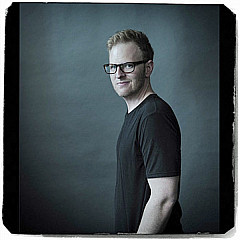
We're definitely on board. Here's our interview with Pickwick vocalist and songwriter Galen Disston.
Galen Disston: It explores my greatest subconscious fears.
The "greatest subconscious fears" at the heart of LoveJoys include Disston's fear of losing his wife.
Songfacts: Did you change anything in the way you wrote and recorded LoveJoys from the way you did Can't Talk Medicine?Galen: Yes. Can't Talk Medicine was written from a bird's-eye view/abstract collage/third-person narrative and Lovejoys was inspired lyrically by mumbled and sung subconscious phrases that came out of the writing process. We were generally more open to letting the song lead us while writing this record.
Songfacts: It's interesting that Pickwick found inspiration from "The Ostrich," an un-danceable dance song Lou Reed wrote for Pickwick Records. What is it about that scenario that intrigued you enough to name your band after it?
Galen: It's a reminder not to take ourselves too seriously. A dance song that inherently functioned like a practical joke inspires what we do; we make danceable/spacey/funky music that is filled with dread, despair and fear.
Songfacts: What is that you find so important about keeping mystery in your art?
 Galen: It just gives us a little sacred place. Songs that function as destinations for our escapism. And if anyone else can find their way through our songs, we don't want to dictate the path.
 Songfacts: Why do you hide the meanings of your songs from your fans?
Galen: I'm generally pretty open actually. But your interpretation is most likely more interesting than my intent.
Songfacts: Ever see Todd Haynes' I'm Not There? If so, what'd you think of it? Weird question, maybe, but I feel like the theme and nature of the film relate to some of the things I've seen you saying about your music.
Galen: I thought Kate Winslet was amazing. Don't Look Back is one of my favorite films, so to see that period of Dylan's career made grotesque was really interesting. I also loved Jim James' version of "Goin' to Acapulco."
Songfacts: I've heard that you started working on a new album some time ago but ended up scrapping the whole thing and starting over. If that's true, can you expand on that story a bit?
Galen: We were disciplined about songwriting but our methods strangled the music. It wasn't until we eased up that the songs came more freely again. And they tended to be more interesting.
Galen: We barged in.
Songfacts: In a prior interview, you stated that you transitioned away from folk in order to be more authentic. How was folk inauthentic for you?
Galen: I'm no Ryan Adams/Jeff Tweedy/Will Oldham. I'm something else.
Songfacts: Are there any songs you liked whose "real" meaning ended up being more interesting to you than the one you imagined?
Galen: Neil Young's "Ohio," Otis Redding's "Respect," Grateful Dead's "The Other One."
Songfacts: Vice versa, are there any songs that seemed diminished to you after you discovered their "real" meaning?
Galen: Every Bob Dylan song. Except maybe "Positively 4th Street."
Songfacts: Robert Zimmerman was able to bust onto the Greenwich Village scene with a completely fabricated history and identity, and the resulting Bob Dylan persona was instrumental in launching his career. Do you think he would have become the icon he is if they had the internet in his day and were able to find all his high school social media accounts and blow his cover?
Galen: Maybe, but I think most people could sniff out his Woody Guthrie impersonation game. It was charming. But alternatively, I don't think we'd know who he is today if Joan Baez hadn't taken a liking to him. She was on the cover of Time magazine before he showed up. The same publication he'd later shit on in "Don't Look Back." We have Time magazine to thank for Bob Dylan.
Songfacts: If you lived in a different time and could pull it off, do you think you'd go the Dylan route and invent a full-blown alter ego?
Galen: I think I've personally had a pretty developed sense of self from an early age. If I didn't have that confidence I might have tried on some alter egos. Or if I was a sociopath.
Songfacts: Artistically, what were you hoping to achieve with LoveJoys?
Galen: Honestly, just to enjoy the process of making music again. We're chasing that bliss now planning to record the next record.
August 10, 2017
Tour dates and more at pickwickmusic.com
Photo (2): Kim Suwak
More Song Writing