Brother, Can You Spare A Dime

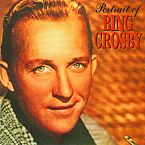
Album: Portrait Of Bing Crosby (1932)
Play Video

Songfacts®:

  • This may have been the first ever protest song - it became the anthem of the Great Depression in the United States. It tells the story of a worker who has helped build the country with his labor, but finds himself out of work in the tough times.
  • This was written by Jay Gorney, the father of Saturday Night Fever actress Karen Lynn Gorney.
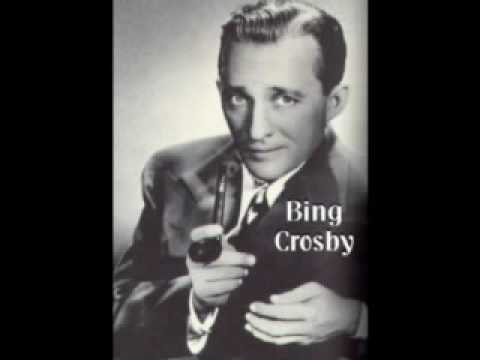
  • This song was written for New Americana, a Broadway show that flopped. It closed just before Bing Crosby recorded his version.
  • This is featured in Brother Can You Spare a Dime?, a 1975 documentary about the Great Depression, written and directed by Philippe Mora.
  • Rudy Vallee added to this song's popularity by releasing his version the same year as Crosby's.
  • E.Y. "Yip" Harburg, who would go on to write the iconic "Over The Rainbow" with Harold Arlen, wrote the lyrics for this. He said of the song's narrator: "He's bewildered. Here is a man who had built his faith and hope in this country. Then came the crash. Now he can't accept the fact that the bubble has burst. He still believes. He still has faith. He just doesn't understand what could have happened to make everything go so wrong."
  • By request of the New York Times, Harburg updated the lyrics for the '70s recession:

    Once we had a Roosevelt
    Praise the Lord!
    Life had meaning and hope.
    Now we're stuck with Nixon, Agnew, Ford,
    Brother, can you spare a rope?
  • George Michael recorded this for his 1999 album, Songs from the Last Century.
  • At the time, some politicians condemned this song, labeling it anti-capitalist propaganda and trying to have it banned from radio play.

Comments: 5

  • Anthony from Guadalupe, AzThe phrase,"Brother, can you spare a dime" is in the hit song by the O'Jays ("For The Love Of Money"... another song that should be on this list about money problems).
  • Randy from Houghton Lake, MiMandy Patinkin came out with Tony Randall doing a bit about a guy that had to practice a song and sang this on David Letterman back in the 80s or early 90s. The audience was totally blown away so was I.
  • Heather from Los Angeles, CaGreat Steve, congrats. Got nothing to do with the song, but congrats. He's my uncle too.
  • Old Pierce from Livonia, MiAlso, this is by no means the first ever protest song. They were writing them at least as far back as the 1700's (historical records showing) and have more than likely been for thousands of years. Can you imagine musicians under Roman slavery not writing protest songs to sing amongst themselves? Also consider David's Psalms. Are not some of them protest songs?
  • Steve from Chiang Mai, ThailandThe name is Jay Gorney. And he is father of Karen Gorney. And Jay Gorney is also famous for discovering Shirley Temple. And he is my UNCLE!
see more comments

Editor's Picks

Michael Glabicki of Rusted Root

Michael Glabicki of Rusted RootSongwriter Interviews

Michael tells the story of "Send Me On My Way," and explains why some of the words in the song don't have a literal meaning.

Colbie Caillat

Colbie CaillatSongwriter Interviews

Since emerging from MySpace with her hit "Bubbly," Colbie has become a top songwriter, even crafting a hit with Taylor Swift.

Eric Burdon

Eric BurdonSongwriter Interviews

The renown rock singer talks about "The House of the Rising Sun" and "Don't Let Me Be Misunderstood."

Michael Schenker

Michael SchenkerSongwriter Interviews

The Scorpions and UFO guitarist is also a very prolific songwriter - he explains how he writes with his various groups, and why he was so keen to get out of Germany and into England.

John Waite

John WaiteSongwriter Interviews

"Missing You" was a spontaneous outpouring of emotion triggered by a phone call. John tells that story and explains what MTV meant to his career.

Barney Hoskyns Explores The Forgotten History Of Woodstock, New York

Barney Hoskyns Explores The Forgotten History Of Woodstock, New YorkSong Writing

Our chat with Barney Hoskyns, who covers the wild years of Woodstock - the town, not the festival - in his book Small Town Talk.