I'll Be Home For Christmas

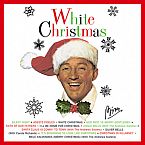
Album: White Christmas (1943)
Charted: 3
Play Video

Songfacts®:

  • Bing Crosby was the King Of Christmas in 1943, a year when many Americans were overseas fighting in World War II. A year earlier, he released "White Christmas," a song about being somewhere sunny away from home and dreaming of a Christmas with snow. "I'll Be Home For Christmas" has a similar mood but ends on a low note: He'll be home for Christmas, but only in his dreams. This was the unfortunate reality for many of the troops fighting the war.
  • "I'll Be Home For Christmas" was a very popular Christmas song in 1943, reaching #3 on Billboard's Best Sellers chart, but it endured to become a holiday classic, returning to playlists every year. Crosby's version even popped back into the charts at #102 in 1960 (by this time, Billboard had the Hot 100), but it was mostly cover versions that kept the song alive in later years, particularly a 2007 version by Josh Groban that was part of his #1 Christmas album Noel. Others to cover the song include Elvis Presley, Johnny Mathis, the Carpenters and Kelly Clarkson.
  • Crosby recorded the song with the John Scott Trotter Orchestra, the same orchestra that played on "White Christmas."
  • Walter Kent and James "Kim" Gannon were the songwriters on this one. It's by far the most popular and enduring song either of them wrote.
  • Many of the crooners who had big Christmas hits before the rock era were also actors, notably Gene Autry and Fred Astaire. Bing Crosby had two very popular movies out around this time: Road To Morocco and Holiday Inn (a Christmas movie where he sings "White Christmas").
  • The song made the news in 1965 when the crew of the Gemini 7 spacecraft completed what was then a record for the longest US space flight. Astronauts Frank Borman and James Lovell requested the song as they made their return to earth.
  • "I'll Be Home For Christmas" was the first big holiday hit to put "mistletoe" in the lyric... it wouldn't be the last. The tradition of kissing under the mistletoe is a trope that showed up a lot in earlier times but didn't happen very often in real life. We're guessing you've never seen it, but if you have, mistletoe is usually bunched with holly and hung for decoration.

    Christmas songs for adults can be challenging for songwriters because most of the imagery is for kids: Santa, snowmen, opening presents. What do grown-ups do for Christmas? Put presents under the tree, hang lights... after that you get into more obscure activities like roasting chestnuts and going on a sleigh ride, activities that would later make for the Christmas classics "Sleigh Ride" and "The Christmas Song."

    The writers of "I'll Be Home For Christmas" was can imagine struggling to complete the line "please have snow" and coming up empty:

    "So we can grow." Nah.
    "And glass to blow." Does anybody blow glass at Christmas?
    "And a murder of crows." Now you're murdering me.

    Finally they hit on "mistletoe," which isn't very common but certainly rhymes. And it brings forth the idea that this soldier will get a big kiss if he makes it home.

    After this song got away with it, there was no stopping mistletoe when it came to Christmas lyrics. Listen for it in "Merry Christmas Baby," "Rockin' Around The Christmas Tree," and even "Christmas Rappin'," the first holiday rap song.

Comments

Be the first to comment...

Editor's Picks

The Girl in That Song

The Girl in That SongFact or Fiction

Billie Jean, Delilah, Sara, Laura and Sharona - do you know who the girls in the songs really are?

Jesus In Pop Hits: The Gospel Songs That Went Mainstream

Jesus In Pop Hits: The Gospel Songs That Went MainstreamSong Writing

These overtly religious songs crossed over to the pop charts, despite resistance from fans, and in many cases, churches.

Annie Haslam of Renaissance

Annie Haslam of RenaissanceSongwriter Interviews

The 5-octave voice of the classical rock band Renaissance, Annie is big on creative expression. In this talk, she covers Roy Wood, the history of the band, and where all the money went in the '70s.

Michael Schenker

Michael SchenkerSongwriter Interviews

The Scorpions and UFO guitarist is also a very prolific songwriter - he explains how he writes with his various groups, and why he was so keen to get out of Germany and into England.

Martyn Ware of Heaven 17

Martyn Ware of Heaven 17Songwriter Interviews

Martyn talks about producing Tina Turner, some Heaven 17 hits, and his work with the British Electric Foundation.

Gary Lewis

Gary LewisSongwriter Interviews

Gary Lewis and the Playboys had seven Top 10 hits despite competition from The Beatles. Gary talks about the hits, his famous father, and getting drafted.