The Man Who Broke The Bank At Monte Carlo

Album: The Golden Years of Music Hall (1892)
Play Video

Songfacts®:

  • There were two men who famously broke the bank at Monte Carlo in the late 19th Century, both Englishmen: one was an engineer, the other was described by an MP as the greatest swindler living. This song was inspired by the second of them.

    While Joseph Jagger used his engineering nous to exploit the very slight imperfections of a roulette wheel in order to overcome the house percentage and show a modest profit, Charles Wells (1841-1926) was a confidence trickster who defrauded gullible investors in England and used their money to win considerable sums playing roulette at the Monte Carlo Casino, Monaco.

    Although fraud was naturally suspected, security was paramount even in those days; Wells played a very risky system staking on even chances, and got lucky. On his second visit, he also got lucky backing the number 5. Luck does not last forever though, and although he broke the bank several times on his third visit, he ended up giving it all back. In any case, the meaning of the phrase "to break the bank" is not quite as impressive as it sounds; it means simply to win every chip on the table.

    Wells' first two (successful) visits to the casino were in 1891, by the following year, his exploits had become the stuff of legend, possibly assisted by clever publicity from the casino to draw in the punters (and mugs) in the expectation that they might have the same luck. In April, Fred Gilbert wrote "The Man Who Broke The Bank At Monte Carlo", which was popularized by the music hall star Charles Coborn, and boosted the Wells legend even more. However, his aforementioned third visit, in the winter of 1892, saw him not just cleaned out but arrested at Le Havre and extradited to stand trial at the Central Criminal Court. Convicted of fraud, he was sentenced to eight years imprisonment.

    Though leopards do sometimes change their spots, this one didn't; Wells served another sentence in his native England, then a third in France before dying in poverty in 1926.
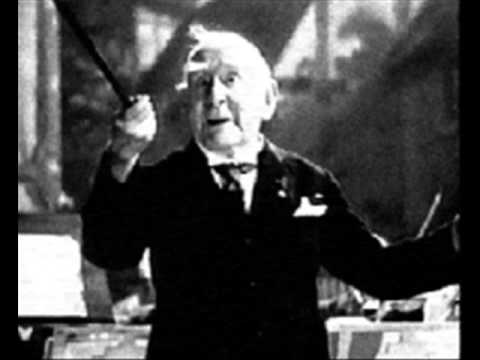
  • If ultimately Wells paid the price for his exploits, Coborn reaped a nice reward from them; "The Man Who Broke The Bank At Monte Carlo" became his biggest hit in the days before Billboard and sundry record charts. He even called his autobiography "The Man Who Broke The Bank" Memories Of The Stage & Music Hall.
  • The song, which was published by Francis, Day & Hunter, was recorded by Coborn many times; the 1979 Brian Rust discography British Music Hall On Record lists recordings June 1904 and 1905 (with one chorus in French) on Columbia and Edison Bell Winner respectively; another in 1913; and another November 1924. There is also extant, footage of Coborn performing the song.
  • The Tin Pan Alley Song Encyclopedia makes a curious claim about this song; referring to it as "The Man That Broke The Bank At Monte Carlo" author Thomas Hischak says it was inspired by a famous con man named Arthur De Courcy Bower, who worked as a shill for the casinos, adding "The dapper gent would walk the streets of London and set tongues wagging about his supposed wealth."

    It remains to be seen where he obtained this gem, but "The Man Who Broke The Bank At Monte Carlo" was most definitely inspired by the English con man Charles Wells. >>>
    Suggestion credit:
    Alexander Baron - London, England, for all above

Comments: 1

  • Robin from UkThe mention of an "Arthur De Courcey" is interesting. A man who called himself Captain Arthur de Courcy-Bower broke the bank at Monte Carlo five times in 1911, winning the maximum pay-out five times in a row. Several reference books state that he inspired Fred Gilbert's song, but as 'The Man who Broke the Bank at Monte Carlo' was published in 1891 and Bower did not attain Monte Carlo fame until twenty years later, these claims cannot be true. It is a fact, however, that Bower was a convicted fraudster who also shared many other characteristics with Charles Wells. (A more detailed explanation is in my book, 'The Man who Broke the Bank at Monte Carlo, Charles Deville Wells, gambler and fraudster extraordinaire.' Robin Quinn, author)
see more comments

Editor's Picks

Gavin Rossdale On Lyric Inspirations and Bush's Album The Kingdom

Gavin Rossdale On Lyric Inspirations and Bush's Album The KingdomSongwriter Interviews

The Bush frontman on where he finds inspiration for lyrics, if his "machine head" is a guitar tuner, and the stories behind songs from the album The Kingdom.

Loreena McKennitt

Loreena McKennittSongwriter Interviews

The Celtic music maker Loreena McKennitt on finding musical inspiration, the "New Age" label, and working on the movie Tinker Bell.
Richard Butler of The Psychedelic Furs

Richard Butler of The Psychedelic FursSongwriter Interviews

Psychedelic Furs lead singer Richard Butler talks about their first album since 1991 and explains what's really going on in "Pretty In Pink."
JJ Burnel of The Stranglers

JJ Burnel of The StranglersSongwriter Interviews

JJ talks about The Stranglers' signature sound - keyboard and bass - which isn't your typical strain of punk rock.

Mike Love of The Beach Boys

Mike Love of The Beach BoysSongwriter Interviews

The lead singer/lyricist of The Beach Boys talks about coming up with the words for "Good Vibrations," "Fun, Fun, Fun," "Kokomo" and other classic songs.

Kristian Bush of Sugarland

Kristian Bush of SugarlandSongwriter Interviews

Kristian talks songwriting technique, like how the chorus should redefine the story, and how to write a song backwards.