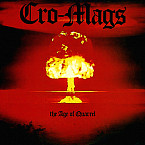

We Gotta Know

Album: The Age Of Quarrel (1986)
Play Video

Songfacts®:

  • "We Gotta Know" is one of the most popular songs from the hardcore heroes Cro-Mags, who emerged from the Lower East Side of New York City along with bands like the Misfits and Sick Of It All. It captures the outsider angst many young people were feeling at the time, with lead singer John Joseph raging against the liars and cheaters trying to keep him in his place. But he's not going down without a fight:

    Gotta break these shackles gotta break these chains
    The only way we'll do it is if we use our brains
  • The song was written by John Joseph along with guitarist Parris Mayhew and bass player Harley Flanagan. It's part of their debut album, The Age Of Quarrel.

    Mayhew told Songfacts the story behind the song: "It was the last song written for Age Of Quarrel, it was piecemealed together out a bunch of riffs that were floating around for a while that the bass player and I wrote, and it was finally assembled just in time for Age Of Quarrel. The now-notorious intro came about like so many Mags songs, mimicking another song, and that song was 'Malfunction.' I was playing the chorus riff and tuning my guitar and ended up letting the G F# ring out while I turned the tuning knobs. I did that a few times and everyone began mimicking that mistake and, voila, the intro was born... and I was just tuning. When they all joined in I said, 'That's just 'Malfunction' played wrong!' I got a few shoulder shrugs, then it became another song."
  • The music video for "We Gotta Know" made an impact on many levels, notably because it was the first to show slam dancing in its natural environment - the gnarly clubs where bands like Cro-Mags played. Band member Parris Mayhew made it by shooting footage of their shows from behind the scenes on a Bolex film camera. "Being on tour was an extraordinary experience and I just wanted to document it the way people do it now with their iPhones," he said in a Songfacts interview. "I shot everything that I thought was interesting, and fortunately, I was in an interesting band."

    Shooting the footage was only part of the challenge - editing it into a music video was considerably harder. Getting the film transferred to video was the first step. That's usually an expensive process done at a specialized facility, but Mayhew is resourceful (you king of had to be when you were in a hardcore band) and got some help from his brother, who was doing television production in Nashville and got him into a small facility. They did the transfer by projecting the film on a wall and recording it with a VHS camcorder. Then they used a basic edit room to cut the video together.

    The result was very crude but captured the spirit of the song, and the associated scene, perfectly. Only the brave souls who ventured out to these concerts got to see what went down, but now all that mayhem was on video, and it was compelling.

    But the fight wasn't over. Mayhew still had to convince their label, Profile Records, to release the video. He brought it to his rep at the label, who took the tape and left on a trip and left for a convention, where he played the tape on a VCR from one of the presenters.

    "He said that crowd stayed in front of that monitor all weekend, the entire length of the convention, because people had never seen slam-dancing," Mayhew said. "They'd never seen a behind-the-scenes music video, you know, in the tour bus, backstage. That wasn't the thing at the time."

    Profile released the video and MTV played it on their specialty shows 120 Minutes and Headbangers Ball. It did particularly well on Headbangers Ball and set the table for many metal videos to come. It also turned Mayhew into a video director. Anthrax had him make their video for "Belly Of The Beast," and then Onyx had him do "Slam." He went on to make videos for Type O Negative, Biohazard, and Run-DMC.

Comments

Be the first to comment...

Editor's Picks

Corey Hart

Corey HartSongwriter Interviews

The Canadian superstar talks about his sudden rise to fame, and tells the stories behind his hits "Sunglasses At Night," "Boy In The Box" and "Never Surrender."

In The Cards

In The CardsSong Writing

Songwriters have used cards and card games to make sense of heartache, togetherness, and even Gonorrhea.

Grunge Bands Quiz

Grunge Bands QuizMusic Quiz

If the name Citizen Dick means anything to you, there's a chance you'll get some of these right.

Greg Lake of Emerson, Lake & Palmer

Greg Lake of Emerson, Lake & PalmerSongwriter Interviews

Greg talks about writing songs of "universal truth" for King Crimson and ELP, and tells us about his most memorable stage moment (it involves fireworks).

Mike Rutherford (Genesis, Mike + The Mechanics)

Mike Rutherford (Genesis, Mike + The Mechanics)Songwriter Interviews

Mike Rutherford talks about the "Silent Running" storyline and "Land Of Confusion" in the age of Trump.

Rock Revenge Songs

Rock Revenge SongsMusic Quiz

John Lennon, Paul Simon and Lynyrd Skynyrd are some of the artists who have written revenge songs. Do you know who they wrote them about?