Beautiful Sunday

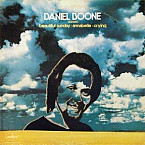
Album: Beautiful Sunday (1972)
Charted: 21 15
Play Video

Songfacts®:

  • Daniel Boone started his musical career under his birth name of Peter Green in the late 1950s as vocalist and guitarist for a Birmingham band called the Beachcombers.

    In 1963, the London-based rock and roll vocalist Tommy Bruce invited the Beachcombers to be his backing band. He'd had a #3 hit in 1960 as Tommy Bruce and the Bruisers with a cover of Fats Waller's "Ain't Misbehavin'." The original "Bruisers" were EMI session musicians who backed him on recordings, but Bruce wanted a permanent backing group.

    The Beachcombers agreed and moved down to London. Now renamed "The Bruisers" and signed to EMI, the band released a single called "Blue Girl" with Green (now renamed Lee Stirling) on lead vocals. It entered the UK charts on August 8, 1963, eventually reaching #31.

    This was The Bruisers' only UK chart hit before they broke up in 1967. By now, Green had started writing for other artists. His successful songs included "I Think of You" and "Don't Turn Around" for The Merseybeats and "I Belong" for Kathy Kirby.

    In 1971, Green signed to the Penny Farthing record label as a singer-songwriter. He decided on another name change and became Daniel Boone after the popular American folk hero.

    Boone's debut single for the label was a Geoff Stephens and Peter Callande-penned ballad called "Daddy Don't You Walk So Fast." It climbed to #17 in the UK chart and became a big hit in the US when Wayne Newton covered it.

    For his next single, Boone teamed up with Rod McQueen, another songwriter working for Penny Farthing. The resulting song, "Mamma," made impact on the charts. However, their next effort, "Beautiful Sunday," changed their fortunes.
  • Released in February 1972, Boone sings of a perfect Sunday spent with the girl he loves. "Beautiful Sunday" topped the singles charts in various countries, including France, Germany, New Zealand and South Africa. In Germany, it held the #1 position from May to late June 1972.
  • Three years later, the Japanese TBS morning show Ohayo 720 picked up "Beautiful Sunday" as its theme song. After Penny Farthing rereleased the recording, it reached #1 on March 22, 1976, and spent four months on the summit. "Beautiful Sunday" remains the best-selling single by a foreign artist in Japan.
  • Panny Farthing label owner Larry Page produced the track. Page enjoyed success in the 1960s as producer/manager for The Kinks and The Troggs.
  • Boone released versions of "Beautiful Sunday" and the follow-up, "Annabelle", in German.
  • The Scots commonly use "Beautiful Sunday" for the "Slosh" dance, which is popular in at wedding receptions.
  • Boone had no more chart entries in the UK and US, but continued his career as a songwriter. In 1992, he co-wrote two songs for The Troggs' Athens Andover album.

Comments

Be the first to comment...

Editor's Picks

David Bowie Lyrics Quiz

David Bowie Lyrics QuizMusic Quiz

How well do you know your David Bowie lyrics? Take this quiz to find out.

Elton John

Elton JohnFact or Fiction

Does he have beef with Gaga? Is he Sean Lennon's godfather? See if you can tell fact from fiction in the Elton John edition.

Chris Robinson of The Black Crowes

Chris Robinson of The Black CrowesSongwriter Interviews

"Great songwriters don't necessarily have hit songs," says Chris. He's written a bunch, but his fans are more interested in the intricate jams.

Country Song Titles

Country Song TitlesFact or Fiction

Country songs with titles so bizarre they can't possibly be real... or can they?

Facebook, Bromance and Email - The First Songs To Use New Words

Facebook, Bromance and Email - The First Songs To Use New WordsSong Writing

Where words like "email," "thirsty," "Twitter" and "gangsta" first showed up in songs, and which songs popularized them.

Chris Frantz of Talking Heads

Chris Frantz of Talking HeadsSongwriter Interviews

Talking Heads drummer Chris Frantz on where the term "new wave" originated, the story of "Naive Melody," and why they never recorded another cover song after "Take Me To The River."