Sunday

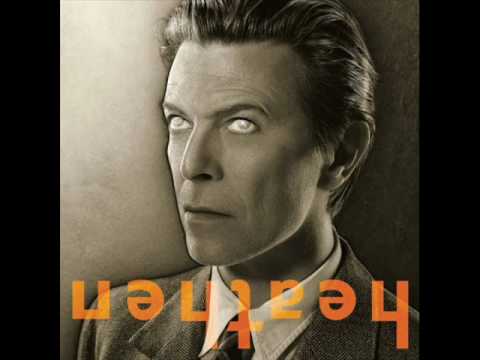
Album: Heathen (2002)
Play Video

Songfacts®:

  • This is the opening track to the 2002 album Heathen, which marked the return of producer Tony Visconti, who'd co-produced many of Bowie's classic albums in the 1970s. Visconti recalled to Uncut magazine June 2008 about recording this track and the album: "'Sunday' is absolutely stunning. It took a long time to make and every time we added a layer of sound from either us or a visiting musician, the song grew to be more and more of an emotional experience. I think Heathen was a very spiritual album. David wrote some great lyrics, wore his heart on his sleeve for that album. This is all my assumption. He rarely "explains" his lyrics to me. But I have to make something of them so I can help to create his musical settings. Sometimes he would specifically tell me his meaning, to keep the recording focussed."
  • David Bowie's work often circled big, unanswerable questions; faith, doubt, identity, and what's left when certainty disappears. On "Sunday," he returns to that territory with a look at the spiritually drained modern age.
  • Bowie had explored religion before, pleading for belief on "Word On A Wing," flirting with mystical obsession on "Station to Station," and confronting mortality decades later on "Lazarus" But "Sunday" is quieter, colder. Rather than searching for God, it asks what happens when God no longer answers.
  • Bowie described the Heathen era as a period of intense reflection on aging, mortality, and spirituality. Tony Visconti said Bowie was essentially "addressing God himself," calling Heathen a portrait of a "godless century" and "the bleakness of our soul, and maybe his own soul."

    The album's title sets the tone: belief replaced by uncertainty, reverence by emptiness.
  • The word "Sunday" never appears in the lyrics. Instead, the title works symbolically. Sunday is traditionally a day of worship and reckoning, a moment to pause, reflect, and take spiritual stock.
  • Bowie wrote the song at Allaire Studios in upstate New York. He said "the words to 'Sunday' were tumbling out" as he sat at the piano watching two deer grazing on the grounds below, while a car moved slowly across the reservoir. The stillness of the scene struck him deeply. "There were tears just running down my face as I was writing this thing."
  • Heathen was recorded at Allaire just before 9/11, but there is eerie resonance in lines like:

    Nothing remains
    We could run when the rain slows


    While not written as prophecy, the album took on added weight after the attacks. Bowie lived in lower Manhattan, saw the destruction firsthand, and later performed Simon & Garfunkel's "America" at the Concert for New York, an experience that also fed into his next album, Reality.
  • Bowie played mellotron, saxophone, synthesizer, keyboards, and guitar on "Sunday." The other musicians are:

    David Torn – guitar
    Matt Chamberlain – drums, percussion
    Tony Visconti – bass, backing vocals

    Torn was chosen for his textural, hard-to-classify style. "We were blown away by the effects and the jazz runs," Visconti told Uncut magazine. Torn arrived with a custom loop setup - still unusual at the time - and created the haunting, chirping guitar loop that opens "Sunday."

    "That was one of the first songs we recorded, and already we knew it was going to be special," Visconti recalled.

Comments

Be the first to comment...

Editor's Picks

Timothy B. Schmit

Timothy B. SchmitSongwriter Interviews

The longtime Eagle talks about soaring back to his solo career, and what he learned about songwriting in the group.

Dwight Twilley

Dwight TwilleySongwriter Interviews

Since his debut single "I'm On Fire" in 1975, Dwight has been providing Spinal-Tap moments and misadventure.

Graham Parker

Graham ParkerSongwriter Interviews

When Judd Apatow needed under-appreciated rockers for his Knocked Up sequel, he immediately thought of Parker, who just happened to be getting his band The Rumour back together.

Experience Nirvana with Sub Pop Founder Bruce Pavitt

Experience Nirvana with Sub Pop Founder Bruce PavittSong Writing

The man who ran Nirvana's first label gets beyond the sensationalism (drugs, Courtney) to discuss their musical and cultural triumphs in the years before Nevermind.

Janis Ian

Janis IanSongwriter Interviews

One of the first successful female singer-songwriters, Janis had her first hit in 1967 at age 15.

Metallica

MetallicaFact or Fiction

Beef with Bon Jovi? An unfortunate Spandex period? See if you can spot the true stories in this Metallica version of Fact or Fiction.