2 Hard 4 the Radio

Album: Iceman (2026)
Charted: 9
Play Video

Songfacts®:

  • "2 Hard 4 the Radio" is Drake's full-scale immersion into Bay Area rap culture, built as a tribute to late Vallejo rapper Mac Dre. The title is a near-direct lift from Dre's 2004 track "Too Hard for the F---in' Radio," differing only in abbreviation and punctuation.
  • This is not Drake's first public tribute to Mac Dre. On "The Motto" (2011), he rapped: "RIP Mac Dre, I'mma do it for The Bay," and "2 Hard 4 the Radio" makes good on that promise in full.
  • Throughout the song Drake stuffs the lyrics with Bay Area signifiers, shouting out Oakland and "The Yoc" - local slang for Antioch, California - to position himself inside the culture rather than admiring it from a safe Canadian distance.

    The tribute matters because Mac Dre remains one of West Coast rap's most beloved cult figures. As a pioneer of hyphy - the Bay's eccentric, bass-heavy, proudly chaotic movement - Dre became symbolic of a uniquely Northern Californian rap identity before his murder in 2004.
  • The most confrontational passage targets DJ Mustard, the Compton-born producer who became one of hip-hop's defining hitmakers through his work with YG, Ty Dolla Sign, and others:

    Mustard heard about us, gotta catch up to the slaps
    You ain't had one since me and YG rapped


    The line works as a layered condiment pun - "catch up" echoing ketchup alongside Mustard's name - while also dismissing the producer's post-2014 output. Drake specifically references "Who Do You Love," the YG collaboration produced by Mustard that became one of the defining West Coast rap singles of the decade.

    The insult is intentionally provocative because it's demonstrably debatable. Since "Who Do You Love," Mustard has produced major hits including "Boo'd Up" by Ella Mai, his own song "Ballin'" and most painfully for Drake, "Not Like Us" by Kendrick Lamar, the 2024 diss track that dominated the charts and became the defining anthem of Drake's public dismantling. Drake's claim therefore lands less as objective fact than deliberate antagonism, or perhaps the kind of selective memory usually associated with people explaining why they definitely didn't lose an argument.

    The tension carries extra weight because Mustard played an unusually vocal role during Drake and Kendrick's feud, even jokingly referring to Drake's supporters as the "Nation of Drizzlam." More importantly, "Not Like Us" leaned heavily into West Coast solidarity, with Mustard's unmistakably Californian production serving as the backbone of the record. By embracing Bay Area culture here - and dismissing Mustard's importance - Drake attempts to reclaim part of that regional authority for himself.
  • The title also doubles as a sly commentary on Drake's relationship with radio. His 2025 single "What Did I Miss?" debuted at #2 on the Hot 100, dominant in streaming and digital sales, but kept off the top spot by Alex Warren's "Ordinary," which was one of the most radio-embraced songs in years. Despite topping eight Billboard charts simultaneously, Drake couldn't crack the radio-driven Hot 100 summit. "2 Hard 4 the Radio" reframes that commercial frustration as artistic validation: Drake casting himself as too raw, too uncompromising, or too culturally specific for mainstream programmers to fully embrace.
  • The track has a split production structure. The first half is produced by OZ and Mars (also known as marsonthecomeup), while the second half is co-produced by P-Lo and Karri. P-Lo's involvement is particularly significant; he is one of the Bay Area's defining producers, closely associated with the HBK Gang collective and the modern hyphy sound. His credit here is not incidental; it is the structural proof of Drake's Bay Area credibility claim.
  • "2 Hard 4 the Radio" appears as track 13 on Iceman and was serviced to US rhythmic radio alongside "Janice STFU" on May 19, 2026, as the album's third single. Within the broader narrative of Iceman, the song continues Drake's attempt to reassert legitimacy in regions associated with his rivals. Just as "Ran To Atlanta" answered Kendrick's "culture vulture" accusations by embracing Atlanta rap traditions, this track turns toward the Bay Area, reclaiming the hyphy culture that Kendrick and Mustard's West Coast coalition implicitly drew strength from during the feud.
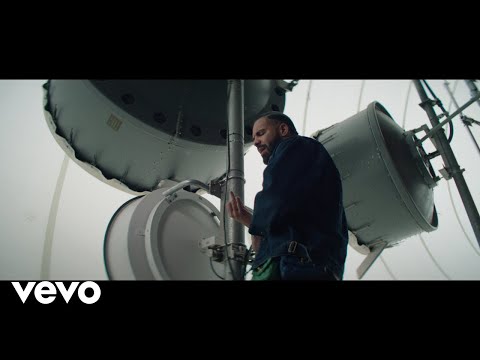
  • The video continues the nostalgic theme by showing Drake back at Toronto's CN Tower - the same landmark on the cover of his 2016 album Views - and across various locations throughout the city. The visual language is one of legacy and homecoming: Drake surveying his kingdom from a height, performing across the city that made him. The CN Tower callback to Views is especially fitting because that album represents Drake's commercial peak. By returning to the image on Iceman, he presents himself as an artist who's still standing at the center of his own story, despite the public fallout and industry battles surrounding him.

Comments

Be the first to comment...

Editor's Picks

Max Cavalera of Soulfly (ex-Sepultura)

Max Cavalera of Soulfly (ex-Sepultura)Songwriter Interviews

The Brazilian rocker sees pictures in his riffs. When he came up with one of his gnarliest songs, there was a riot going on.

History Of Rock

History Of RockSong Writing

An interview with Dr. John Covach, music professor at the University of Rochester whose free online courses have become wildly popular.

Martyn Ware of Heaven 17

Martyn Ware of Heaven 17Songwriter Interviews

Martyn talks about producing Tina Turner, some Heaven 17 hits, and his work with the British Electric Foundation.

Michael W. Smith

Michael W. SmithSongwriter Interviews

Smith breaks down some of his worship tracks as well as his mainstream hits, including "I Will Be Here For You" and "A Place In This World."

British Invasion

British InvasionFact or Fiction

Go beyond The Beatles to see what you know about the British Invasion.

Jethro Tull

Jethro TullFact or Fiction

Stage urinals, flute devices, and the real Aqualung in this Fact or Fiction.