
Starlings

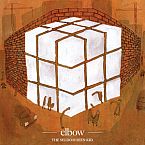
Album: The Seldom Seen Kid (2008)
Play Video

Songfacts®:

  • Frontman Guy Garvey told popmatters.com the story of this song. Said Garvey: "We had just that for a long, long time, and originally the words over it were a poem about my first girlfriend. It was called 'Whenever I See a Crimson 105.' And it was okay. It might have made an entertaining B-side. It wasn't brilliant. I certainly didn't think it was album strength, you know?"

    "So then I changed the lyrics completely. I wrote the 'how dare the premier' thing. I would say that all the words to that song were written in an hour, which is great for me because it usually takes months for me. And I was so vibing on it and I got to the 'darling is this love?' line and I thought, 'You can't say this!' It is quite cliché really: you can't say that, and that is where we came up with the horn blasts. Quite often we will have a sound in our heads, but we don't know what it is going to be and you go looking for that sound."

    "It was one of those things where the benefits of being together with the same people for eighteen years is you have a language that nobody else could understand. I went back in and continued to work on the lyrics and when I came back into the room and they had it working. I had a moment of feeling very, very proud at the speed and accuracy of our communication for that song. We knew it was something special at that point, I think."

    "Every time we played it from the top, we would pace around the room and try to act like somebody wasn't expecting that horn blast. And then every time the horn blasts, we would piss ourselves laughing because it is such an audacious opening move. It was a lot louder than that. We had to temper it a little bit because it was forcing the boys to turn it down in the car. You don't want people skipping a tune."
  • Garvey told the Manchester Evening News that this song was his attempt to write about a character like Count Arthur Strong, the self-important thespian normally heard on a BBC Radio 4 sitcom. He explained: "He's a guy who thinks he's far more important than he actually is, a little pompous. I suppose he's an exaggeration of an area of my own character that I'm very wary of: a little bit of that I have to keep in check. He's this overblown, slightly older figure, who considers himself a cut above the others. But he's absolutely lost for words in the presence of beauty, in this case a waitress."

Comments

Be the first to comment...

Editor's Picks

Philip Cody

Philip CodySongwriter Interviews

A talented lyricist, Philip helped revive Neil Sedaka's career with the words to "Laughter In The Rain" and "Bad Blood."

Janis Ian: Married in London, but not in New York

Janis Ian: Married in London, but not in New YorkSong Writing

Can you be married in one country but not another? Only if you're part of a gay couple. One of the first famous singers to come out as a lesbian, Janis wrote a song about it.

John Parr

John ParrSongwriter Interviews

John tells the "St. Elmo's Fire (Man In Motion)" story and explains why he disappeared for so long.

Motley Crue

Motley CrueFact or Fiction

Was Dr. Feelgood a dentist? Did the "Crüecifixion" really happen?

Scott Gorham of Thin Lizzy and Black Star Riders

Scott Gorham of Thin Lizzy and Black Star RidersSongwriter Interviews

Writing with Phil Lynott, Scott saw their ill-fated frontman move to a darker place in his life and lyrics.

Commercials

CommercialsFact or Fiction

Was "Ring Of Fire" really used to sell hemorrhoid cream?