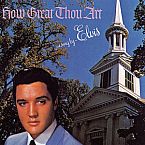
How Great Thou Art

Album: How Great Thou Art (1967)
Play Video

Songfacts®:

  • This song started out as a hymn written in 1885 by the Rev. Carl Boberg, a Swedish evangelist, who set it to a Swedish folk melody. The hymn was translated into German, then Russian, and when an English missionary Stuart Hine working in the Ukraine heard a native congregation sing the Russian words, he produced an English version. The hymn didn't gain worldwide popularity until it was incorporated into the services of the Billy Graham Crusades in the 1950s.
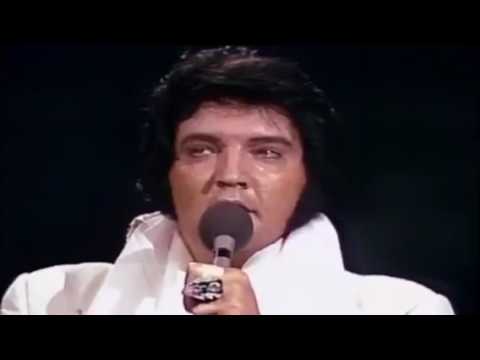
  • Elvis won his first Grammy for this song: the 1967 Grammy for the Best Sacred, Religious or Inspirational Recording. Surprisingly, Elvis won only three Grammy Awards: this one, the Lifetime Achievement Award in 1970, and another Best Sacred, Religious or Inspirational Recording for his album, He Touched Me in 1972. The Grammy Awards were first given out in 1959, and for about eight years they were clearly biased against rock music, favoring artists like Frank Sinatra and Ella Fitzgerald.
  • In honor of the 87-year-old dobro player Brother Oswald, Vince Gill performed this with a dobro at the Grand Ole Opry in 1999. >>
    Suggestion credit:
    Bertrand - Paris, France
  • The hymn was included in the 2002 National Endowment for the Arts (NEA) and the Recording Industry Association of America (RIAA) list of the top 365 "Songs Of The Century.
  • BBC's Songs Of Praise ranked "How Great Thou Art" second in a 2019 nationwide poll of the most loved hymns.
  • Carrie Underwood first performed the hymn with Vince Gill on the ACM Presents: Girls Night Out show televised on CBS on April 22, 2011. They received a standing ovation, and shortly after, Underwood's single version of "How Great Thou Art" topped the iTunes' Top Gospel Songs. She later included it on her 2021 gospel album, My Savior.
  • The song was first translated to English in 1949. To celebrate the 75th anniversary of that occasion, 16 prominent artists from the contemporary Christian music (CCM) and country music scenes joined forces to create a special rendition titled "How Great Thou Art (Until That Day)." Chris Tomlin, Matt Redman, Hillary Scott, Cody Carnes, Kari Jobe, Naomi Raine, TAYA, Ryan Ellis, Jon Reddick, Blessing Offor, Brian Johnson, Jenn Johnson, Matt Maher, Pat Barrett, Benjamin William Hastings, and Mitch Wong joined together to record the new version.

Comments: 3

  • Greg from Walhalla, MiHis later recording live with the Stamps, just before the first chorus he takes off and I would have given anything to be in the audience to hear the power!
  • Sauni from Moab, UtIt was my grandmother's favorite hymm and am singing it for her funeral service next week.
  • Stephen from Leesburg, FlIt is indeed a monumental hymn, worthy to the King and to glorify the King of Kings.
    - Stephen, Leesburg, FL
see more comments

Editor's Picks

Chris Squire of Yes

Chris Squire of YesSongwriter Interviews

One of the most dynamic bass player/songwriters of his time, Chris is the only member of Yes who has been with the band since they formed in 1968.

Let Me Be Your Teddy Bear: Teddy Bears and Teddy Boys in Songs

Let Me Be Your Teddy Bear: Teddy Bears and Teddy Boys in SongsSong Writing

Elvis, Little Richard and Cheryl Cole have all sung about Teddy Bears, but there is also a terrifying Teddy song from 1932 and a touching trucker Teddy tune from 1976.

David Paich of Toto

David Paich of TotoSongwriter Interviews

Toto's keyboard player explains the true meaning of "Africa" and talks about working on the Thriller album.

Eric Burdon

Eric BurdonSongwriter Interviews

The renown rock singer talks about "The House of the Rising Sun" and "Don't Let Me Be Misunderstood."

Tim Butler of The Psychedelic Furs

Tim Butler of The Psychedelic FursSongwriter Interviews

Tim and his brother Richard are the Furs' foundation; Tim explains how they write and tells the story of "Pretty In Pink."

He Hit Me (And It Felt Like A Kiss): A History Of Abuse Pop

He Hit Me (And It Felt Like A Kiss): A History Of Abuse PopSong Writing

Songs that seem to glorify violence against women are often misinterpreted - but not always.