
Praying For Time

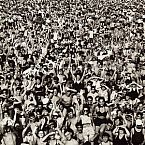
Album: Listen Without Prejudice Vol. 1 (1990)
Charted: 6 1
Play Video

Songfacts®:

  • In this despairing and somber song, George Michael offers the healing passage of time as the only relief for the many who are suffering poverty and injustice.
  • George Michael used an echoey vocal effect, resulting in a similar fuzzed verbal sound to John Lennon's "Imagine."
  • In The New York Times September 16, 1990, George Michael is quoted regarding this song: "No event inspired the song. It's my way of trying to figure out why it's so hard for people to be good to each other. I believe the problem is conditional as opposed to being something inherent in mankind. The media has affected everybody's consciousness much more than most people will admit. Because of the media, the way the world is perceived is as a place where resources and time are running out. We're taught that you have to grab what you can before it's gone. It's almost as if there isn't time for compassion."
  • Michael dissected the meaning of this song in MTV's Rockumentary and explained why he decided to explore different subject matters on his second solo album, Listen Without Prejudice. "There comes a point where you have to write something which you have not written before and which your interest in any particular topic or subject will inspire you," he said. "And that's why I suppose, eventually, most lyricists do approach wider topics than sex and love, you know?

    These are the days of the open hand
    They will not be the last
    Look around now, these are the days
    Of the beggars and the choosers


    The 'open hand' to me represents the vast numbers of people – specifically in this country – who are actually on the poverty line or below the poverty line, which is something that's going to go on. And I like the idea of 'beggars and the choosers' because you take a phrase – what's the phrase – 'beggars can't be choosers,' and you completely change it. In other words, 'the beggars and the choosers' and nothing in-between, which was really my point, because it does seem to be not that much in-between these days."
  • This is the year of the hungry man
    Whose place is in the past
    Hand in hand with ignorance
    And legitimate excuses


    "That verse is really about the fact that the hungry men of today are completely, where there is a full knowledge of them, people know what's going on, in this country and abroad, and the legitimate excuse of yesterday was that ignorance and that's gone, obviously," said Michael. "So, in other words, the hungry man today is a well-known fact."
  • I guess somewhere along the way
    He must have let us all out to play
    Turned his back and all God's children
    Crept out the back door


    Michael explained: "I've always liked the term 'God's children,' somehow as though we were that innocent, in a way, and the idea being that we ran out on God, in a sense – 'crept out the back door' - and because of that we're left to make our own decisions. 'We'll take our chances because God stopped keeping score,' like saying there's no one here to pull back the reins so we have to make our own decisions."
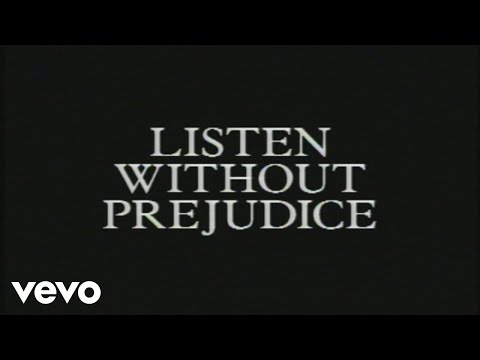
  • This was the first single from Michael's second album, Listen Without Prejudice, Vol. 1, his first release since Sony Music acquired his record label, Columbia, in 1988. The relationship between Michael and Sony was contentious, and when Michael refused to make a video to promote the song, a furious Sony released its own video instead, with only the words being displayed across the screen. These "lyric videos" became popular in the YouTube era, but in 1990 they were certainly not, especially when it came to photogenic stars like Michael.

    Despite the lack of a proper video and a mournful tone, the song still did very well, as it was the first new material from Michael since his wildly popular Faith album and was pretty much guaranteed airplay.

    When he released Listen Without Prejudice, Vol. 1, Michael was determined to avoid the cycle of promotion and touring that caused him so much anguish in the '80s. He didn't appear on the album cover and didn't show up in the videos - the next single, "Freedom '90," was filled with supermodels miming the lyrics.

    The album was Michael's last for the label; he sued Sony in 1992 to get out of his contract, but lost the case. Eventually, a deal was reached where he signed with Virgin and Dreamworks SKG, with Sony getting $40 million and a host of other perquisites. His next album, Older, finally arrived in 1996.
  • Carrie Underwood sang this on the April 2008 Idol Gives Back charity fundraising TV show. Thanks to the sale of downloads via Apple's iTunes Music Store, her version charted in the Top 40 of the Billboard Hot 100. Michael performed the song (and promoted his upcoming US tour) on the season finale that year, when David Cook was declared the winner.
  • According to the 2023 documentary George Michael: Portrait of an Artist, while recording "Praying For Time," Michael sang the lyrics as they came into his head.

Comments: 5

  • Mark Bryant from Inverness, FlThese are not the original lyrics - these are taken from a live performance where Michael took some creative license (and nicely) with his own words.
  • Sir Lord from MichiganPraying for Time is the best single that has ever been put together in the entire English-speaking language, from lyrics to acoustics to performance by One Sir Lord George Michael! Put that in your pipe and smoke it, radio stations across the fifty states and around the Western Hemisphere!!
  • Susan from Airdrie, -George Michael's words in this song and in the interview excerpt above are so true. This song is sad, but it also, like he says, speaks of the perception, not the reality of it all. He gives words to our feelings, then shows us how to overcome them and be positive.
  • Shawn from Green Bay, WiEpic song. Great message. Very powerful.
  • Erin from Boston, Massachusetts, MaA haunting but beautiful song. Speaks to the desperation so many people are feeling, then and now. Time does seem to be the only true healer of our pain and suffering.
see more comments

Editor's Picks

80s Video Director Jay Dubin

80s Video Director Jay DubinSong Writing

Billy Joel and Hall & Oates hated making videos, so they chose a director with similar contempt for the medium. That was Jay Dubin, and he has a lot to say on the subject.

Songs in Famous Movie Scenes: Tarantino Edition

Songs in Famous Movie Scenes: Tarantino EditionMusic Quiz

Whether he's splitting ears or burning Nazis, Quentin Tarantino uses memorable music in his films. See if you can match the song to the scene.

Gary Lewis

Gary LewisSongwriter Interviews

Gary Lewis and the Playboys had seven Top 10 hits despite competition from The Beatles. Gary talks about the hits, his famous father, and getting drafted.

90s Metal

90s MetalFact or Fiction

Test your metal - Priest, Maiden, and Beavis and Butt-head show up in this one.

Lace the Music: How LSD Changed Popular Music

Lace the Music: How LSD Changed Popular MusicSong Writing

Starting in Virginia City, Nevada and rippling out to the Haight-Ashbury, LSD reshaped popular music.

David Paich of Toto

David Paich of TotoSongwriter Interviews

Toto's keyboard player explains the true meaning of "Africa" and talks about working on the Thriller album.