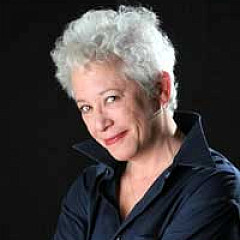
Imogen Heap

Imogen Heap Artistfacts

  • December 9, 1977
  • Imogen Heap's parents separated when she was 12. Her mother was an art therapist and her father was a construction rock retailer. At 13, she began to teach herself music and eventually learned how to play the guitar and drums.
  • Heap's first major break came in 1996. Her manager got her a gig at the Prince's Trust Concert at Hyde Park in London, England. Heap played four of her own songs in between sets by Eric Clapton and The Who.
  • Her career almost ended after her label Almo Sounds was sold to Universal. While working on her second solo album, Heap was given a deadline to deliver the rest of the songs. After handing over the tunes, Heap was told they "lacked hit potential" and she was dropped from the label. Heap started up a new duo called Frou Frou and decided to move on with new music.
  • In 2011 Imogen Heap tweeted what she was working on a new song with DJ and mega-producer Deadmau5. The track was titled "Telemisscommunications" and can be found on Deadmau5's disc, Album Title Goes Here.
  • Imogen Heap recorded a song called "Can't Take It In" for the soundtrack to the Disney movie The Chronicles of Narnia: The Lion, The Witch, and The Wardrobe after a version by Dido was deemed unfitting for the film. Heap also wrote a song for the sequel The Chronicles of Narnia: Prince Caspian, but it was cut from the movie because it was too dark.
  • Heap recorded a cover version of Leonard Cohen's "Hallelujah" for the season three finale of The O.C. She also wrote the track "Not Now But Soon" for the soundtrack to NBC's hit show Heroes.
  • In 2009 Imogen Heap asked fans to audition for a cello spot on her North American tour. Heap provided sheet music for her song "Aha!" and decided that on each night of her tour, she would pick a person in that city to join her onstage to perform the song.
  • She was Twitter power user early on, and in 2009 she crowd-sourced her bio on the platform, taking submissions from fans. She got 1500 responses; those whose contributions made the final copy were send autographed copies of her album Ellipse.
  • In 2010 Imogen Heap became the first woman to win a Grammy Award for Best Engineered Album, Non-Classical, taking the prize for her work on her album Ellipse.
  • Heap's music has been extensively sampled by various artists. Ariana Grande is a huge fan, and her song "Goodnight n Go" is a reworking of Heap's track of the same name. Also, Jason Derulo's "Whatcha Say" samples Heap's 2005 single "Hide and Seek."

    Heap's influence extends to hip-hop as well. For instance, A$AP Rocky's song "Angels" borrows Heap's "Headlock," while Mac Miller's "Angels (When She Shuts Her Eyes)" samples Heap's "2-1."
  • Imogen Heap attended Friends' School, a Quaker-run boarding school in Saffron Walden, England, where she often clashed with authority. "I feel awful now for some of the things I did," she told The Guardian in 2025.

    After being expelled for telling the matron to "F-off," Heap was still asked to perform in the school's end-of-term concert and ended up living with the headmistress, who she recalled as being "really kind."
  • Reflecting on her rebellious years, Heap said her diagnosis with ADHD and autism helped her understand why she always felt restless and driven to "shake things up and do new things."

Comments

Be the first to comment...

Editor's Picks

Sarah Brightman

Sarah BrightmanSongwriter Interviews

One of the most popular classical vocalists in the land is lining up a trip to space, which is the inspiration for many of her songs.

George Harrison

George HarrisonFact or Fiction

Did Eric Clapton really steal George's wife? What's the George Harrison-Monty Python connection? Set the record straight with our Fact or Fiction quiz.

Rick Astley

Rick AstleySongwriter Interviews

Rick Astley on "Never Gonna Give You Up," "Cry For Help," and his remarkable resurgence that gave him another #1 UK album.

Deconstructing Doors Songs With The Author Of The Doors Examined

Deconstructing Doors Songs With The Author Of The Doors ExaminedSong Writing

Doors expert Jim Cherry, author of The Doors Examined, talks about some of their defining songs and exposes some Jim Morrison myths.

Kip Winger

Kip WingerSongwriter Interviews

The Winger frontman reveals the Led Zeppelin song he cribbed for "Seventeen," and explains how his passion for orchestra music informs his songwriting.

Philip Cody

Philip CodySongwriter Interviews

A talented lyricist, Philip helped revive Neil Sedaka's career with the words to "Laughter In The Rain" and "Bad Blood."