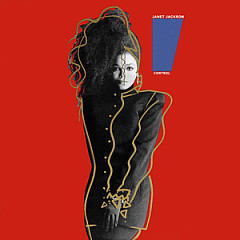
Album: janet. (1993)
Charted: 14 4
Play Video

Songfacts®:

  • Written and produced by Janet Jackson, Jimmy Jam and Terry Lewis, in this explicit fantasy narrative, Janet lets a guy know what she has in store for him if she's ever his girl. Apparently she'll get a little rough:

    I'd make you call out my name, I'd ask who it belongs to

    We remember seeing a comedian at the time with a bit about how he wouldn't need much coaxing if this were to happen. He'd call her name like a cheerleader: "Give me a J!..."
  • Jackson told Q magazine the song is "about a girl who goes to a club and fantasizes about this guy: serious fantasies about the things she'd do to him if she was his girl - the positions and things like that. But she's not, so she can't, so she gets pretty frustrated in the second verse - without it being too much. It's still within good taste."
  • Those signature Jimmy Jam and Terry Lewis beats power the song, but it's also laced with a rock guitar riff and a sample from Diana Ross & The Supremes' "Someday We'll Be Together." It's not the first time Janet Jackson incorporated a rock riff: check out her 1989 hit "Black Cat." And she's used pieces of a Supremes song before as well too: Listen for bits of "Love Child" in Jackson's "You Want This," which like "If" was released in 1993 on her janet. album.
  • The song's music video was directed by Dominic Sena, who previously worked with Jackson on visuals for Rhythm Nation 1814. The clip was staged as a futuristic Asian nightclub. The spy cameras monitoring the intimate interactions of patrons within their private boudoirs acted as a metaphor for the single's message of sexual fantasy, desire and voyeurism. It was choreographed by Tina Landon, who previously danced for the singer during the Control and Rhythm Nation era. Looking back at the video in a 2013 interview with Billboard magazine, she said: "I don't think people really realize what we were showing in that video that wasn't available with technology then. The video featured futuristic technology, specifically high definition touch screens. I wanted the actors in the video to use these screens to communicate, and relate with each other in the clubs. Similar to what we all do with our smart phones and tablets today. As I look at our lives now, it seems that life is imitating art. I have seen different elements from all of these videos in lots of artists work and it's a great feeling to know that you have inspired them in such a way."
  • Jackson made her big screen acting debut in 1993, the same year this song was released, in John Singleton's Poetic Justice. She credits the role with giving her the confidence to embrace her sexier side on the janet album, particularly on this song. "I knew that I wanted for the album to be about love and all of that, but I don't think I would've taken it to this extent except for the film," she told Us Weekly. "Like the song 'If' - I probably would have never talked about it before the film." (Jackson also earned an Academy Award nomination for Best Original Song for "Again," which was used in the closing credits of the movie.)
  • "If" was the second single from the janet. album, following the #1 hit "That's The Way Love Goes." "If" reached #4 but topped the Dance chart.

    Jackson's albums at this stage in her career were slathered with hits, and four more Top 10 singles emerged from janet., including another #1, "Again."

    Starting with her Control album in 1986, she was a huge star with a might presense on MTV. It would take two years to wind down all the singles from these albums, then another year or two to make the next one, so her albums were typically released three or four years apart. Following janet., her next album was The Velvet Rope in 1997. That one includes the #1 hit "Together Again."

Comments

Be the first to comment...

Editor's Picks

Band Names

Band NamesFact or Fiction

Was "Pearl" Eddie Vedder's grandmother, and did she really make a hallucinogenic jam? Did Journey have a contest to name the group? And what does KISS stand for anyway?
Judas Priest

Judas PriestSongwriter Interviews

Rob Halford, Richie Faulkner and Glenn Tipton talk twin guitar harmonies and explain how they create songs in Judas Priest.
Donald Fagen

Donald FagenSongwriter Interviews

Fagen talks about how the Steely Dan songwriting strategy has changed over the years, and explains why you don't hear many covers of their songs.

Boy Bands

Boy BandsFact or Fiction

From NKOTB to 1D, how well do you know your boy bands?

The Truth Is Out There: A History of Alien Songs

The Truth Is Out There: A History of Alien SongsSong Writing

The trail runs from flying saucer songs in the '50s, through Bowie, blink-182 and Katy Perry.

David Gray

David GraySongwriter Interviews

David Gray explains the significance of the word "Babylon," and talks about how songs are a form of active imagination, with lyrics that reveal what's inside us.