Semper Fidelis

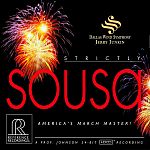
Album: Strictly Sousa (1888)
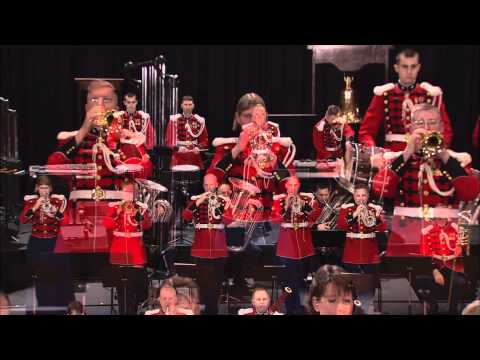
Play Video

Songfacts®:

  • John Philip Sousa's patriotic composition "Semper Fidelis" is the official march of the US Marine Corps. It was inspired by officers serving in the Marines and borrowed its title from their motto "semper fidelis" (the Latin words for "always faithful"), but it was written for a president.

    President Chester A. Arthur told Sousa, then conductor of the President's Own Marine Corps Band, that he didn't think "Hail To The Chief" was appropriate for the presidential anthem, especially when Sousa told him it was originally a Scottish boating song. At Arthur's request, Sousa came up with two compositions for his consideration, but the president only lived long enough to hear one of them, "Presidential Polonaise" (1896). Arthur died that same year and, two years later, Sousa wrote "Semper Fidelis" after a moving experience with his fellow servicemen.

    He told Nebraska's Independent in 1927: "I wrote 'Semper Fidelis' one night while in tears, after my comrades of the Marine Corps had sung their famous hymn at Quantico."

    While Marines weren't stationed at Quantico until 1917, more than 20 years after Sousa wrote the march, he may be referring to exercises conducted at the Virginia base.
  • This is an extension of Sousa's 1896 trumpet-and-drum piece "With Steady Step."
  • This was performed for the first time at the inauguration for President Benjamin Harrison, and Sousa made sure it was memorable by precisely timing the trumpet theme for dramatic effect. The composer recalled (as quoted in Paul E Bierley's The Works Of John Philip Sousa, 1984):

    "We were marching down Pennsylvania Avenue, and had turned the corner at the Treasury Building. On the reviewing stand were President Harrison, many members of the diplomatic corps, a large part of the House and Senate, and an immense number of invited guests besides. I had so timed our playing of the march that the 'trumpet' theme would be heard for the first time, just as we got to the front of the reviewing stand. Suddenly ten extra trumpets were shot in the air, and the 'theme' was pealed out in unison. Nothing like it had ever been heard there before - when the great throng on the stand had recovered its surprise, it rose in a body and led by the President himself, showed its pleasure in a mighty swell of applause. It was a proud moment for us all."
  • Sousa sold this and his subsequent "Washington Post" march (1889) to publisher Harry Coleman for just $35 a piece.
  • After his 12-year stint leading the President's Own band, Sousa requested a discharge from the Marine Corps in 1892 to try his hand as a civilian bandleader. He toured the world with his Sousa Band and wrote some of his most famous marches, including "The Liberty Bell" (1893) and "The Stars And Stripes Forever" (1896).
  • This was used in these TV shows:

    Stranger Things ("Chapter Seven: The Bite" - 2019)
    The Ren & Stimpy Show ("Insomniac Ren/My Shiny Friend" - 1995)

    And these movies:

    The Shape Of Water (2017)
    My Friend Dahmer (2017)
    Red Lights (2012)
    When The Drum Is Beating (2011)
    A Heartbeat Away (2011)
    Natural Selection (2011)
    Welcome To Mooseport (2004)
    Mystic River (2003)
    Miss Congeniality (2000)
    Varsity Blues (1999)
    Bulworth (1998)
    Spy Hard (1996)
    Clear And Present Danger (1994)
    A Few Good Men (1992)
    The Boston Strangler (1968)
    The Dirty Dozen (1967)
    Mr. Smith Goes To Washington (1939)
    I Am A Fugitive From A Chain Gang (1932)

Comments

Be the first to comment...

Editor's Picks

Spooner Oldham

Spooner OldhamSongwriter Interviews

His keyboard work helped define the Muscle Shoals sound and make him an integral part of many Neil Young recordings. Spooner is also an accomplished songwriter, whose hits include "I'm Your Puppet" and "Cry Like A Baby."

Steve Morse of Deep Purple

Steve Morse of Deep PurpleSongwriter Interviews

Deep Purple's guitarist since 1994, Steve talks about writing songs with the band and how he puts his own spin on "Smoke On The Water."

Reverend Horton Heat

Reverend Horton HeatSongwriter Interviews

The Reverend rants on psychobilly and the egghead academics he bashes in one of his more popular songs.

Phil Hurtt ("I'll Be Around")

Phil Hurtt ("I'll Be Around")Songwriter Interviews

Phil was a songwriter, producer and voice behind many Philadelphia soul classics. When disco hit, he got an interesting project: The Village People.

Let Me Be Your Teddy Bear: Teddy Bears and Teddy Boys in Songs

Let Me Be Your Teddy Bear: Teddy Bears and Teddy Boys in SongsSong Writing

Elvis, Little Richard and Cheryl Cole have all sung about Teddy Bears, but there is also a terrifying Teddy song from 1932 and a touching trucker Teddy tune from 1976.

Kim Thayil of Soundgarden

Kim Thayil of SoundgardenSongwriter Interviews

Their frontman (Chris Cornell) started out as their drummer, so Soundgarden takes a linear approach when it comes to songwriting. Kim explains how they do it.