Keep It Comin' Love

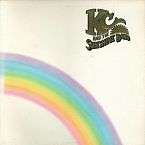
Album: Part 3 (1976)
Charted: 31 2
Play Video

Songfacts®:

  • It's impossible to forget the title of this classic disco earworm because the phrase is repeated more than 30 times throughout the song. Lead singer Harry Wayne Casey, who puts the KC in KC & The Sunshine Band, was a former record-store employee who kept customers in mind when he went on to write commercial tunes with his popular group. "The reason we would always use so much repetition was because I didn't want anyone not to know the name of the song once they heard it on the radio," he explained in The Billboard Book Of Number One Rhythm & Blues Hits. "When they went into the store, I wanted them to know it was 'Keep It Comin' Love,' or whatever."
  • Rick Finch, the Sunshine Band's bassist and co-producer, has a different explanation for why they kept singing the title phrase: They couldn't think of any other lyrics. After writing three albums, the well was running dry on their fourth.

    "We didn't know what else to write about at that point," Finch told Songfacts in 2009. "We were like, Okay, now what? We gotta figure out a way to keep it comin'. And then that's what we started writing about, 'keep it comin'.' Okay, and then what? 'Keep it comin', love.'

    That's why there's no lyrics in that song. If you notice it just says, 'Keep it comin', love, don't stop it now, don't stop it now,' and that's all it does, it's the same thing. 'Don't tell me there is no more.'"
  • This was recorded at the same time as "I'm Your Boogie Man," which preceded "Keep It Comin' Love" as a single. They're also linked together as the last two tracks on the band's fourth studio album, Part 3. When Casey came up with the horn part that closes out "Boogie," he and Finch thought it would be a great segue to the final tune.

    "It seemed to all fit," Casey recalled. "Rick and I decided we should put the two songs together nonstop on the album."
  • Even the most straightforward of songs can lead to confusion when folks mishear the lyrics. In this case, the misunderstanding contributed to the single's success.

    "In the Midwest everyone thought we were saying 'keep it common law,' like keep it common law marriage," Finch told Songfacts. "That's actually what made that record big in the Midwest, and we wouldn't even know that until later. There was a perfect example of people letting it mean what they want it to mean."
  • This was KC & The Sunshine Band's fourth and final #1 single on the R&B chart. It stalled at #2 on the Billboard Hot 100 thanks to the chart-toppers "Star Wars Theme / Cantina Band" by Meco and "You Light Up My Life" by Debby Boone.
  • It was especially important for the group to have catchy titles early on because no one knew how to market their brand of funky R&B, which made it difficult for fans to track down their songs.

    "Our music was R&B, and it was our sound that became the disco sound," Casey told The Advocate. "I wasn't really happy with the tag at the time. They never know where to put us in the record stores. 'Do we put them under dance? Do we put them under R&B? Do we put them under pop?'"
  • Jay Z's 1999 hit "Girl's Best Friend," produced by Swizz Beatz, samples this tune in its beat.
  • This was used in these TV shows:

    Titans ("Origins" - 2018)
    The Deuce ("There's An Art To This" - 2018)

    And these movies:

    Trolls Band Together (2023)
    Wedding Crashers (2005)
    Blow (2001)
    Private Parts (1997)

Comments

Be the first to comment...

Editor's Picks

Rock Stars of Horror

Rock Stars of HorrorMusic Quiz

Rock Stars - especially those in the metal realm - are often enlisted for horror movies. See if you know can match the rocker to the role.

Women Who Rock

Women Who RockSong Writing

Evelyn McDonnell, editor of the book Women Who Rock, on why the Supremes are just as important as Bob Dylan.

Charlie Daniels

Charlie DanielsSongwriter Interviews

Charlie discusses the songs that made him a Southern Rock icon, and settles the Devil vs. Johnny argument once and for all.

Glen Phillips of Toad the Wet Sprocket

Glen Phillips of Toad the Wet SprocketSongwriter Interviews

The "All I Want" singer went through a long depression, playing some shows when he didn't want to be alive.

Pete Anderson

Pete AndersonSongwriter Interviews

Pete produced Dwight Yoakam, Michelle Shocked, Meat Puppets, and a very memorable track for Roy Orbison.

Eric Clapton

Eric ClaptonFact or Fiction

Did Eric Clapton really write "Cocaine" while on cocaine? This question and more in the Clapton edition of Fact or Fiction.