Rock The Machine

Album: Starboard Home (2016)
Play Video

Songfacts®:

  • Lisa O'Neill is an Irish singer-songwriter who is passionate about her homeland and the plight of its people. In this powerful track, she sings about Dublin's traditional dock workers who lost their jobs between the '60s and '80s as advanced machinery eliminated the need for manual labor.

    In 2016, Ireland's National Concert Hall commissioned 12 Irish singer-songwriters to compose and perform tunes for the project Starboard Home in honor of Dublin Port's centenary. When O'Neill was tasked to write a song about the docklands that surround both sides of the River Liffey, which flows through the center of the city, she encountered the sad reality that inspired "Rock The Machine."

    "What I found was that so many jobs were lost at the docklands, and there you have it. There was my story and I really felt something for that," she shared in a 2023 Songfacts interview.

    "The machine, the damn machine coming in and replacing our jobs and our livelihood. It's our way of life and purpose. There's more to life than money and wages, though we need it. The machine vacuums something else, as well, which is the foundation of community. We all have a part and a purpose within this thing. If the machine comes in and says, 'We don't need you anymore,' that's not very empathetic, is it, machine? You don't have any feelings. 'Rock The Machine,' I felt strongly about, and I was glad for the song to land in the right way."
  • Starboard Home was released around the time O'Neill issued her third studio album, Pothole In The Sky, in the spring of 2016. Two years later, she included "Rock The Machine" on her subsequent album, Heard A Long Gone Song, and released it as a single.
  • This won Best Original Folk Track at Ireland's RTE Radio 1 Folk Awards in 2019. That same year, it was also nominated for Best Traditional Track and Best Original Track at the BBC Radio 2 Folk Awards, where she also garnered nominations for Folk Singer of the Year and Best Album (for Heard A Long Gone Song).
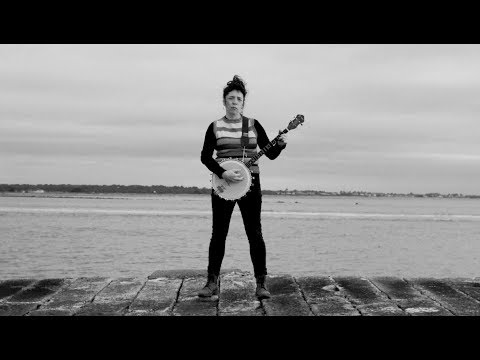
  • In the black-and-white music video, directed by Jamie Goldrick, O'Neill performs against the stark backdrop of the docklands, intercut with shots of looming machinery and real-life former dock workers. The cormorant, a seabird that O'Neill references in the song lyrics, is present throughout the clip, symbolizing a glimmer of hope in the darkness. The singer explained:

    "In Irish mythology, the cormorant bird might appear to you in your dark hour with the purpose of taking your troubles away. I've spotted hundreds of cormorants along the River Liffey."
  • O'Neill grew up in County Cavan but moved to Dublin when she was 18 to study music at Ballyfermot College. She spent several years working at coffeehouses in the area before she caught her big break as an opener for David Gray on his Lost and Found tour in 2011.

Comments

Be the first to comment...

Editor's Picks

Michael Bolton

Michael BoltonSongwriter Interviews

Into the vaults for this talk with Bolton from the '80s when he was a focused on writing songs for other artists.

Oliver Leiber

Oliver LeiberSongwriter Interviews

Oliver Leiber talks about writing and producing hits for Paula Abdul, and explains his complicated relationship with his father, the songwriter Jerry Leiber.

Jason Newsted (ex-Metallica)

Jason Newsted (ex-Metallica)Songwriter Interviews

The former Metallica bassist talks about his first time writing a song with James Hetfield, and how a hand-me-down iPad has changed his songwriting.

Rock Stars of Horror

Rock Stars of HorrorMusic Quiz

Rock Stars - especially those in the metal realm - are often enlisted for horror movies. See if you know can match the rocker to the role.

Subversive Songs Used To Sell

Subversive Songs Used To SellSong Writing

Songs about drugs, revolution and greed that have been used in commercials for sneakers, jeans, fast food, cruises and cars.

Richie Wise (Kiss producer, Dust)

Richie Wise (Kiss producer, Dust)Songwriter Interviews

Richie talks about producing the first two Kiss albums, recording "Brother Louie," and the newfound appreciation of his rock band, Dust.