Berlin

Album: Berlin (1973)
Play Video

Songfacts®:

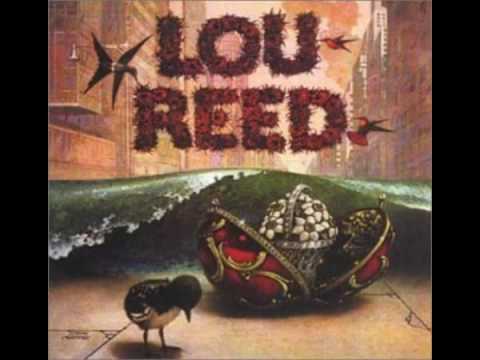
  • This song first appeared on Lou Reed's 1972 self-titled debut album, where it runs 5:16. The lyric finds Reed in character, recalling a very romantic night at a small cafe in Berlin. It was paradise, but now she's gone.

    We don't know why the couple is apart or what happened to the girl; the song ends with Reed repeating the line, "One sweet day," leaving us to wonder.

    The song was an obscurity, as the album sold poorly. But Reed's next album, Transformer, had a hit - "Walk On The Wild Side" - and suddenly he was a big name and garnering critical attention. For his next album, Reed decided to revisit the song "Berlin," not just by re-doing the track, but by extending the story to encompass the full album. The result was the album Berlin, with the first track a 3:23 reworking of the song, still titled "Berlin."

    On the album, we learn that the couple are drug addicts who are completely dysfunctional. They get names: Caroline and Jim. The songs reveal details of their lives: Caroline loves music but can't get her life together; Jim beats her. They have kids, but are unfit parents and lose them to the state. Caroline kills herself by slitting her wrists. The album ends with "Sad Song," where Jim dispassionately reflects on his life. His conclusion:

    I'm gonna stop wasting time
    Somebody else would have broken both of her arms
  • When he wrote this song, Reed had never been to Berlin. He used the city as the setting because it was divided by the Berlin Wall, thus making it the perfect metaphor for a couple who have been split apart.
  • Listeners felt the Berlin album was either a work or macabre genius or a an aural pit of despair - there was not much middle ground. As for critics, the underground press generally loved it, while the mainstream rock magazines trashed it. Rolling Stone ran an exceptionally vituperative review, with Stephen Davis writing: "Reed's only excuse for this kind of performance (which isn't really performed as much as spoken and shouted over Bob Ezrin's limp production) can only be that this was his last shot at a once-promising career. Goodbye, Lou."

    This reaction was typical of Reed's work dating to his days in The Velvet Underground. Those who connected with his music found it spoke to them on an intimate level; most people though (critics included), didn't get it. In later years, Reed became a critical darling, lauded for his adventurous music and artistic integrity. Digging Lou Reed became the in-thing; when Rolling Stone listed their 500 greatest albums of all time in 2003, Berlin made the list at #344.

    Reed never came around to critics, however, dismissing them throughout his career as irrelevant.
  • Bob Ezrin, who produced Alice Cooper's School's Out album the previous year, produced the Berlin album. Ezrin said the 12 days in the studio making the album were some of the most harrowing of his career, leaving him with short-term PTSD. "I got home and started breaking things," he told Circus. "That album just had me so taut inside."

    Ezrin's two children, David and Joshua, are the voices crying and calling for their mother on the track "The Kids."
  • This song, and the entire Berlin album, were very dear to Lou Reed. It's a depressing work, but as Reed pointed out, so are A Streetcar Named Desire and Hamlet. He was very proud of it.
  • In reworking the song for the album, Reed took a very direct lyrical approach, having the characters say exactly what they mean. "There could be no mistaking it, no head games," he told Bruce Pollock. "It was to-the-point, whereas some of my other albums and songs had puns or double entendre."
  • On the original "Berlin" released on Reed's debut album, musicians included Yes members Steve Howe (guitar) and Rick Wakeman (piano). For the Berlin album, producer Bob Ezrin used Jack Bruce (bass), Steve Winwood (organ), Aynsley Dunbar (drums) and Dick Wagner (guitar). Allan Macmillan handled piano on "Berlin."
  • This song put Reed on a trajectory to pop stardom, but he quickly changed course with his next album, Berlin, which even those who love it describe as "horrific." The album tells the story of a drug-addicted couple who neglect their children; the girl ends up committing suicide. The album secured Reeds standing as an underground iconoclast beyond the comprehension of the typical listener.
  • The Berlin album was made into a stage production that ran at St. Ann's Warehouse in Brooklyn in December 2006 and at the Sydney Festival in Australia in January 2007. Bob Ezrin, who produced the album, was the conductor and co-producer. The show was released as the film Berlin: Live at St. Ann's Warehouse in 2008.

Comments

Be the first to comment...

Editor's Picks

The Untold Story Of Fiona Apple's Extraordinary Machine

The Untold Story Of Fiona Apple's Extraordinary MachineSong Writing

Fiona's highly-anticipated third album almost didn't make it. Here's how it finally came together after two years and a leak.

La La Brooks of The Crystals

La La Brooks of The CrystalsSong Writing

The lead singer on "Da Doo Ron Ron" and "Then He Kissed Me," La La explains how and why Phil Spector replaced The Crystals with Darlene Love on "He's A Rebel."

Psychedelic Lyrics

Psychedelic LyricsMusic Quiz

Whoa man! Do you know which band came up with these cosmic lyrics?

Dar Williams

Dar WilliamsSongwriter Interviews

A popular contemporary folk singer, Williams still remembers the sticky note that changed her life in college.

Little Richard

Little RichardFact or Fiction

Was Long Tall Sally a cross-dresser? Did he really set his piano on fire? See if you know the real stories about one of rock's greatest innovators.

Sarah Brightman

Sarah BrightmanSongwriter Interviews

One of the most popular classical vocalists in the land is lining up a trip to space, which is the inspiration for many of her songs.