Don't Let's Be Beastly To The Germans

Album: His HMV Recordings 1928-1953 (1943)
Play Video

Songfacts®:

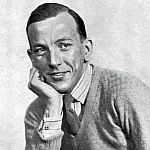
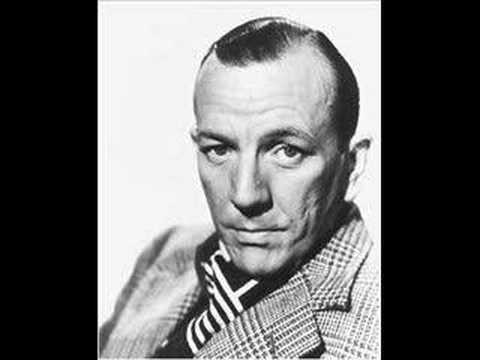
  • Though "London Pride" was unquestionably Coward's finest wartime song, "Don't Let's Be Beastly To The Germans" was his most controversial.

    Written in the Spring of 1943 and recorded on July 2 that year, it was a personal favorite of Prime Minister Winston Churchill, so much so that according to Coward's biographer Sheridan Morley, when Coward sang it at a private party on the stage at Haymarket, Churchill liked it enough to demand three reprises. Coward himself said Churchill made him play it no less than seven times in one evening.

    After the War, Coward himself explained that he had written it "as a satire directed against a small minority of excessive humanitarians, who, in my opinion, were taking a rather too tolerant view of our enemies." Unfortunately, some people - who were obviously none too bright - didn't realize that at the time, and thought it was pro-German; he received a sackful of abusive letters, and the BBC and His Master's Voice flew into a panic. The latter suppressed it for three months, the former banned it from airplay, although it was played once, and Coward became the first person to use the word "bloody" over the air.
  • The song includes the couplet:

    Let's soften their defeat again
    And build their bloody fleet again


    An obvious reference to the First World War.
  • According to the Noël Coward Society, "Don't Let's Be Beastly To The Germans" was booked, rehearsed and printed into the program for the revue Flying Colours which opened on August 26, 1943 where it was to have been performed by Douglas Byng, but was cut due to the public furor.

    In spite of the reservations of the BBC, Coward's record company and certain sections of the British public, some people were impressed. In the USA, Ira Gershwin was asked to write an extra refrain by the Writers' War Board; he added what has been called "an American bite to it"; Coward also reworked some of the lyrics himself. In at least one recording he substituted the word "blasted" for "bloody."
  • The sheet music was published by Chappell of London in 1943, retailing for one shilling. As with Coward's even more famous "Don't Put Your Daughter On The Stage, Mrs. Worthington," the music follows the words closely.
  • "Don't let's be beastly" has become a catchphrase, and the opening lines of the song has found its way into the Oxford Dictionary Of Modern Quotations.

    With the War On Terror, at least one parody was circulated: "Don't Let's Be Beastly To The Muslims." >>>
    Suggestion credit:
    Alexander Baron - London, England, for all above

Comments

Be the first to comment...

Editor's Picks

Rock Revenge Songs

Rock Revenge SongsMusic Quiz

John Lennon, Paul Simon and Lynyrd Skynyrd are some of the artists who have written revenge songs. Do you know who they wrote them about?

Elton John

Elton JohnFact or Fiction

Does he have beef with Gaga? Is he Sean Lennon's godfather? See if you can tell fact from fiction in the Elton John edition.

Tim McIlrath of Rise Against

Tim McIlrath of Rise AgainstSongwriter Interviews

Rise Against frontman Tim McIlrath explains the meanings behind some of their biggest songs and names the sci-fi books that have influenced him.

Laura Nyro

Laura NyroSongwriting Legends

Laura Nyro talks about her complex, emotionally rich songwriting and how she supports women's culture through her art.

Jesus In Pop Hits: The Gospel Songs That Went Mainstream

Jesus In Pop Hits: The Gospel Songs That Went MainstreamSong Writing

These overtly religious songs crossed over to the pop charts, despite resistance from fans, and in many cases, churches.

Who Did It First?

Who Did It First?Music Quiz

Do you know who recorded the original versions of these ten hit songs?