
Don't Put Your Daughter On The Stage, Mrs. Worthington

Album: Masters (1935)
Play Video

Songfacts®:

  • The title of this humorous and extremely well-crafted song can also be rendered "(Don't Put Your Daughter On The Stage,) Mrs. Worthington" or simply "Mrs. Worthington." The punctuation also varies.
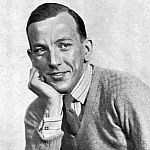
  • In his biography, A Talent to Amuse, Sheridan Morley said that in 1933, when Coward was at the height of his powers, he received a constant stream of letters from women begging him "to find parts for their respective daughters in whatever he happened to be staging next". He wrote the song as a general refusal to all these ambitious mothers. According to Morley, it remained "one of the lastingly popular Coward songs that did not have its origin in one of his shows" but although it sold well enough and "served him admirably for cabaret appearances during and after the war", it had the opposite effect from intended; most women took it as a joke.
  • Another version of this song's origin is given in Noël Coward: The Complete Lyrics. As related by the actress daughter of a producer, the writer was visiting her father, who tossed aside a letter he had been reading, clearly upset, and when Coward asked, he replied: "Oh, it's just a letter from some maddening woman called Mrs. Worthington, asking me if I can put her daughter on the stage..." Coward went straight upstairs and wrote it.
  • Amusing as the song is, there is an additional verse which was never recorded because it would not have got past the censor.
  • The sheet music was published by Chappell of London in 1935 at two shillings. Coward recorded the song with piano and orchestra; the music follows the words very closely.
  • "Mrs. Worthington" was also Prime Minister Winston Churchill's favorite Noël Coward song bar "Mad Dogs And Englishmen." The song's title has found its way into the Oxford Dictionary Of Modern Quotations, and has also been hijacked for a comedy thriller (1943) and an autobiography (1972). >>>
    Suggestion credit:
    Alexander Baron - London, England, for all above

Comments

Be the first to comment...

Editor's Picks

Matt Sorum

Matt SorumSongwriter Interviews

When he joined Guns N' Roses in 1990, Matt helped them craft an orchestral sound; his mezzo fortes and pianissimos are all over "November Rain."

Al Kooper

Al KooperSongwriter Interviews

Kooper produced Lynyrd Skynyrd, played with Dylan and the Stones, and formed BS&T.

Best Band Logos

Best Band LogosSong Writing

Queen, Phish and The Stones are among our picks for the best band logos. Here are their histories and a design analysis from an expert.

Brian Kehew: The Man Behind The Remasters

Brian Kehew: The Man Behind The RemastersSong Writing

Brian has unearthed outtakes by Fleetwood Mac, Aretha Franklin, Elvis Costello and hundreds of other artists for reissues. Here's how he does it.

Dave Alvin - "4th Of July"

Dave Alvin - "4th Of July"They're Playing My Song

When Dave recorded the first version of the song with his group the Blasters, producer Nick Lowe gave him some life-changing advice.

Charlotte Caffey of The Go-Go's

Charlotte Caffey of The Go-Go'sSongwriter Interviews

Charlotte was established in the LA punk scene when a freaky girl named Belinda approached her wearing a garbage bag.