
Saoko

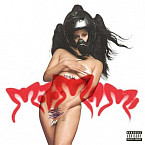
Album: Motomami (2022)
Play Video

Songfacts®:

  • "Saoko" (also spelt "saoco") is Puerto Rican slang meaning having outstanding rhythm, movement and flavor. Daddy Yankee and Wisin famously used the word in their 2004 reggaetón anthem "Saoco."

    Here, Rosalia revels in taking up different identities, whether it be a butterfly, drag queen, or sex siren. According to the singer, her lyrics are about "celebrating that you are always yourself even though you are in constant transformation or even that you are you more than ever at the very moment you are changing."
  • The track fuses distorted chords, industrial elements, improvised jazz flourishes, and a sample of Wisin and Daddy Yankee's "Saoco."

    Rosalia created the beat while playing an upright piano at Electric Lady's Studio B in New York. "It was at night," she recalled, "and making this beat seemed as fun as driving a Lambo."

    From there, Rosalia distorted the piano and added reggaeton drums from a music library sent to her by the producer Mr. NaisGai (Rauw Alejandro's "Todo De Ti," Jennifer Lopez's "Cambia El Pasio").

    Rosalia named the track "Saoko" and used the "Saoco" sample because it was "the most direct homage I can make to classic reggaeton, a genre that I love."
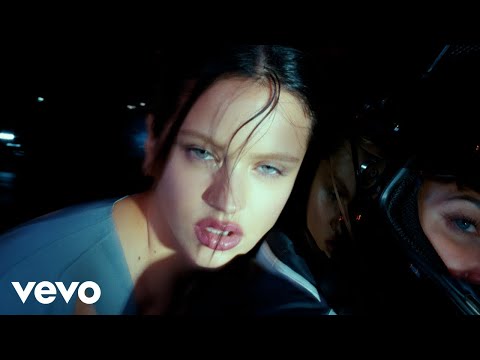
  • Valentin Petit directed the song's music video. Shot in Kyiv, it finds Rosalía going on a joyride with an all-women biker gang.
  • "Saoko" was the last song Rosalia made for her Motomami album. "I think it's when you really put the pieces together, you understand what you're doing, you understand the palette, you understand the direction, you are clear about what you're doing," she said of her final piece of the jigsaw. "And you're freer too, because you have the rest of the pieces, so it gives you confidence."
  • Rosalia created the song at New York's Electric Lady Studio. She'd been working with Lil Uzi Vert, but the rapper got sick, leaving just the Spanish singer and her engineer David Rodríguez. "I just went to the piano, I started improvising a little bit," Rosalia told Zane Lowe on Apple Music. "I found the riff and then I was like, okay, let's distort this. Let's distort this. Let's put some distortion, let's make it sound tougher."
  • Rosalia mixed motorcycle noises with synth elements reminiscent of 1990s hip-hop, amplifying the track's high-energy impact. The engines weren't just sound effects; they became part of the rhythm, the pulse that drives the song forward.

Comments

Be the first to comment...

Editor's Picks

Sarah Brightman

Sarah BrightmanSongwriter Interviews

One of the most popular classical vocalists in the land is lining up a trip to space, which is the inspiration for many of her songs.

George Harrison

George HarrisonFact or Fiction

Did Eric Clapton really steal George's wife? What's the George Harrison-Monty Python connection? Set the record straight with our Fact or Fiction quiz.

Rick Astley

Rick AstleySongwriter Interviews

Rick Astley on "Never Gonna Give You Up," "Cry For Help," and his remarkable resurgence that gave him another #1 UK album.

Deconstructing Doors Songs With The Author Of The Doors Examined

Deconstructing Doors Songs With The Author Of The Doors ExaminedSong Writing

Doors expert Jim Cherry, author of The Doors Examined, talks about some of their defining songs and exposes some Jim Morrison myths.

Kip Winger

Kip WingerSongwriter Interviews

The Winger frontman reveals the Led Zeppelin song he cribbed for "Seventeen," and explains how his passion for orchestra music informs his songwriting.

Philip Cody

Philip CodySongwriter Interviews

A talented lyricist, Philip helped revive Neil Sedaka's career with the words to "Laughter In The Rain" and "Bad Blood."