The opening song on Roxy Music's sixth album of the same name, "Manifesto" is a brooding call to arms. Composed by Bryan Ferry and Roxy Music guitarist Phil Manzanera following a four-year recording hiatus, "Manifesto" was the British rock band announcing their much-anticipated return to the music world. As Ferry explained to BBC Radio 2 on January 17, 2011: "It felt like, 'Here we are, back, as a band, back with a record,' and it was like a statement of intent, it was a manifesto, basically, 'This is what we're about, this is what I'm about, and here we are, and hello again.'"
Ferry drew inspiration from the Claes Oldenburg poem "I Am for an Art" for "Manifesto." Written by the Swedish-American pop-art sculptor in 1961, "I Am for an Art" is frequently hailed as Oldenburg's creative manifesto. An ode to the artistic value of daily life, "I Am for an Art" begins every line with "I am for," a style Ferry replicates in "Manifesto":
I am for the revolution's coming
I don't know where she's been
For those who dare because it's there
I know I've seen
While it was the first song Ferry conceptualized for the album, this intense groove was the last song Roxy Music completed for Manifesto. "I had the idea for 'Manifesto' for simply ages. From the very outset I knew it was going to be the title of the album – that's always happened with every album we've made. I always have the title, be it For Your Pleasure (1973) or Country Life (1974), down first," Ferry revealed in an interview with NME on May 19, 1979. "As I recall, it was the last song completed but that's only because I kept it, almost like an ace up the sleeve. Because if you tell someone, it immediately leaks out and the impact is blown."
Speaking to
Far Out on September 26, 2022, Ferry listed "Manifesto" as one of Roxy Music's most underappreciated songs. He added: "Sometimes less obvious songs get overshadowed. I thought the opening title track of
Manifesto – with Alan Spenner playing great bass – was very strong. I'd done
The Bride Stripped Bare (solo album, 1978) with American musicians and was disappointed with how it was received. Punk had happened, and I felt out of step, so I wanted to come back more in tune with what was happening."
A different version of this song was released as the B-side to the
Flesh + Blood cut "
Over You" in 1980. While the original consists of an extended raga-inspired instrumental introduction followed by Ferry delivering an impassioned monologue, the new version has a shorter introduction with the monologue broken down into verses.
Ferry defined his own "manifesto" during an interview with
Vulture on August 16, 2022. "It's trying out different things – experimenting and exploring sounds and textures. Trying out combinations of instruments and so on. With writing in particular, trying to go to different places and creating a body of work that's interesting to perform," Ferry stated. "We didn't want to be a one-trick pony."
This song was the set opener for The Manifesto World Tour in 1979, but Ferry hasn't performed it - solo or with Roxy Music - since.
"Manifesto" plays over the end credits of the 2019 documentary Halston. Directed by Frédéric Tcheng and featuring contributions from the likes of Liza Minnelli, Marisa Berenson, and Joel Schumacher, the film tells the story of American fashion designer Roy Halston Frowick. Frowick rose to fame after designing the iconic pillbox hat worn by Jacqueline Kennedy at the presidential inauguration of her husband, John F. Kennedy, in 1961. Frowick subsequently became a pioneer of luxuriously minimalist disco fashion and a frequent guest at the famous New York City nightclub Studio 54.
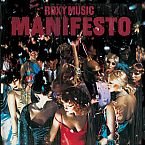
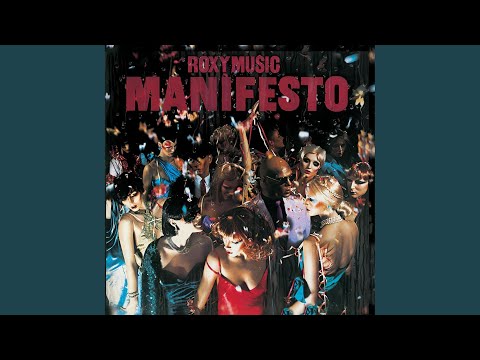
Manifesto was released on March 16, 1979. It reached #7 in the UK and #23 in the US, making it Roxy Music's highest-charting album in the States. The album cover was conceived by Ferry and British fashion designer Antony Price and depicts a group of mannequins attending a raucous soiree. The use of mannequins marked a detour from Roxy Music's traditional approach of featuring female models on their album covers, with previous muses including Playboy playmate Marilyn Cole (Stranded, 1973) and American socialite Jerry Hall (Siren, 1975).