
Famine

Album: Universal Mother (1994)
Charted: 51
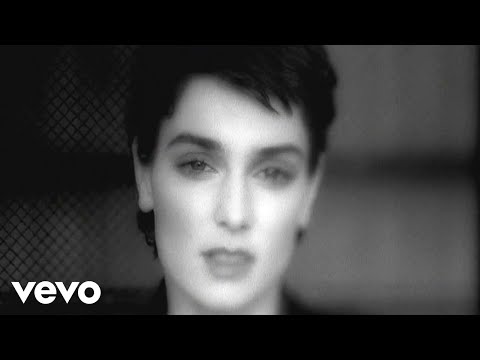
Play Video

Songfacts®:

  • Sinéad O'Connor speaks her truth about the Irish Potato Famine in this song, which is mostly spoken-word. Her take on it: There was no famine, and the devastating food shortage was caused by the British government, which ruled Ireland at the time.

    She explained in her book Rememberings: "Everyone believes there was a 19th-Century famine, but in fact, there was lots and lots of food in the country, it was just being shipped out of the country. It was just that you were shot dead if you were Irish and you went near anything but a potato. The fact is that to call it a famine is a lie."

    What's indisputable is that Ireland was devastated from 1845 to 1852, when many starved and many more left the country. It left an indelible mark on the country that O'Connor believes can still be felt.

    Much has been written about the Famine, and there is evidence to support O'Connor's assertion. Predictably, the song proved very controversial, especially in the UK.
  • The hook of "All the lonely people, where do they all come from" is interpolated from the Beatles song "Eleanor Rigby." Paul McCartney, who wrote the lion's share of that song, has also lent his voice to support Ireland, particularly in his 1972 song "Give Ireland Back To The Irish."
  • "Famine" was released as a single in Europe and Australia backed by O'Connor's cover of Nirvana's "All Apologies." In the UK, it reached #51 despite the scathing attack on British political history.
  • The fiddle at the beginning is a sample of "Tradition" from the musical Fiddler On The Roof. The voice at the end of the song that says "Because of our tradition, everyone here knows who he is and what God expects him to do" also comes from the musical, spoken by the main character, Tevye.
  • The trumpet notes that come in midway through the song are a sample of "Straight No Chaser," a 1958 song by Miles Davis. His song "Dr. Jekyll" is sampled on another track from Universal Mother, "Fire On Babylon."
  • The male voice that comes in at 3:40 ("We stand on the brink of a great achievement...") is Irish Prime Minister Jack Lynch from a 1970 speech he gave on the Troubles in Northern Ireland.
  • With this song, O'Connor showed she was not going to shy away from controversy. She became a lightning rod in America when she wouldn't let the concert venue where she was performing play the national anthem before a show in 1990. In 1992, she tore up a photo of the Pope on Saturday Night Live, making her far more notorious for her politics than for her music.

    When "Famine" was released on her Universal Mother album, she stayed clear of America, the country that caused her so much stress. It didn't get much attention there but did well in Europe, which became her stronghold.
  • O'Connor wrote the song with John Reynolds, Dave Clayton, and Tim Simenon. Clayton and Simenon also produced it. Reynolds, who played keyboards on the track, is O'Connor's first husband and the father to her first child, Jake. They split a few years earlier but continued working together.

    John Lennon and Paul McCartney are also listed as songwriters because it quotes "Eleanor Rigby."
  • It was through this song that O'Connor met John Waters, the father of her second child, Roisin. They connected when he interviewed her about the song.

Comments

Be the first to comment...

Editor's Picks

Glen Ballard

Glen BallardSongwriter Interviews

Glen Ballard talks about co-writing and producing Alanis Morissette's Jagged Little Pill album, and his work with Dave Matthews, Aerosmith and Annie Lennox.

Judas Priest

Judas PriestSongwriter Interviews

Rob Halford, Richie Faulkner and Glenn Tipton talk twin guitar harmonies and explain how they create songs in Judas Priest.

90210 to Buffy to Glee: How Songs Transformed TV

90210 to Buffy to Glee: How Songs Transformed TVSong Writing

Shows like Dawson's Creek, Grey's Anatomy and Buffy the Vampire Slayer changed the way songs were heard on TV, and produced some hits in the process.

Don Brewer of Grand Funk

Don Brewer of Grand FunkSongwriter Interviews

The drummer and one of the primary songwriters in Grand Funk talks rock stardom and Todd Rundgren.

Lita Ford

Lita FordSongwriter Interviews

Lita talks about how they wrote songs in The Runaways, and how she feels about her biggest hit being written by somebody else.

Who's Johnny, And Why Does He Show Up In So Many Songs

Who's Johnny, And Why Does He Show Up In So Many SongsSong Writing

For songwriters, Johnny represents the American man. He has been angry, cool, magic, a rebel and, of course, marching home.