Look To Windward

Album: Even In Arcadia (2025)
Charted: 38 66
Play Video

Songfacts®:

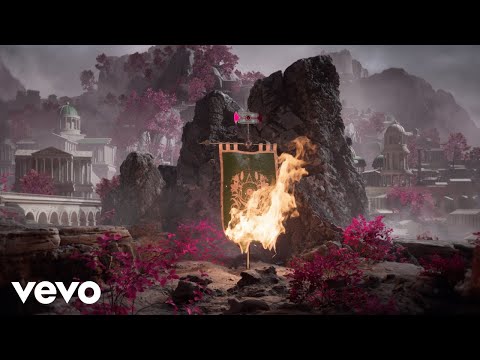
  • Opening Sleep Token's fourth album, Even In Arcadia, "Look To Windward" emerges slowly and dramatically. It builds over eight cinematic minutes, creating a swelling atmosphere and an existential ache, like Pink Floyd by way of Dante's Inferno. Throughout the song, Sleep Token frontman Vessel wrestles with themes of inner collapse, cosmic isolation, and a yearning for salvation.
  • Vessel borrowed the title from a line in T.S. Eliot's famously bleak 1922 poem "The Waste Land" where Eliot urges us to pause our spinning wheels and reflect on the transience of power and beauty:

    O you who turn the wheel and look to windward,
    Consider Phlebas, who was once handsome and tall as you


    This is Eliot at his most softly brutal: a reminder that even the handsome and tall end up drowned and forgotten. Like Eliot, Vessel is preoccupied with memory, ruin, and the cruel passage of time.
  • Whether Vessel lifted the title straight from "The Waste Land" or from Iain M. Banks's 2000 sci-fi novel also titled Look To Winward (which itself borrowed from Eliot's poem), the effect is the same: literary depth, with a sci-fi shimmer.
  • Musically, the track is a study in opposites: shimmering ambiance gives way to cavernous riffs; moments of stillness are consumed by bursts of noise. It mirrors the album's broader themes: beauty and brutality, serenity and upheaval, paradise as a place not without its own rot.
  • The poem "The Waste Land" has proven a rich resource for songwriters across genres who, like T.S. Eliot, find themselves baffled by the modern world and in search of some lost sense of meaning. A few notable examples:

    "Desolation Row" – Bob Dylan (1965)

    Dylan name-checks Eliot, and the song's rambling, surreal imagery owes much to "The Waste Land"'s free-associative brilliance.

    "The Cinema Show" – Genesis (1973)

    Inspired in part by Eliot's Tiresias character and the "Fire Sermon" section, this prog-rock suite dabbles in the poet's favorite themes: sex, disillusionment, and existential hangovers.

    "West End Girls" – Pet Shop Boys (1984)

    Per Shop Boys' Neil Tennant has openly cited "The Waste Land" as a touchstone, especially in its shifting narrative voices and bleak urban landscape.

    "A Wasteland Companion" – M. Ward (2012)

    The title is a nod, if not a direct reference, and the accompanying album's introspective mood channels Eliot's poetic sense of spiritual searching.

    So if Eliot were around today, maybe you wouldn't find him in the poetry section, but somewhere in the dark corner of a record store, leafing through vinyl sleeves, pondering whether "doomgaze" is a genre or a cry for help.

Comments

Be the first to comment...

Editor's Picks

Ron and Russell Mael of Sparks

Ron and Russell Mael of SparksSongwriter Interviews

The men of Sparks on their album Hippopotamus, and how Morrissey handled it when they suggested he lighten up.

Strange Magnetics

Strange MagneticsSong Writing

How Bing Crosby, Les Paul, a US Army Signal Corps Officer, and the Nazis helped shape rock and Roll.

Elton John

Elton JohnFact or Fiction

Does he have beef with Gaga? Is he Sean Lennon's godfather? See if you can tell fact from fiction in the Elton John edition.

Michael Glabicki of Rusted Root

Michael Glabicki of Rusted RootSongwriter Interviews

Michael tells the story of "Send Me On My Way," and explains why some of the words in the song don't have a literal meaning.

Bands Named After Real People (Who Aren't In The Band)

Bands Named After Real People (Who Aren't In The Band)Song Writing

How a gym teacher, a janitor, and a junkie became part of some very famous band names.

Let Me Be Your Teddy Bear: Teddy Bears and Teddy Boys in Songs

Let Me Be Your Teddy Bear: Teddy Bears and Teddy Boys in SongsSong Writing

Elvis, Little Richard and Cheryl Cole have all sung about Teddy Bears, but there is also a terrifying Teddy song from 1932 and a touching trucker Teddy tune from 1976.