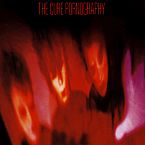
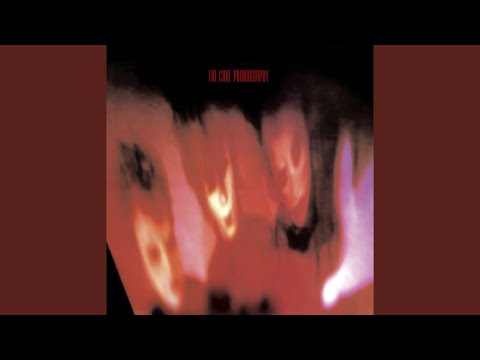
Pornography

Album: Pornography (1982)
Play Video

Songfacts®:

  • The Cure's Pornography album was borne out of frontman Robert Smith's depression combined with the band's heavy drug use. He explained in Jeff Apter's Never Enough: The Story of the Cure: "I had two choices at the time, which were either completely giving in [committing suicide] or making a record of it and getting it out of me." The resulting dark album was dubbed by NME as "Phil Spector in Hell," and solidified the band's place in music history as a proto-goth rock band.
  • 21-year-old Phil Thornalley, then a recording engineer for acts like Duran Duran and the Psychedelic Furs, was brought in to produce the album (making him a "producer of Pornography"). In a Songfacts interview, Thornalley - who would go on to co-write pop hits like "Torn" - reflected on the album's legacy: "At the time, it was just another album that was made along with the Psychedelic Furs or Hot Chocolate. But with that one I think because I was at the same age as the guys in The Cure, we were more like contemporaries and all the nutty stories you've read about the making of the record, they're all true. It was just over the top."

    He added: "In the end there was no hit single, but there was this great legacy of this album that you put on and you go: 'That's something different.' So I'm very proud of that, but the mythologizing, I guess maybe it has got something special about it; it's so different, it's so not what anybody was doing then or not what anybody's doing now."
  • The beginning of this track samples a debate between feminist Germaine Greer and Monty Python comedian Graham Chapman on the subject of pornography. The song was already written when Thornalley and Robert Smith happened upon the clip by accident. Thornalley explained: "It was just one of those freaky things that has happened in my career in the studio where we tried this approach that Brian Eno and David Byrne from Talking Heads were doing. They called it 'Found Music.' You turned on the radio or the TV and tried to find some disparate elements and sometimes it just worked. I suppose in this case it was very literal, you know, the song was about pornography - in fact I don't know what the song was about – but the title was 'Pornography.' But we happened to try this experiment coincidentally just as this highbrow program was discussing the subject. So it's just weird."

    A classic example of this "found music" is the snippet of a radio broadcast that The Beatles used at the end of "I Am The Walrus."
  • The drug-fueled sessions obliterated most of Smith's memories of crafting the album. He told Creem in 1986: "I don't remember writing a lot of it, particularly 'Pornography.' I don't remember writing much of it at all. I understand it, I know most of the references that are in the songs, but they're so disjointed, it took me a long time to figure out. A lot of it was written when I wasn't really, I wasn't sitting down and writing, I just remember going to the studio and having this big sheaf of words. I was so possessive around that time, of the record. I was very difficult to work with. Simon and Laurence didn't enjoy it at all."

    The album opens with the bleak lyric "It doesn't matter if we all die," but as it reaches its conclusion with the title track, it's clear Smith isn't giving up the struggle against his personal demons:

    I'll watch you drown in the shower
    Pushing my life through your open eyes
    I must fight this sickness
    Find a cure
    I must fight this sickness
  • The album peaked at #8 on the UK albums chart.

Comments: 1

  • Eliseu Carvalho from Canoas, Rs, BrazilWhile "Faith" was grey, gloomy and depressive, "Pornography" was blood-red, hateful and full of anger. I got my vinyl copy today and could notice those strong feelings even more. What about listening to the album in the dark? Yes, I did it. It was one of the most thrilling experiences in my life - and the last track made me shiver and sweat a lot...
see more comments

Editor's Picks

Michael Franti

Michael FrantiSongwriter Interviews

Franti tells the story behind his hit "Say Hey (I Love You)" and explains why yoga is an integral part of his lifestyle and his Soulshine tour.

He Hit Me (And It Felt Like A Kiss): A History Of Abuse Pop

He Hit Me (And It Felt Like A Kiss): A History Of Abuse PopSong Writing

Songs that seem to glorify violence against women are often misinterpreted - but not always.

Robert DeLeo of Stone Temple Pilots

Robert DeLeo of Stone Temple PilotsSongwriter Interviews

Stone Temple Pilots bass player Robert DeLeo names the songs that have most connected with fans and tells the stories behind tracks from their Tiny Music album.

Curt Kirkwood of Meat Puppets

Curt Kirkwood of Meat PuppetsSongwriter Interviews

The (Meat)puppetmaster takes us through songs like "Lake Of Fire" and "Backwater," and talks about performing with Kurt Cobain on MTV Unplugged.

Real or Spinal Tap

Real or Spinal TapMusic Quiz

They sang about pink torpedoes and rocking you tonight tonight, but some real lyrics are just as ridiculous. See if you can tell which lyrics are real and which are Spinal Tap in this lyrics quiz.

Timothy B. Schmit of the Eagles

Timothy B. Schmit of the EaglesSongwriter Interviews

Did this Eagle come up with the term "Parrothead"? And what is it like playing "Hotel California" for the gazillionth time?