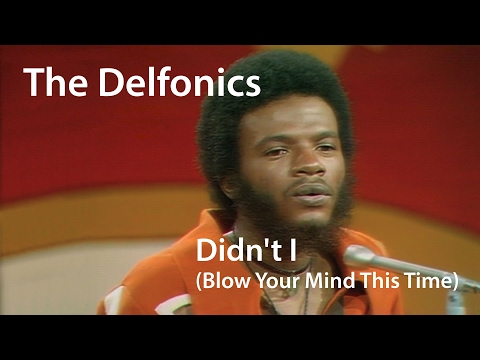
Didn't I (Blow Your Mind This Time)

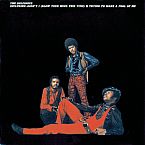
Album: The Delfonics (1970)
Charted: 22 10
Play Video

Songfacts®:

  • The epitome of Philadelphia Soul, "Didn't I (Blow Your Mind This Time)" is a heartbreaker, with the guy in the song getting his heart broken by the same girl over and over, yet still going back for more. He keeps trying, figuring his persistance will pay off, but every time he's disappointed. After his latest attempt, he asks, "Didn't I blow your mind this time?" but the answer is no. It might be time to fold the tent.
  • Delfonics frontman William Hart wrote the lyric, with the group's producer, Thom Bell, adding the music. Bell and The Delfonics come together at Cameo-Parkway Records in Philadelphia. At the time, the group had five members and played instruments. Bell wasn't impressed with how they played or with the vocal talents of one member, so he reduced them to a trio (one guy joined the military) and had them just sing - Bell himself played many of the instruments on their early recordings.

    In 1968, an executive at Cameo started a new label called Philly Groove and brought The Defonics (and Bell) with him. Their first single with the label was "La-La Means I Love You," a big hit that got them off and running. They ran off a string of minor hits until 1970, when "Didn't I (Blow Your Mind This Time)" got them back near the top of the charts. Bell left soon after to work with another Philadephia start-up, Philadelphia International Records, where he produced The Stylistics. He started getting pigeonholed
    as a maker of slow, often melancholy ballads, but showed his range with The Spinners, leading them to a string of hits from 1972-1977. The Delfonics didn't do nearly as well without Bell at the helm, and broke up in the mid-'70s.
  • This song has been covered extensively, by the likes of Aretha Franklin, Regina Belle, Jackie Jackson, Millie Jackson, The Trammps, Maxine Nightingale, and Patti LaBelle. The most successful cover, and also the most unexpected, is by the boy band New Kids On The Block, who took it to #8 in 1989. Their version was originally released on their self-titled debut album in 1986.
  • A new generation discovered this song when Quentin Tarantino used it in his 1997 movie Jackie Brown, which uses it as a plot device.

    [PLOT SPOILERS]

    First, the bail bondsman character Max Cherry (Robert Forster) is having coffee at Jackie's (Pam Grier) when she puts the record on and grooves to this song - Brown and Cherry have a conversation about how she never got into "the whole CD revolution." Next, we see Max Cherry at a record store in the Del Amo mall buying the Delfonics album and then driving around in the car listening to it. We're supposed to get the idea that this middle-aged white man suddenly listening to the Delfonics indicates his growing infatuation with her. Finally towards the end, a highly agitated Ordell Robbie (Samuel L. Jackson) is riding with Max in the car on his way to what he thinks will be the return of his money, but he's actually getting set up. Whoops, Max left the Delfonics in the radio, and Ordell has a moment of suspicion when he remarks that he didn't know Max liked the Delfonics - it suggests that Max and Jackie might have become quite close and thus could have hatched a conspiracy behind his back.

    It also bears mentioning that Jackie Brown seems to have become the least-popular Quentin Tarantino film among his fans. It has more to do with timing - it came out right after Pulp Fiction and is a much slower-paced film (based on the Elmore Leonard novel Rum Punch), and how do you follow an act like that? Nevertheless, it was Tarantino's love letter to the '70s and Super Fly-type exploitation flicks.
  • The song shows up in the 2019 Euphoria episode "The Trials and Tribulations of Trying to Pee While Depressed," and in the 2021 movie The Many Saints of Newark.

Comments: 3

  • Bobby from San Bernardino CaThis song here like many others, take me back to what now seems a simpler time. In reality the troubles then were worse then I choose to remember. Looking back, it is the songs of then that are what soften the reality of a wasted youth. Yeah buddy, I love these songs. You kids today, think before you do. Maybe different than mine you will be able to look back at a life well lived.
  • Barry from Sauquoit, NyOn January 4th, 1970 ( "Didn't I (Blow Your Mind This Time)" by the Delfonics entered Billboard's Hot Top 100 chart; and on March 15th it peaked at #10 (for 1 week) and spent 15 weeks on the Top 100...
    It reached #3 on Billboard's R&B Singles chart and #22 in the U.K.
    The song won a Grammy Award for 'Best R&B Performance by a Duo or Group'...
    In 1989 the New Kids On The Block covered it; and on November 12th, 1989 their version peaked at #8 (for 1 week) on the Top 100.
  • Zabadak from London, EnglandReleased on the Bell label in the UK...
see more comments

Editor's Picks

Joe Jackson

Joe JacksonSongwriter Interviews

Joe talks about the challenges of of making a Duke Ellington tribute album, and tells the stories behind some of his hits.

Soul Train Stories with Stephen McMillian

Soul Train Stories with Stephen McMillianSong Writing

A Soul Train dancer takes us through a day on the show, and explains what you had to do to get camera time.

Real or Spinal Tap

Real or Spinal TapMusic Quiz

They sang about pink torpedoes and rocking you tonight tonight, but some real lyrics are just as ridiculous. See if you can tell which lyrics are real and which are Spinal Tap in this lyrics quiz.

Michael Schenker

Michael SchenkerSongwriter Interviews

The Scorpions and UFO guitarist is also a very prolific songwriter - he explains how he writes with his various groups, and why he was so keen to get out of Germany and into England.

Don Brewer of Grand Funk

Don Brewer of Grand FunkSongwriter Interviews

The drummer and one of the primary songwriters in Grand Funk talks rock stardom and Todd Rundgren.

Black Sabbath

Black SabbathFact or Fiction

Dwarfs on stage with an oversize Stonehenge set? Dabbling in Satanism? Find out which Spinal Tap-moments were true for Black Sabbath.