This song is about Johnny Thunders, guitarist and founding member of the glam-rocking, punk-pioneering New York Dolls. The Dolls formed in 1971 in New York City, as their name suggests. Their 1973 self-titled debut album and its successor, Too Much Too Soon (1974), remain cult favorites and landmarks in the evolution of the punk genre - not punk themselves, per say, but proto-punk.
Thunders was a hard partyer from early in his career. He got addicted to smack ("Johnny always needs more than he shoots") and stayed that way for over a decade. It was natural to assume drugs were the cause when he died on April 23, 1991, and that is how one coroner report stated it: overdose by heroin and cocaine. Thunders' death actually remains a mystery, though, and one that gets stranger the more you look into it.
Thunders died in the Inn on St. Peter in New Orleans. According to Thunders/Dolls biographer Nina Antonia, who spoke with Thunders' sister, the autopsy showed signs of advanced leukemia.
Even stranger is the accounting of Dee Dee Ramone of The Ramones. In his biography, Lobotomy: Surviving The Ramones, Dee Dee states that he got a call from Thunders' rhythm guitar player, Stevie Klasson, saying that Thunders had gotten tangled up with some "bastards" who stole Thunders' methadone supply, fed him LSD, and killed him.
Fringe-music legend Willy DeVille further muddied waters (with good intentions) when he claimed that Thunders died with his guitar in his hands. DeVille lived next to the hotel where Thunders' body was found, and was assailed with inquiries by journalists. The reality was that rigor mortis had already set in when Thunders was pulled out of the hotel, and his body was rigid in the fetal position - none too flattering. DeVille was trying to add a little rock-star mythmaking to romanticize a grim situation but later admitted that he invented the claim about the guitar.
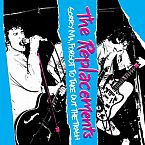
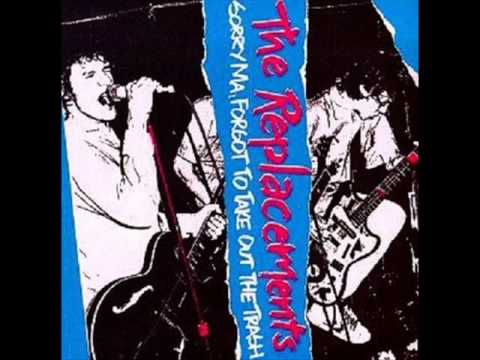
Thunders and the Dolls were major inspirations for Replacements frontman Paul Westerberg. When Westerberg brought some albums over to convince his fellow Replacements that they should be more punk than metal, one of the albums he brought was Johnny Thunders & the Heartbreakers' Live at Max's Kansas City (1979). The Replacements covered Thunders songs often in their early shows.
In July of 1980, The Replacements competed to open for Thunders' new band, Gang War, who were set to play in The Replacements' Minneapolis stomping grounds. They lost out to local rival Hüsker Dü.
Westerberg decided to attend the show anyway.
In a scene detailed in Trouble Boys: The True Story of the Replacements (Bob Mehr, Da Capo Press, 2017), Thunders was in a rough way before the performance, going through withdrawal and claiming his heroin had been stolen. Hüsker Dü frontman Bob Mould rounded up enough cocaine to get Thunders functioning again.
Thunders staggered out onstage, looking moribund. "When Johnny was playing, it looked like he was walking dead," Westerberg is quoted in Trouble Boys. "It was pitiful, like watching a guy in a cage."
Westerberg wrote "Johnny's Gonna Die" the next day at home, borrowing from chords from the Heartbreakers' "Chinese Rocks," which is about Thunders scoring heroin. Westerberg was aware he was predicting the death of one of his inspirations and someone who was a real human being in his circle, but he figured that everyone who knew Thunders knew that he was going to die, and those who didn't know Thunders wouldn't know what the song was about. Thunders was reportedly amused by the song and later told Westerberg half-jokingly and half-seriously about it backstage at a show.
In March of 1989, The Replacements were playing on a bill with Thunders. Westerberg called for Thunders to join them in a performance of "I Will Dare," and someone in the audience cried out, "Johnny's gonna die!" Westerberg angrily told them to shut it and have some respect.
Westerberg himself had a close brush with death from using pharmaceutical amphetamines on tour. The experience is the basis of "Take Me Down To The Hospital."
The song was important to Westerberg's songwriting development, being the first slow, ballad-like song he penned.