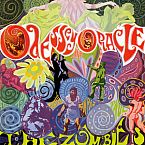
Butcher's Tale (Western Front 1914)

Album: Odessey And Oracle (1968)
Play Video

Songfacts®:

  • The writer of this song is Zombies bassist Chris White, who recalled in Mojo magazine February 2008 how this dark and chilling war protest number came about: "I'd been reading AJP Taylor on the First World War and my uncle had died at Passchendaele. I was driving to St. Albans and working out that in the first morning there were 60,000 casualties in the Battle of The Somme. The enormity hit me and I had to pull over to the side of the road because I was shaking. That's where that (lyric) came from. 'I just can't stop shaking.' In the flat I had an old American pedal organ with the knee swells. I wrote it on that, but Rod played it so much better in the studio."
  • Despite being the album's least commercial track, this was released as its first US single. White admitted in the same interview: "I was surprised. I think it was the resonance of the Vietnam War." Unsurprisingly the single flopped.
  • There was a printer's error with the title. It was actually called "Butcher's Tale Somme 1916" but they printed it as "Butcher's Tale (Western Front 1914)." This was on top of another error on the album as the designer of the LP cover misspelt the word "Odyssey" as '"Odessey."
  • In our interview with Zombies lead singer Colin Blunstone, he explained why he didn't sing on this track. "I don't know if you've ever listened to the lyric, but it's pretty dark stuff," he said. "People thought it was about Vietnam but really it's about the First World War, and I just couldn't see how it could fit on the album. But I was wrong. Everybody plays the album through, and I've never heard the running order questioned ever.

    So, originally I was going to sing that, but I thought it was too dark for me, especially at 19. I could handle it now, but at 19 I just thought it was a bit dark."

Comments: 3

  • Julian from Burlington, VtThe melody in the chorus of this song sounds very similar to the melody in the chorus of Another Morning by The Moody Blues. Seeing as this song was released about five months after Days of Future Passed, the album that Another Morning was on, it seems as if The Zombies were taking at least some influence from The Moody Blues, unless of course this is a complete coincidence.
  • Adam from West Palm Beach, FlDefinitely one of the most eloquent anti-war songs of the age.
  • David from Flushing, MiThe production of this song has a haunting feel to it that invokes the dark, terrifying world of WWI trench warfare. A true masterpiece but, unfortunately, not a song that would appeal to the masses as a popular hit record.
see more comments

Editor's Picks

Meshell Ndegeocello

Meshell NdegeocelloSongwriter Interviews

Meshell Ndegeocello talks about recording "Wild Night" with John Mellencamp, and explains why she shied away from the spotlight.
Verdine White of Earth, Wind & Fire

Verdine White of Earth, Wind & FireSongwriter Interviews

The longtime bassist of Earth, Wind & Fire discusses how his band came to do a holiday album, and offers insight into some of the greatest dance/soul tunes of all-time.
Producer Ron Nevison

Producer Ron NevisonSong Writing

Ron Nevison explains in very clear terms the Quadrophenia concept and how Heart staged their resurgence after being dropped by their record company.
A Monster Ate My Red Two: Sesame Street's Greatest Song Spoofs

A Monster Ate My Red Two: Sesame Street's Greatest Song SpoofsSong Writing

When singers started spoofing their own songs on Sesame Street, the results were both educational and hilarious - here are the best of them.
Michael Bolton

Michael BoltonSongwriter Interviews

Into the vaults for this talk with Bolton from the '80s when he was a focused on writing songs for other artists.
John Lee Hooker

John Lee HookerSongwriter Interviews

Into the vaults for Bruce Pollock's 1984 conversation with the esteemed bluesman. Hooker talks about transforming a Tony Bennett classic and why you don't have to be sad and lonely to write the blues.