Song To The Siren

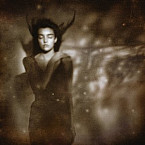
Album: It'll End in Tears (1983)
Charted: 66
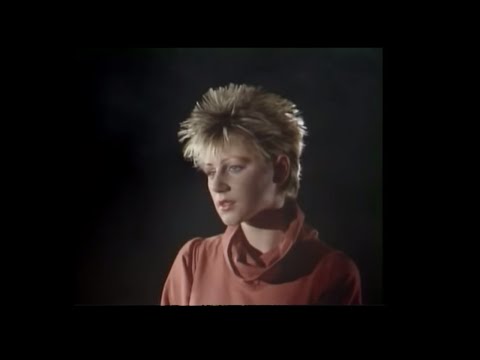
Play Video

Songfacts®:

  • "Song To The Siren" was written in 1967 by Tim Buckley and his high school friend and lyricist Larry Beckett, appearing first on Buckley's 1970 album Starsailor. The 1983 cover by This Mortal Coil, featuring Cocteau Twins members Elizabeth Fraser on vocals and Robin Guthrie on guitar, became the definitive version for a generation.
  • Beckett drew the title and imagery directly from Homer's Odyssey, using the myth of sirens luring sailors to their deaths on the rocks as a metaphor for the danger of surrendering to a love that might destroy the person who feels it. The nautical imagery, including a "foolish boat," rocks, breakers, and the choice between standing amid the waves or lying "with Death my bride," casts the object of desire as a siren whose call is both irresistible and perilous. According to BBC's Soul Music, Beckett wanted the song to carry a more hopeful message about love, and regrets that its enduring association with doom overtook that original intent.
  • This Mortal Coil was producer Ivo Watts-Russell's rotating collective of musicians from the 4AD roster, which included the Cocteau Twins. Elizabeth Fraser planned to record the track a cappella, but Robin Guthrie happened to be at Blackwing Studios with her. When Watts-Russell could not decide what to put between the verses, Guthrie reluctantly plugged in, leaned against the studio wall, and improvised guitar while listening to Buckley's original version once through his headphones.
  • "Song to the Siren" was originally slated as the B-side to "Sixteen Days/Gathering Dust," intended as This Mortal Coil's debut single, but it was switched to the A-side and released in September 1983. It went on to become the opening track of the group's 1984 debut album, It'll End in Tears. The single entered the UK Independent Singles Chart at #31 and remained on the chart for 101 weeks, ranking fourth for the decade behind Bauhaus's "Bela Lugosi's Dead" (131 weeks), New Order's "Blue Monday" (186 weeks), and Joy Division's "Love Will Tear Us Apart" (195 weeks).
  • Fraser told Mojo magazine she was "spellbound" the first time she heard the song, feeling an unexpected connection to Scottish folk music despite its American origins.

    She initially distanced herself from her own recording out of embarrassment over lyrics she'd misheard, as no publisher's lyric sheet was available and there was no internet to check against. That reservation eventually faded. Fraser performed it as her final encore at her second Meltdown show in 2012 and sang it on Massive Attack's 2024 and 2025 tours. "That song is such a moment in my life," she told Mojo. "I had to think about what it was like to sing it again, to reinterpret it, now I'm older, I have a different voice and I'm coming from a different place... it sounds less like the 'siren' now."

    Buckley's original still affects her just as deeply. "The lyrics are so beautiful, and Tim's voice had such a positive effect on all levels," she said. "It makes you think how much you can use your imagination. It makes you think the sky's the limit."
  • Fraser noted she would never have met Jeff Buckley, Tim Buckley's son, were it not for "Song to the Siren." The two later shared a clandestine relationship lasting 18 months in the 1990s.
  • David Lynch wanted to use This Mortal Coil's recording in Blue Velvet (1986) but could not afford the licensing, so he had Angelo Badalamenti compose "Mysteries of Love" instead. Lynch finally used the song over a decade later in Lost Highway (1997), though it was excluded from that film's official soundtrack album. It also appears prominently in Peter Jackson's The Lovely Bones (2009), scoring a heavenly scene with the murdered protagonist, and has featured across various other film, television, and radio projects, including an episode of BBC Radio 4's Soul Music exploring its emotional resonance around grief and loss.
  • In 1992, UK dance act Messiah sampled Fraser's vocal from the This Mortal Coil recording for their rave hit "Temple of Dreams," which peaked at #20 on the UK singles chart. A song born from Homeric mythology, 1960s songwriting, and 4AD's gothic dream pop had somehow made its way onto the dance floor. The Sirens, it turns out, had discovered rave culture.

Comments

Be the first to comment...

Editor's Picks

Marc Campbell - "88 Lines About 44 Women"

Marc Campbell - "88 Lines About 44 Women"They're Playing My Song

The Nails lead singer Marc Campbell talks about those 44 women he sings about over a stock Casio keyboard track. He's married to one of them now - you might be surprised which.

Graham Nash

Graham NashSongwriter Interviews

Graham Nash tells the stories behind some of his famous songs and photos, and is asked about "yacht rock" for the first time.

Keith Reid of Procol Harum

Keith Reid of Procol HarumSongwriter Interviews

As Procol Harum's lyricist, Keith wrote the words to "A Whiter Shade Of Pale." We delve into that song and find out how you can form a band when you don't sing or play an instrument.

Tom Bailey of Thompson Twins

Tom Bailey of Thompson TwinsSongwriter Interviews

Tom stopped performing Thompson Twins songs in 1987, in part because of their personal nature: "Hold Me Now" came after an argument with his bandmate/girlfriend Alannah Currie.

Dan Reed

Dan ReedSongwriter Interviews

Dan cracked the Top 40 with "Ritual," then went to India and spent 2 hours with the Dalai Lama.

Brandi Carlile

Brandi CarlileSongwriter Interviews

As a 5-year-old, Brandi was writing lyrics to instrumental versions lullabies. She still puts her heart into her songs, including the one Elton John sings on.