Shush

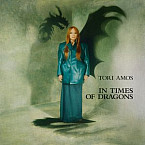
Album: In Times Of Dragons (2026)
Play Video

Songfacts®:

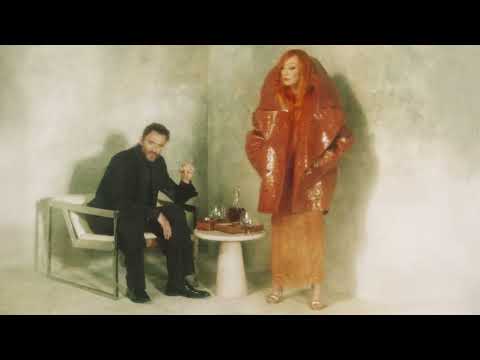
  • "Shush" opens Tori Amos's 2026 album, In Times of Dragons, wasting little time establishing that things have gone off the rails. The track introduces a fictionalized version of "Tori," who finds herself married to a "dangerous, power-hungry billionaire," a character Amos uses as a metaphor for modern authoritarian politics.

    "He represents what we're dealing with right now," Amos explained. "He sees congressmen, senators, and even probably presidents, as people who answer to him and other billionaires, who don't think you and I should vote. He's trying to develop the kind of feudal system we had hundreds of years ago. But it doesn't look like it once did... it has the same philosophy."
  • The song takes its name from the husband's chilling refrain:

    You shush yourself
    Shush yourself
    Shush yourself down now


    The line sounds almost soothing at first until the context becomes clear. His command to "shush" is a demand for absolute submission, underscored when he follows it with:

    You put a finger on those beautiful lips
    We both know what they're good for, don't we
  • While the husband is portrayed as a "lizard demon" billionaire, Amos anchors the fiction in reality with the line, "I no longer believe that freedom and democracy are compatible," a direct quote from tech billionaire Peter Thiel's 2009 essay.
  • Midway through the song, Amos drops a surprising pop-culture nod:

    Can I live through this?
    Can I live through this?
    Courtney, thank you


    The line references Hole's classic 1994 album Live Through This and their frontwoman, Courtney Love, who made headlines in 2005 when she publicly warned women on a red carpet about Harvey Weinstein, a missive that was largely laughed off at the time due to Love's controversial reputation.

    The shoutout carries extra trivia weight given the two songwriters' icy history. Amos's 1996 hit "Professional Widow" was widely interpreted as a scathing response to Love, and the two were never close.

    "Courtney and I, it's not like we're friends," Amos admitted to Uncut magazine. "We don't know each other. But I had to acknowledge respectfully that she actually asked that question before I did. But it was a very different time when she wrote that. America was not in a dictatorship. When she said it, it might have been a more personal question. I'm asking a global question."
  • The husband condescendingly calls Tori "Cassandra," a nod to the princess of Greek mythology granted the gift of prophecy but cursed never to be believed. The reference ties into the song's broader theme of women raising alarms about powerful men only to be ignored, a callback many critics linked to the #MeToo movement, the manosphere, and revelations surrounding Jeffrey Epstein.
  • Near the end of the track, Amos turns the mirror on her own career with a direct self-reference:

    I knew a girl who wrote "Silent All These Years"
    Where is she?


    It's a heavy question for longtime fans. "Silent All These Years" was the breakthrough 1991 single that launched Amos' solo career following the commercial failure of her 1988 synth-pop group, Y Kant Tori Read.

    "I had been destroyed by Y Kant Tori Read's failure," she told Uncut. "I remember being laughed at by people. The humiliation of that time is very hard to describe, because I was a child prodigy. The question I kept asking myself was: How did you go from prodigy to 'bimbo music?' That's what Billboard called my music... So I took a step back, but I had betrayed my Muses chasing radio and the record companies' concept of the slot they needed filling at the time. I'm not blaming them. I blame myself. That's what is behind 'Silent All These Years,' not bravery. It was the admission that I had betrayed my Muses. That [song] was the reclamation of: I embrace them again."

    By referencing her breakthrough hit in "Shush," Amos bridges her younger self with the fictionalized narrator trapped in the billionaire's home. Asking "Where is she?" questions whether the woman who reclaimed her voice back in 1991 still has that same fire inside her today.
  • Amos debuted "Shush" live on April 8, 2026, at Sheffield City Hall on the opening night of her UK tour, her most extensive run of dates in over a decade.
  • As the gateway to In Times of Dragons, "Shush" sets the narrative in motion. By introducing the fictionalized Tori, her "Lizard Demon" husband, and a web of personal trauma, political allegory, and industry callbacks, the track sets up the heroine's journey toward escape starting with the title track.

Comments

Be the first to comment...

Editor's Picks

Laura Nyro

Laura NyroSongwriting Legends

Laura Nyro talks about her complex, emotionally rich songwriting and how she supports women's culture through her art.

Curt Kirkwood of Meat Puppets

Curt Kirkwood of Meat PuppetsSongwriter Interviews

The (Meat)puppetmaster takes us through songs like "Lake Of Fire" and "Backwater," and talks about performing with Kurt Cobain on MTV Unplugged.

Linda Perry

Linda PerrySongwriter Interviews

Songwriting Hall of Famer Linda Perry talks about her songs "What's Up" and "Beautiful," her songwriting process, and her move into film music.

Subversive Songs Used To Sell

Subversive Songs Used To SellSong Writing

Songs about drugs, revolution and greed that have been used in commercials for sneakers, jeans, fast food, cruises and cars.
Classic Metal

Classic MetalFact or Fiction

Ozzy, Guns N' Roses, Judas Priest and even Michael Bolton show up in this Classic Metal quiz.

David Bowie Leads the Society for Prevention of Cruelty to Long-Haired Men

David Bowie Leads the Society for Prevention of Cruelty to Long-Haired MenSong Writing

Bowie's "activist" days of 1964 led to Ziggy Stardust.