No More Lockdown

Album: not on an album (2020)
Play Video

Songfacts®:

  • Unlike much of Morrison's other music, there's nothing mystical or elliptical in this song.

    The whole piece is him talking about his perception of the UK's COVID-19 pandemic lockdown, which was very divisive. There were those who viewed it as a commonsense safeguard against death and the overrunning of hospitals, those who viewed it an overreaction that caused more harm than good, and those like Morrison who viewed it as a corrupt-to-the-core power grab.

    "No More Lockdown" is Morrison talking to the others in his camp and issuing a soft rallying cry.
  • Despite the confrontational lyrics and heavy subject matter, the music and vocals are restrained. It's almost like a kid's sing-a-long, and calls to mind the simple folk songs that labor protesters used to build morale and organized resistance on the picket line.
  • No more Imperial College
    Scientists making up crooked facts


    This might refer to any number of things because the Imperial College of London is the UK's premier research institution, but the clearest reference would seem to be to epidemiologist Neil "Professor Lockdown" Ferguson.

    Ferguson constructed the computer model that predicted doom for the UK and inspired the government to initiate lockdowns and the suspension of certain civil rights. Ferguson has since been vilified by many in the public and the press (mostly the conservative press). Opponents of the anti-Ferguson crowd would argue there's no way to know if his model was inaccurate because it is based on the idea of life continuing as normal and not under lockdown.

    Still, criticism of Ferguson was hardly limited to Morrison. There were many critics of the man and his work, and he was forced to step down from his position after it was revealed that he was breaking his own recommended quarantine rules in order to have a tryst with his very married lover.
  • No more celebrities telling us
    Telling us what we're supposed to feel


    There's a certain irony in this statement because Morrison himself is a celebrity, but it echoed a strong sentiment among certain aspects of UK culture, largely made up of the working class but by no means limited to it.

    It's emblematic of the division growing throughout the Western world at that time and one that could be seen in Europe and the US as well as in the UK. 2020 was a time when the intellectual and cultural "elites" were very much at odds with growing portions of their nations. This rift didn't start with COVID-19: In UK the landmark event happened a couple years earlier with Brexit, which was when the UK shockingly voted to separate from the European Union. In the US, this was marked by the 2016 election of Donald Trump.
  • This is the third and last of Morrison's trio of COVID lockdown protest songs. The first was "Born to Be Free" (released September 24) and the second was "As I Walked Out" (released October 8).

Comments

Be the first to comment...

Editor's Picks

Gary Numan

Gary NumanSongwriter Interviews

An Electronic music pioneer with Asperger's Syndrome. This could be interesting.

Yacht Rock!

Yacht Rock!Song Writing

A scholarly analysis of yacht rock favorites ("Steal Away," "Baker Street"...) with a member of the leading YR cover band.

Movie Stars In Music Videos

Movie Stars In Music VideosSong Writing

Johnny Depp, Angelina Jolie, Mila Kunis and John Malkovich are just a few of the film stars who have moonlighted in music videos.
Jesus Thinks You're a Jerk: Rock vs. Televangelists

Jesus Thinks You're a Jerk: Rock vs. TelevangelistsSong Writing

When televangelists like Jimmy Swaggart took on rockers like Ozzy Osbourne and Metallica, the rockers retaliated. Bono could even be seen mocking the preachers.
John Waite

John WaiteSongwriter Interviews

"Missing You" was a spontaneous outpouring of emotion triggered by a phone call. John tells that story and explains what MTV meant to his career.
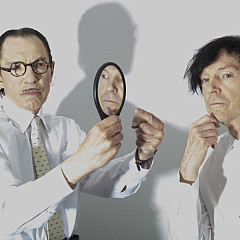
Ron and Russell Mael of Sparks

Ron and Russell Mael of SparksSongwriter Interviews

The men of Sparks on their album Hippopotamus, and how Morrissey handled it when they suggested he lighten up.