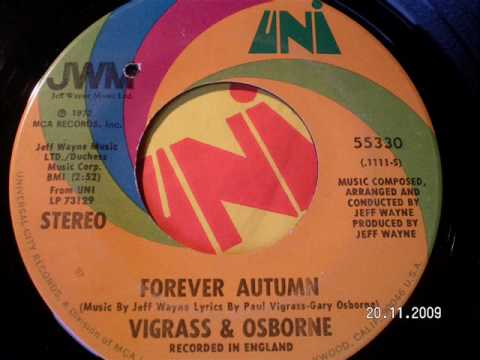
Forever Autumn

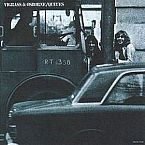
Album: Queues (1972)
Play Video

Songfacts®:

  • There are two ways to listen to this ballad: as a generic love song where life will be "forever autumn" now that you're gone - possibly dead; and as something very specific.

    Although Jeff Wayne wrote the melody as long ago as 1969 - as a jingle for a commercial - and it was recorded by co-writers Vigrass & Osborne for their 1972 album Queues. "I'd done a Lego ad that at the time was very popular," Wayne recalled to Mojo magazine. "People wrote in, asking if it was a record they could buy, which it wasn't until Vigrass and Osborne wrote lyrics and it became Forever Autumn."

    His uptempo version is distinctly inferior to the later Justin Haywood version, which was recorded for Wayne's musical version of The War Of The Worlds.

    To understand it properly, it is probably best to listen to the entire (double) album, on which it is the 2nd track on Side B running to 7:43.
  • The radio edit single runs 4:07 and was released on the CBS label backed by "The Fighting Machine." >>>
    Suggestion credit:
    Alexander Baron - London, England, for above 2
  • Moody Blues singer Justin Haywood's version of this tearjerker was released as a single, peaking at #5 in the UK and #47 in the US in 1978. "I had a call," Haywood recalled. "Asking if I was the guy who sang 'Nights in White Satin.' I guess Jeff Wayne wanted that same plaintive feel. He sent over a demo of Forever Autumn."
  • In the song, migrating birds and falling leaves represent the disappearance of the singer's lover, and now his "life will be forever autumn." The lyrics perfectly suited a scene Wayne needed a song for. "There was a moment in the score from a story point of few, when the wife of the journalist is missing," he told Mojo, "and it was as if Forever Autumn had been written for it."

Comments: 2

  • Rob T from Ontario, CanadaFor me it has always belonged in 'War of the Worlds' not just for the melancholy feel, which fits at this point in the album but also as a metaphor: It was the autumn of mankind having enjoyed his ascendancy in spring and ruling the world in summer. Kicking his (mankinds) way through the leaves of world, enjoying it all as if it was all meant for him. The birds flying south are sort of metaphysical as the boon by which mankind ruled, but now his betters are coming so the boons are leaving, one by one they disappear - and then they are gone. Winters coming; this wont be the world that 'came to love you' for much longer (now is the winter of your discontent).
  • Barry from Sauquoit, NyOn this day in 1978 {December 30th} Justin Heyward performed "Forever Autumn" on the ABC-TV Saturday-afternoon program, 'American Bandstand'...
    At the time "Forever Autumn" was at position #81 on Billboard's Top 100 chart, three weeks earlier it had peaked at #47 {for 1 week}, and it spent thirteen weeks on the Top 100...
    It reached #22 on Billboard's Easy Listening Tracks chart...
    And on August 20th, 1978 it peaked at #5 {for 1 week} on the United Kingdom's Official Top 75 Singles chart...
    David Justin Hayward celebrated his 73rd birthday two months ago on October 14th, 2019...
see more comments

Editor's Picks

80s Music Quiz 1

80s Music Quiz 1Music Quiz

MTV, a popular TV theme song and Madonna all show up in this '80s music quiz.

Dino Cazares of Fear Factory

Dino Cazares of Fear FactorySongwriter Interviews

The guitarist/songwriter explains how he came up with his signature sound, and deconstructs some classic Fear Factory songs.

Paul Stanley of Kiss, Soul Station

Paul Stanley of Kiss, Soul StationSongwriter Interviews

Paul Stanley on his soul music project, the Kiss songs with the biggest soul influence, and the non-make-up era of the band.

Dave Alvin - "4th Of July"

Dave Alvin - "4th Of July"They're Playing My Song

When Dave recorded the first version of the song with his group the Blasters, producer Nick Lowe gave him some life-changing advice.

Todd Rundgren

Todd RundgrenSongwriter Interviews

Todd Rundgren explains why he avoids "Hello It's Me," and what it was like producing Meat Loaf's Bat Out of Hell album.

Benny Mardones

Benny MardonesSongwriter Interviews

His song "Into The Night" is one of the most-played of all time. For Benny, it took him to hell and back.