Carmelita

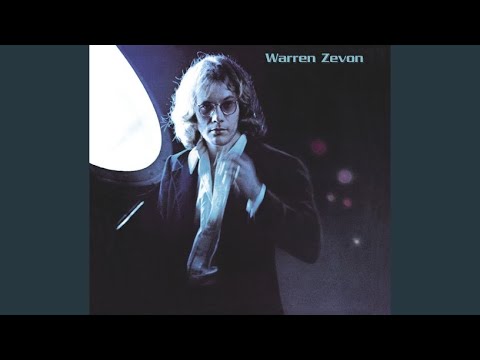
Album: Warren Zevon (1976)
Play Video

Songfacts®:

  • The guy in this song has hit rock bottom. He's broke, strung out on heroin, and his welfare has run out. All he has left is Carmelita, and all he wants is for her to hold him tighter. Zevon, rather sarcastically, called it "a cheerful number about heroin, a substance with which, happily, I had only a brief flirtation and not a tragic love affair."
  • "Carmelita" is part of Warren Zevon's 1976 eponymous second album, produced by Jackson Browne. Zevon's debut album was issued in 1970 and went nowhere. It looked like he was destined for a career on the musical outskirts, writing jingles and doing arrangements, but Browne loved Zevon's songs and made it his mission to get them out there. Browne started performing "Carmelita" and another Zevon song, "Werewolves Of London," in concert, making a point to say who wrote them. He got Zevon a record deal and became his producer.

    The album didn't do very well, but Zevon's bizarro songs were never made for the masses. Browne was back on board for Zevon's next album, Excitable Boy, in 1978, and that one included "Werewolves," giving Zevon a hit.
  • There is a lot of Los Angeles imagery in this song, with mentions of Ensenada, Echo Park, and the Pioneer chicken stand on Alvarado Street. Zevon lived in Echo Park.
  • Linda Ronstadt covered "Carmelita" on her 1977 album Simple Dreams, along with another Zevon song, "Poor Poor Pitiful Me." Ronstadt was a huge star so these covers gave Zevon a big boost. Ronstadt's version of "Poor Poor Pitiful Me" was released as a single and gave Zevon his first chart entry as a writer.
  • An early demo released on the 2007 album Preludes: Rare and Unreleased Recordings reveals that the line "Well, I pawned my Smith Corona" was originally "Well, I pawned my Smith & Wesson." This is a pretty big distinction: A Smith & Wesson is a gun and a Smith Corona is a typewriter, so the guy in the song is more likely to be a writer than a criminal.
  • Jackson Browne's cohorts Glenn Frey (of the Eagles) and David Lindley both played guitar on this track, and Frey added harmony vocals as well. Session stars Wadddy Wachtel (guitar), Bob Glaub (bass) and Larry Zack (drums) also played on it.

Comments: 2

  • El_odio from Cato a writer, and Warren was, his typewriter is his weapon..also possibly a reference to the film 'Lost Weekend'. It would seem that Carmelita has gone to Ensenada, leaving the protagonist who is playing 'solitaire with my pearl handled deck'..an allusion to a pearl handled revolver(S&W) and suicide? The ambiguity and mixed imagery are part of what makes this song so haunting
  • Martin from Toronto, Canada.Canadian musician, Murray McLachlan recorded a very nice cover of "Carmelita."
see more comments

Editor's Picks

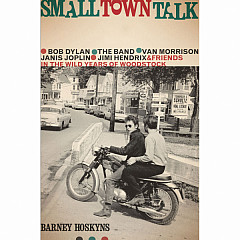
Barney Hoskyns Explores The Forgotten History Of Woodstock, New York

Barney Hoskyns Explores The Forgotten History Of Woodstock, New YorkSong Writing

Our chat with Barney Hoskyns, who covers the wild years of Woodstock - the town, not the festival - in his book Small Town Talk.
Kerry Livgren of Kansas

Kerry Livgren of KansasSongwriter Interviews

In this talk from the '80s, the Kansas frontman talks turning to God and writing "Dust In The Wind."
Spot The Real Red Hot Chili Peppers Song Titles

Spot The Real Red Hot Chili Peppers Song TitlesMusic Quiz

The Red Hot Chili Peppers have some rather unusual song titles - see if you can spot the real ones.
Grateful Dead Characters

Grateful Dead CharactersMusic Quiz

Many unusual folks appear in Grateful Dead songs. Can you identify them?
Richie Wise (Kiss producer, Dust)

Richie Wise (Kiss producer, Dust)Songwriter Interviews

Richie talks about producing the first two Kiss albums, recording "Brother Louie," and the newfound appreciation of his rock band, Dust.

Tim McIlrath of Rise Against

Tim McIlrath of Rise AgainstSongwriter Interviews

Rise Against frontman Tim McIlrath explains the meanings behind some of their biggest songs and names the sci-fi books that have influenced him.