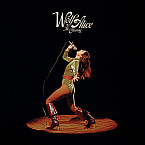

White Horses

Album: The Clearing (2025)
Play Video

Songfacts®:

  • "White Horses" is the one song on Wolf Alice's fourth album, The Clearing, where their drummer, Joel Amey, is the lead vocalist. Drummers in rock bands tend to get lead vocal spots only under very specific circumstances, usually involving either Phil Collins, Don Henley or karaoke night, but here he steps out from behind the kit and takes the lead mic, with Ellie Rowsell joining him later to duet. This isn't his first time singing lead, though; he first took center stage on vocals with "Swallowtail" from their 2017 album Visions of a Life.
  • The song's roots are deeply personal. Amey's mother and aunt were adopted, which meant the family's heritage was always something of a blank page. "Taxi drivers would ask if I was from where they're from because of my dark coloring," Amey told The Guardian "and I couldn't say either way."

    It wasn't until much later that the family discovered his grandmother was from Saint Helena, a revelation that coincided neatly with, as Amey put it, "the strange in-perspective bulls--t that starts happening in your 30s."

    The track is as much about that moment of discovery as it is a love letter to his chosen family: his friends, his bandmates, the people who travel the world with him.
  • In the chorus, Amey sings:

    I do not need no rooting, I carry home with me
    To be a nomad floating on the waves of the Channel Sea
    I can see England waving, white horses carry me


    The "white horses" here are literal and metaphorical - the foamy crests of ocean waves, yes, but also symbols of journey, transition, and freedom. They reflect both the physical movement of a touring musician and the ongoing search for identity, especially when your sense of home is defined more by people than by place.
  • Musically, "White Horses" is Wolf Alice's 1970s rock side meeting krautrock's hypnotic pulse. Amey wanted something "with a driving krautrock beat," not dance music exactly, but propulsion, the sound of forward motion. That groove sits beneath shimmering guitars and an expansive, open arrangement that producer Greg Kurstin helps keep both warm and widescreen. The result is a track that feels as if it's in perpetual motion, even when it's standing still.
  • Within The Clearing, "White Horses" is a moment of reflection, a pause on the trail before heading back into the forest. "We were saying a lot of these songs are like a moment of peace," Joel Amey told NME, "and 'White Horses' is like that for me, looking at where I've come from and maybe where I'm going, but without necessarily answering it."
  • The "White Horse" title has illustrious company. Jackie Lee's 1968 TV theme "White Horses" imagines escape and innocence; Chris Stapleton's blues-rock tinged version is about readiness; Taylor Swift's Fearless cut frames it as lost innocence; Low's is a slow indie mediation on existential comfort; Paul Weller's a poetic take on the cycle of life. Amey's "White Horses" sits among them comfortably, though in his case, the horses are galloping somewhere between Saint Helena and the North Sea.

Comments

Be the first to comment...

Editor's Picks

Deconstructing Doors Songs With The Author Of The Doors Examined

Deconstructing Doors Songs With The Author Of The Doors ExaminedSong Writing

Doors expert Jim Cherry, author of The Doors Examined, talks about some of their defining songs and exposes some Jim Morrison myths.

Does Jimmy Page Worship The Devil? A Look at Satanism in Rock

Does Jimmy Page Worship The Devil? A Look at Satanism in RockSong Writing

We ring the Hell's Bells to see what songs and rockers are sincere in their Satanism, and how much of it is an act.

Brandi Carlile

Brandi CarlileSongwriter Interviews

As a 5-year-old, Brandi was writing lyrics to instrumental versions lullabies. She still puts her heart into her songs, including the one Elton John sings on.

Bass Player Scott Edwards

Bass Player Scott EdwardsSong Writing

Scott was Stevie Wonder's bass player before becoming a top session player. Hits he played on include "I Will Survive," "Being With You" and "Sara Smile."

Ian Anderson: "The delight in making music is that you don't have a formula"

Ian Anderson: "The delight in making music is that you don't have a formula"Songwriter Interviews

Ian talks about his 3 or 4 blatant attempts to write a pop song, and also the ones he most connected with, including "Locomotive Breath."

Taylor Dayne

Taylor DayneSongwriter Interviews

Taylor talks about "The Machine" - the hits, the videos and Clive Davis.