"Funeral" arrives wearing a black overcoat and looking as though it might politely request a moment of silence, only to sit down and deliver an uplifting sermon about survival, love, and emotional spring cleaning. While earlier Dermot Kennedy songs like "
Outnumbered" functioned as reassuring handholds during emotional chaos, "Funeral" is the moment when the storm finally clears and you realize you've learned something valuable while standing in the rain.
Kennedy explained via Instagram that the song is about "burying the past and moving forward into a new light. Being tested but never broken."
On the surface, the song operates as a sweeping love story about two people choosing each other over the accumulated wreckage of their past mistakes. Rather than suggesting the end of a relationship, the "funeral" symbolically buries shared heartbreak, allowing the couple to step into something stronger. It echoes Kennedy's recurring fascination with love as a stabilizing force, territory he explored in songs like "
Power Over Me," though here the sentiment feels less dizzy with infatuation and more grounded in emotional accountability.
I'm scared of who I'd be without you
Much more than you know
If I seem strong, it's just a showKennedy has built much of his catalogue around the tension between strength and fragility, such as the quietly hopeful perseverance of "
Better Days." In "Funeral," he leans fully into that duality, presenting vulnerability not as weakness but as the foundation for genuine emotional growth.
The song suggests that by ceremoniously acknowledging and releasing pain, by giving it a proper burial, you create fertile ground where resilience, gratitude, and profound connection can finally grow.
"I find it very hard to stay present because I'm always mining the past for inspiration, then I'm so much contemplating the future in terms of my own aspirations,"
Kennedy explained to Rolling Stone. "It felt liberating to express the need to shed burdens."
Standing on St. Brigid's Road
Where we finally let it go
"St. Brigid's Road" is a real street in Dublin's Drumcondra area, and its namesake, Saint Brigid, is traditionally associated with renewal and protection in Irish tradition, reinforcing the song's themes of transformation and passage.
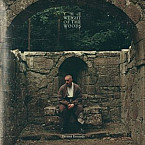
"Funeral" is the lead single and fourth track from Kennedy's third album, The Weight of the Woods. Kennedy described "Funeral" as emerging during what he called the "last roll of the dice" phase of finishing the album, a period when creative pressure often loosens into experimentation. That freedom allowed "Funeral" to develop organically.
Kennedy wrote "Funeral" alongside Gabe Simon, Carrie K, and Gregory "Aldae" Hein, with Simon producing, Carrie K as assistant producer, and Rob Kirwan contributing additional production. Nashville producer Gabe Simon (known for his work with Noah Kahan and Lana Del Rey) temporarily relocated to Ireland for six weeks during the album's creation, with much of The Weight of the Woods written and recorded in a studio near Kennedy's Dublin home, alongside additional sessions in Simon's Nashville studio.
On The Weight of the Woods, Kennedy embraces stripped-back folk textures blended with subtle country influences. "If I get up in a pub with just a guitar or a piano, I'm certain that I can sing to a room full of people," he explained. "It's where I'm the most comfortable. I wanted that element to be front-and-center on this album."
He described the album as "a beautiful homegrown thing with Irish instruments and an Irish story," deeply connected to the forest behind his Dublin home.
Charlie Sarsfield (George Ezra's "
Dance All Over Me" Yungblud's "
Zombie") directed the music video, which visually translates the song's emotional turbulence into a symbolic journey. Starring Charlie Rowe and Maria Tont, the visual follows Rowe's character through a series of cathartic, emotionally charged scenarios that represent internal conflict and healing. Kennedy appears throughout as a steady, almost guiding presence, reinforcing the song's message of quiet resilience.
Dermot Kennedy wanted "Funeral" to be about ditching any difficult stuff he's been through.
"Songwriters spend an awful lot of time wallowing in the past and I wanted it to feel triumphant; moving forward into something more positive," he told The Sun. "It felt good and the vocal carries an energy which is always a fun thing on a song."
The Weight of the Woods topped the UK chart, following the success of Kennedy's 2019 debut Without Fear and 2022's Sonder. Together, these three records completed a rare opening run of consecutive chart-toppers, making Dermot Kennedy the first Irish solo artist to score a #1 album with each of his first three studio releases.