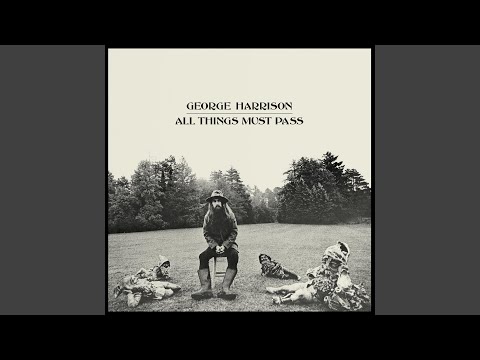

Isn't It A Pity

Album: All Things Must Pass (1970)
Play Video

Songfacts®:

  • George Harrison was big on compassion and understanding, tenets he followed throughout his life. In "Isn't It A Pity," he laments our tendencies to take our blessings for granted and hurt others, often without even thinking. Many songwriters have expressed this sentiment in their songs, but Harrison made it a lifelong quest, taking him on a path through Eastern philosophy. He often found his zen through gardening.
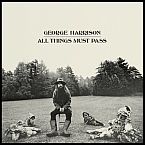
  • "Isn't It A Pity" dates back to 1966, when Harrison first presented it to The Beatles. By this time, he was an excellent songwriter and had became very proficient, but John Lennon and Paul McCartney's song usually got priority, so Harrison was limited to one or two songs per album. By the time The Beatles broke up, Harrison had a trance of tracks ready to go, which he released on his 1970 triple album All Things Must Pass.
  • Harrison had his pick of the top talent to work on his All Things Must Pass album - who wouldn't want to play on an album by an ex-Beatle? He chose Phil Spector to produce it with him, and Spector made use of all the great musicians at his disposal, building their parts into his "wall of sound." It's not clear who played on each track, but "It's A Pity" likely has Harrison's Beatles bandmate Ringo Starr on drums, Billy Preston on piano, and Bobby Whitlock on organ. "That whole session was great," Whitlock told Songfacts. "George Harrison, what a wonderful man. All the time that I ever knew him, which was from 1969 to his passing, he was a wonderful man. He included everyone on everything he did because there was enough for all."
  • There are two versions of this song on the album. The first is on Side 1, Disc 1 and runs 7:10; the second is on Side 2, Disc 2 and goes 4:45.
  • This was one of the songs Harrison played live when he joined Eric Clapton's tour of Japan for 12 dates in 1991. Harrison's 1974 Dark Horse tour was a boondoggle - he lost his voice at one point, and the tour earned scathing reviews. Clapton was able to coax him back on the road for these shows, but Harrison never toured again. Recordings from those shows were compiled into Harrison's 1992 album Live In Japan.
  • This was used as the flip side of "My Sweet Lord," the first single from All Things Must Pass and a #1 hit.
  • In 2023, "Isn't It A Pity" was used in a holiday film commissioned by Apple to promote their iPhone and MacBook Air as tools for video production. In the film, a woman makes a stop-motion movie with her demanding and standoffish boss as the villain. When she sees him eating alone, she changes her opinion of him and reworks the movie so he gets a dog and finds happiness. It fits with the theme of the song; when she sees him from a different perspective, she looks on him with more humanity.

Comments

Be the first to comment...

Editor's Picks

Who's Johnny, And Why Does He Show Up In So Many Songs

Who's Johnny, And Why Does He Show Up In So Many SongsSong Writing

For songwriters, Johnny represents the American man. He has been angry, cool, magic, a rebel and, of course, marching home.

Zakk Wylde

Zakk WyldeSongwriter Interviews

When he was playing Ozzfest with Black Label Society, a kid told Zakk he was the best Ozzy guitarist - Zakk had to correct him.

Art Alexakis of Everclear

Art Alexakis of EverclearSongwriter Interviews

The lead singer of Everclear, Art is also their primary songwriter.

John Lee Hooker

John Lee HookerSongwriter Interviews

Into the vaults for Bruce Pollock's 1984 conversation with the esteemed bluesman. Hooker talks about transforming a Tony Bennett classic and why you don't have to be sad and lonely to write the blues.

Tim McIlrath of Rise Against

Tim McIlrath of Rise AgainstSongwriter Interviews

Rise Against frontman Tim McIlrath explains the meanings behind some of their biggest songs and names the sci-fi books that have influenced him.

80s Video Director Jay Dubin

80s Video Director Jay DubinSong Writing

Billy Joel and Hall & Oates hated making videos, so they chose a director with similar contempt for the medium. That was Jay Dubin, and he has a lot to say on the subject.