Same Ole Me

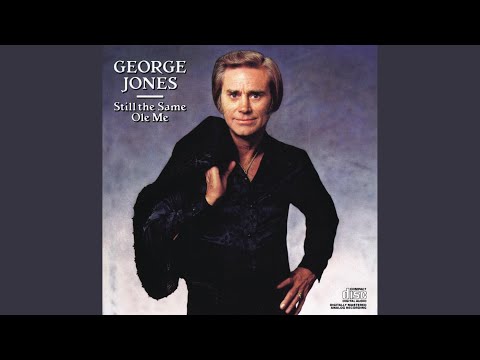
Album: Still the Same Ole Me (1982)
Play Video

Songfacts®:

  • In this song, a couple have grown old together, but their love hasn't aged. He's the "same ole me," loving her just like when he first fell for her.

    By this time, George Jones had been married and divorced three times, most recently to Tammy Wynette. But he had met Nancy Sepulvado, who became his fourth wife in 1983. This one took: They were married until Jones died in 2013. He credited her with saving his life by helping him kick his drug and alcohol addictions. The song went to #5 on the Country chart and hit #1 on the Canadian Country chart.
  • "Same Ole Me" was the first hit song written by Paul Overstreet, who went on to become one of the top songwriters in Nashville. Overstreet's credits include "When You Say Nothing At All" (Keith Whitley), "Forever And Ever, Amen" (Randy Travis) and "She Thinks My Tractor's Sexy" (Kenny Chesney). Overstreet also became a successful solo artist, with hits that include "Seein' My Father in Me" and "Daddy's Come Around." He often performed "Same Ole Me" and included it on his 1999 album A Songwriters Project, Volume 1.
  • The Oak Ridge Boys sang backup on this track and also convinced Jones to record it. In a Songfacts interview with Paul Overstreet, he told the story:

    "I had gone down to Mississippi for a while and I was staying at my brother's house. I lived with him my last two years in high school. I lived with his family and played football in Prentiss. That town closes up at sundown, but the parties are outside of town at people's houses or out in the woods. I was bored, so I went in the living room and sat down. My nephew came in, lay on the couch and went to sleep. The dog was laying on the floor asleep. And for the first time, I actually saw the song, saw the beginning, middle, and end. So I just wrote what I saw.

    Eddie Rabbitt used to tell me about that. He'd go, 'You know how you see a song, you see the beginning, middle and end?' And I'd go, 'No.'

    Sometimes I'd write songs and didn't know how they were going to end. But on that one, I saw it, and I just wrote what I saw. When I went to Nashville I played it for Tony Brown one day and he said, 'We gotta demo that.' I didn't think there was that much to it. I read the lyrics to my brother on the way to the airport the next day, and he said, 'I don't really hear anything.' So I was surprised when Tony wanted to demo the song. The Oak Ridge Boys took it to George's producer and said, 'You always said if we thought we had a song for George that you'd record it. Well, if you record it, we'll sing the backgrounds.' That was how it happened."

Comments

Be the first to comment...

Editor's Picks

Brenda Russell

Brenda RussellSongwriter Interviews

Brenda talks about the inspiration that drove her to write hit songs like "Get Here" and "Piano in the Dark," and why a lack of formal music training can be a songwriter's best asset.

Francesca Battistelli

Francesca BattistelliSongwriter Interviews

The 2011 Artist of the Year at the Dove Awards isn't your typical gospel diva, and she thinks that's a good thing.

Eric Clapton

Eric ClaptonFact or Fiction

Did Eric Clapton really write "Cocaine" while on cocaine? This question and more in the Clapton edition of Fact or Fiction.

Supertramp founder Roger Hodgson

Supertramp founder Roger HodgsonSongwriter Interviews

Roger tells the stories behind some of his biggest hits, including "Give a Little Bit," "Take the Long Way Home" and "The Logical Song."

Producer Ron Nevison

Producer Ron NevisonSong Writing

Ron Nevison explains in very clear terms the Quadrophenia concept and how Heart staged their resurgence after being dropped by their record company.

Jon Foreman of Switchfoot

Jon Foreman of SwitchfootSongwriter Interviews

Switchfoot's frontman and main songwriter on what inspires the songs and how he got the freedom to say exactly what he means.