

Chameleon

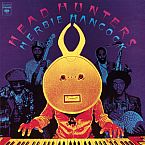
Album: Head Hunters (1973)
Play Video

Songfacts®:

  • This instrumental was composed by Herbie Hancock in collaboration with saxophonist Bennie Maupin, bass guitarist Paul Jackson and drummer Harvey Mason. All four songwriters played on the original version on Head Hunters, which features solos by Hancock and Maupin.
  • The song has a characteristic jazz bass line and is set to a funk beat. "I knew that I had never heard any jazz players really play funk like the funk I had been listening to," said Hancock. "Instead of getting jazz cats who knew how to play funk. I got funk cats who knew how to play jazz."
  • The song is one of the most widely recognized jazz standards, and has become standard repertoire in most small jazz ensembles. The Head Hunters album is a defining moment in the genre of jazz funk, and in 2003, it was ranked at #411 on Rolling Stone's "The 500 Greatest Albums of All Time" list.
  • Head Hunters was a crossover hit thanks to its marriage of traditional jazz and the funk sounds of James Brown, and Sly Stone. Uncut magazine asked Herbie Hancock what inspired Head Hunters' mix of the two genres? He replied; "Two things. One was my own background living in Chicago, which is a blues town. When I was a kid, even though my parents would play classical music on the radio, they also played jazz records, and of course I heard R&B records, which were a part of my generation at that time growing up in the '40s. So that was my roots."

    "But also there was Sly Stone with 'Thank You (Falettinme Be Mice Elf Agin)' and James Brown that I was listening to in the early '70s. At a certain point I felt the need to play music that was more tethered, something that was more earthy. It was certainly a new approach for me and I didn't realise  that I was carving out new territory."
  • On the album, this runs a hearty 15:41. A version running just 2:50 was released as a single.
  • There are about 160 species of chameleon living in Africa, Madagascar, Spain and Portugal, and across south Asia as far as Sri Lanka. Some species of chameleons can change the color of their skins for camouflage, or to signal mood to other chameleons. This is caused by stress and changes in the intensity of light and temperature, which alter the dispersal of pigment granules in the layers of cells beneath the outer skin.

    The word is used figuratively to describe a fickle person who shifts according to the opinions of others just as a chameleon can change its color to blend with its background.
  • Fun Fact: Chameleons have the most distinctive eyes of any reptile. They can rotate and focus separately to observe two different objects simultaneously. This gives them a full 360-degree arc of vision around their bodies (Source The Encyclopedia of Trivia)

Comments

Be the first to comment...

Editor's Picks

Sub Pop Founder Bruce Pavitt On How To Create A Music Scene

Sub Pop Founder Bruce Pavitt On How To Create A Music SceneSong Writing

With $50 and a glue stick, Bruce Pavitt created Sub Pop, a fanzine-turned-label that gave the world Nirvana and grunge. He explains how motivated individuals can shift culture.

Gary LeVox

Gary LeVoxSongwriter Interviews

On "Life Is A Highway," his burgeoning solo career, and the Rascal Flatts song he most connects with.

Jack Blades of Night Ranger and Damn Yankees

Jack Blades of Night Ranger and Damn YankeesSongwriter Interviews

Revisit the awesome glory of Night Ranger and Damn Yankees: cheesily-acted videos, catchy guitar licks, long hair, and lyrics that are just plain relatable.

Country Song Titles

Country Song TitlesFact or Fiction

Country songs with titles so bizarre they can't possibly be real... or can they?

Tony Banks of Genesis

Tony Banks of GenesisSongwriter Interviews

Genesis' key-man re-examines his solo career and the early days of music video.

Ralph Casale  - Session Pro

Ralph Casale - Session ProSongwriter Interviews

A top New York studio musician, Ralph played guitar on many '60s hits, including "Lightnin' Strikes," "A Lover's Concerto" and "I Am A Rock."