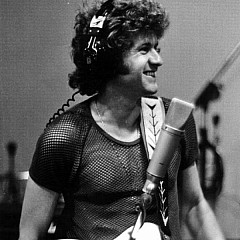
"Pocahontas" was first recorded on August 11, 1976, at the Indigo Ranch Recording Studio in Malibu, California. It was intended to be released in an album with the dozen or so other songs recorded that evening, but the record executives didn't like the product. The original version of the song didn't see the light of day until September 8, 2017, when it was released on Hitchhiker.
Conflicting accounts have floated around about whether that Indigo Ranch version was the "true" original, but on August 31, 2017, while livestreaming the debut of Hitchhiker, Young stated, "I was advised to record the songs with a band, but the Hitchhicker versions are the true originals, recorded earlier than any versions you may have ever heard, and I always knew the original album would find its place and surface."
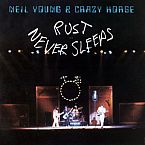
The first time the song was released to the public was on Rust Never Sleeps. Like most of Young's best-loved songs, it wasn't released as a single. Still, it immediately made an impression on fans and critics alike, and still gets airplay on classic rock radio stations.
According to David Briggs, who produced the first version of the song, "Pocahontas" came out of Young with no rehearsal.
"He'd turn to me and go, 'Guess I'll turn on the tap,'" Briggs said of the
Indigo sessions, "and then out came '
Powderfinger,' 'Pocahontas,' '
Out Of The Blue,' 'Ride My Llama.' I'm not talkin' about sittin' down with a pen and paper, I'm talkin' about pickin' up a guitar, sittin' there and lookin' me in the face and in 20 minutes - 'Pocahontas.'"
Pocahontas was a 17th Century Native American woman who holds a prominent role in American history and mythology: She saved John Smith from having his head caved in by her father's war club. She was also a friend to the settlement of Jamestown, Virginia.
Young has long had a fascination and appreciation for Native Americans. In The New Rolling Stone Guide, critic Dave Marsh noted, perhaps facetiously, that Young "found an amusing new way to tackle his romanticized fantasies of the Indians."
In addition to Pocahontas, the song discusses a massacre of Native Americans in graphic detail, noting offhand that the soldiers, "May have left some babies crying on the ground." This is all sung in a soft, restrained manner, which only amplifies the horror of the atrocity.
The song isn't a direct or simple historical narrative. It applies elements of surrealism, flashing back and forth through time and discussing a meeting with Marlon Brando in the Astrodome:
We'll sit and talk of Hollywood
And the good things there for hire
And the Astrodome and the first tepee
Marlon Brando, Pocahontas and me
Brando, one of the most revered actors in Hollywood history, was also a defender of Native American rights. He once had Native American Sacheen Littlefeather represent him at the Oscars. The line, "Well sit and talk of Hollywood and the good things there for hire" is sarcastic. Brando's crusade was for Native American life in general, but in specific about Hollywood's treatment of Native Americans.
The Astrodome, in Houston, Texas, was the world's first multi-purpose, domed sports stadium - it was closed in 2008. It could be seen as a symbol of excess and waste.
"Pocahontas" is very cinematic, with lots of imagery and an action-filled opening, as Native Americans attempt to flee their attackers.
Aurora borealis
The icy sky at night
Paddles cut the water
In a long and hurried flight
From the white man and the fields of green
And the homeland we've never seen
The aurora borealis, also called the Northern Lights, is a natural light display that occurs in high-latitude regions.
The song then describes the massacre the Native Americans they are escaping from.
They killed us in our tepee
They cut our women down
They might have left some babies
Cryin' on the ground
But the big guns and the wagon wheels come
Yes, and the night falls on the setting sun
In the third verse, the song takes a surrealistic twist as it transitions from the massacre of the buffalo to the modern age, where:
The taxis run across my feet
And eyes have turned to blanks
More mysterious that that, though, is:
My little room at the top of the stairs
With an Indian rug and a pipe to share
In addition to flashing forward and back in time, Young seems to sometimes occupy himself and sometimes the identity of a Native American of old. The two blend together seamlessly. There's possibly a double entendre and sexual innuendo in the line: "To sleep with Pocahontas and find out how she felt."
The song's reputation has only grown with time, becoming something of a legend in itself. It's a fitting outcome for a song that tackles such a crucial historical subject in such a timeless voice.
Young recorded live versions of the song on 1993's Unplugged and 1997's Year Of The Horse.